

Why people with disabilities in Nairobi are looking beyond public transport to navigate busy city
Advertisement
Read this article for free:
or
Already have an account? Log in here »
To continue reading, please subscribe:

Digital Subscription
One year of digital access for only $205*
- Enjoy unlimited reading on winnipegfreepress.com
- Read the E-Edition, our digital replica newspaper
- Access News Break, our award-winning app
- Play interactive puzzles
*First annual payment billed as $205.00 + GST for one year. This annual subscription will automatically renew at $233.00 + GST every 52 weeks (10% off the regular annual price of $259.35). Offer available to new and qualified returning subscribers only. Cancel any time.
To continue reading, please subscribe:
Add Free Press access to your Brandon Sun subscription for only an additional
$1 for the first 4 weeks*
- Enjoy unlimited reading on winnipegfreepress.com
- Read the E-Edition, our digital replica newspaper
- Access News Break, our award-winning app
- Play interactive puzzles
*Your next Brandon Sun subscription payment will increase by $1.00 and you will be charged $17.95 plus GST for four weeks. After four weeks, your payment will increase to $24.95 plus GST every four weeks.
Read unlimited articles for free today:
or
Already have an account? Log in here »
Hey there, time traveller!
This article was published 07/11/2024 (697 days ago), so information in it may no longer be current.
NAIROBI, Kenya (AP) — Caroline Mwikali lost her ability to walk at age 13 after an illness. She quickly learned how difficult it is to get around in Kenya’s busy capital, Nairobi.
Mwikali, who now works at a car financing company, said public transport is not designed to accommodate wheelchair users like her.
Nairobi’s most popular modes of transport include motorbikes along with minivans and minibuses that are not fitted with ramps. They also are not designed to fit wheelchairs in their aisles, so users must be hoisted up the stairs and placed on regular seats while their wheelchairs are put with luggage.
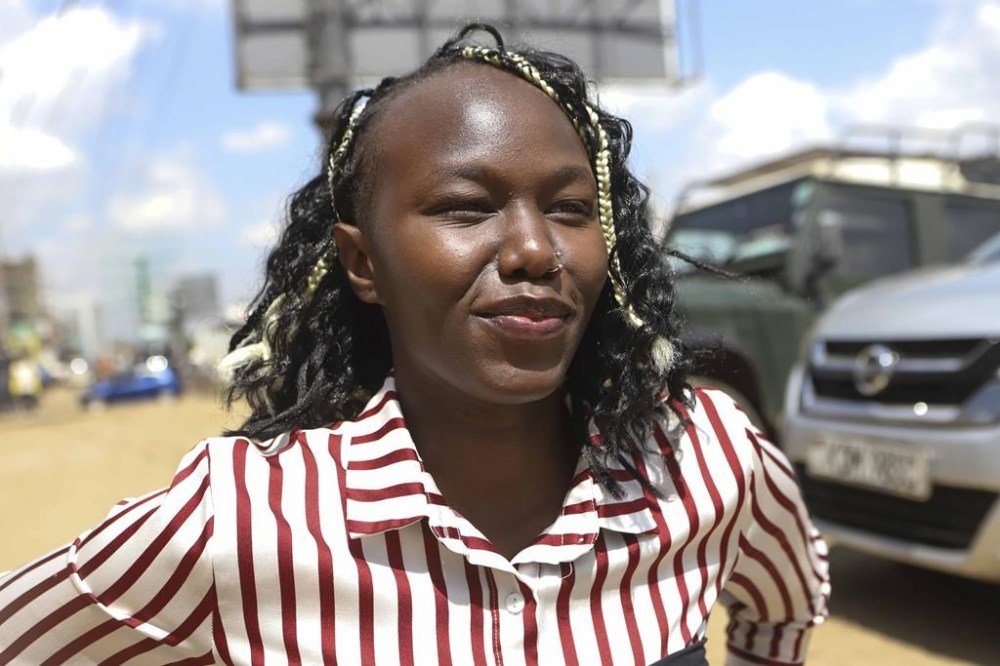
“In most cases, the people manning the bus terminals have to lift you off the wheelchair to help you board the buses. This is not only uncomfortable but leaves you attracting unnecessary attention from the public,” Mwikali told The Associated Press.
She is among 2.2% of Kenya’s population, or about 900,000 people, who live with a disability. The most common type of disability is mobility-related at 42%.
One entrepreneur, Daniel Gatura, founded Ace Mobility in Nairobi in 2021. Its vehicles are modified with ramps and swivel seats to accommodate people with disabilities and anyone else who needs support commuting.
Gatura said he was inspired by a personal experience growing up.
“My father sustained a spinal cord injury in an accident that left him in a wheelchair when he was just 5 years old. I witnessed the challenges my father faced, including losing his job due to transportation issues,” Gatura said.
Users can book rides through the Ace Mobility app. Drivers are trained as caregivers, ensuring they understand how to provide respectful and appropriate assistance to passengers with disabilities.
Gatura said they have 5,000 users.
“We are changing the narrative around disability and reduced mobility. Just because you have a disability doesn’t mean you cannot earn for yourself; it doesn’t mean you are a nobody in the society,” he said.
The transport is more expensive than public transport, charging the equivalent of $1 per kilometer (0.6 miles). The same amount can be used to pay for a 40-kilometer (24-mile) ride in public transport vehicles. But Gatura noted it delivers people directly to their homes.
“I find the charges quite fair considering the convenience that it offers. I get to travel comfortably and without necessarily moving from my chair. It also somehow preserves my dignity,” said Mwikali, who has used the service for four months after a referral from a former classmate.
But others like Cindy Cherotich can’t afford the service. She must jostle for space on minibuses while on crutches.
“When I go to the bus station sometimes the public vehicles do not allow me to board,” she said. “When they see my crutch and (see) somebody who is OK without crutches, they will let them in and I will be left.”
Lucy Nkatha, a disability advocate and coordinator of Kiengu Women Challenged to Challenge Group, an NGO, said she had never heard of Ace Mobility and called for marketing support for such companies.
“It should also be made affordable,” she said.
Sandra Nyawira, the disability inclusion adviser at United Disabled Persons of Kenya, noted that Kenya has a number of policies in place to address accommodations for people with disabilities, but implementation is rare. She called for more political will.
“It’s one thing to have a policy that speaks to your issues, but then it’s another to implement them,” she said.
___
The Associated Press receives financial support for global health and development coverage in Africa from the Gates Foundation. The AP is solely responsible for all content. Find AP’s standards for working with philanthropies, a list of supporters and funded coverage areas at AP.org.