

California voters reject measure that would have banned forced prison labor
Advertisement
Read this article for free:
or
Already have an account? Log in here »
To continue reading, please subscribe:

Digital Subscription
One year of digital access for only $205*
- Enjoy unlimited reading on winnipegfreepress.com
- Read the E-Edition, our digital replica newspaper
- Access News Break, our award-winning app
- Play interactive puzzles
*First annual payment billed as $205.00 + GST for one year. This annual subscription will automatically renew at $233.00 + GST every 52 weeks (10% off the regular annual price of $259.35). Offer available to new and qualified returning subscribers only. Cancel any time.
To continue reading, please subscribe:
Add Free Press access to your Brandon Sun subscription for only an additional
$1 for the first 4 weeks*
- Enjoy unlimited reading on winnipegfreepress.com
- Read the E-Edition, our digital replica newspaper
- Access News Break, our award-winning app
- Play interactive puzzles
*Your next Brandon Sun subscription payment will increase by $1.00 and you will be charged $17.95 plus GST for four weeks. After four weeks, your payment will increase to $24.95 plus GST every four weeks.
Read unlimited articles for free today:
or
Already have an account? Log in here »
Hey there, time traveller!
This article was published 11/11/2024 (691 days ago), so information in it may no longer be current.
SACRAMENTO, Calif. (AP) — California voters have rejected a measure on the November ballot that would have amended the state constitution to ban forced prison labor.
The constitution already prohibits so-called involuntary servitude, but an exception allows it to be used as a punishment for crime.
That exemption became a target of criminal justice advocates concerned that prisoners are often paid less than $1 an hour for labor such as fighting fires, cleaning cells and doing landscaping work at cemeteries.
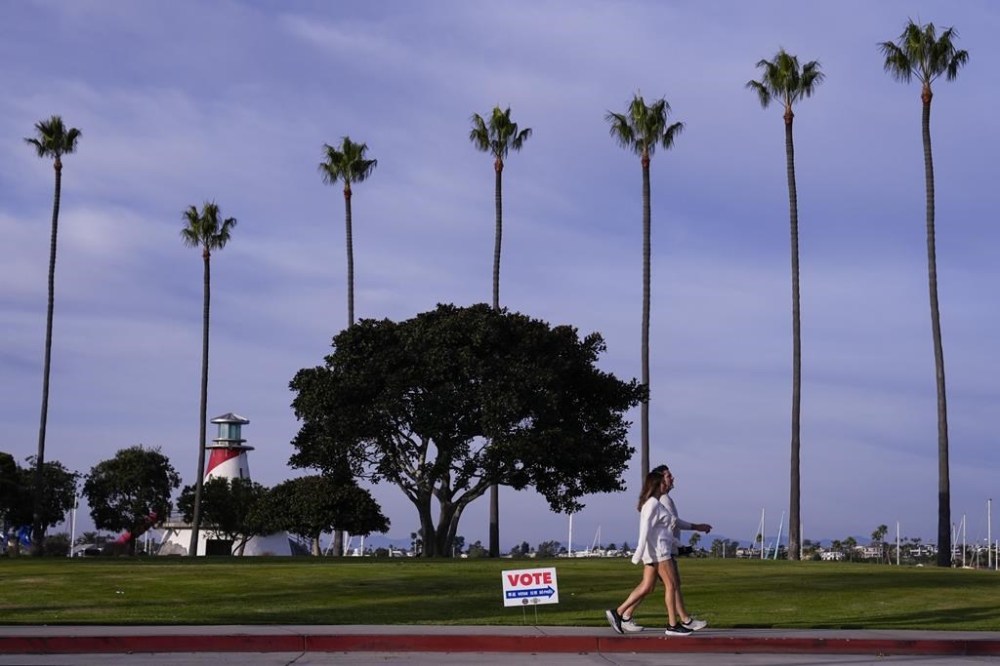
The failed Proposition 6 was included in a package of reparations proposals introduced by lawmakers this year as part of an effort to atone and offer redress for a history of discrimination against Black Californians.
Democratic Gov. Gavin Newsom signed a law in the package in September to issue a formal apology for the state’s legacy of racism against African Americans. But state lawmakers blocked a bill that would have created an agency to administer reparations programs, and Newsom vetoed a measure that would have helped Black families reclaim property taken unjustly by the government through eminent domain.
Abolish Slavery National Network co-founder Jamilia Land, who advocated for the initiative targeting forced prison labor, said the measure and similar ones in other states are about “dismantling the remnants of slavery” from the books.
“While the voters of California did not pass Proposition 6 this time, we have made significant progress,” she said in a statement. “We are proud of the movement we have built, and we will not rest until we see this issue resolved once and for all.”
George Eyles, a retired teacher in Brea who voted against Prop 6, said he found it confusing that the initiative aimed to ban slavery, which was outlawed in the U.S. in the 19th century. After finding out more about the measure, Eyles decided it likely would not be economically feasible since prison labor helps cut costs for upkeep, he said.
“I really couldn’t get any in-depth information about … the thinking behind putting that whole Prop 6 forward, so that made me leery of it,” Eyles said. “If I really can’t understand something, then I’m usually going to shake my head, ‘No.’”
Multiple states — including Colorado, Tennessee, Alabama and Vermont — have voted to rid their constitutions of forced labor exemptions in recent years, and this week they were joined by Nevada, which passed its own measure.
In Colorado — the first state to get rid of an exception for slavery from its constitution in 2018 — incarcerated people alleged in a 2022 lawsuit filed against the corrections department that they were still being forced to work.
Proposition 6’s ballot language did not explicitly include the word “slavery” like measures elsewhere, because the California Constitution was amended in the 1970s to remove an exemption for slavery. But the exception for involuntary servitude as a punishment for crime remained on the books.
The 13th Amendment of the U.S. Constitution also bans slavery and involuntary servitude except as a punishment for crime.
Proposition 6 saw the second-least campaign spending among the 10 statewide initiatives on the ballot this year, about $1.9 million, according to the California Secretary of State’s office. It had no formal opposition.
___
Austin is a corps member for the Associated Press/Report for America Statehouse News Initiative. Report for America is a nonprofit national service program that places journalists in local newsrooms to report on undercovered issues. Follow Austin on Twitter: @ sophieadanna