

Sudan keeps key aid crossing from Chad open for hard-hit Darfur region as famine grows
Advertisement
Read this article for free:
or
Already have an account? Log in here »
To continue reading, please subscribe:

Digital Subscription
One year of digital access for only $205*
- Enjoy unlimited reading on winnipegfreepress.com
- Read the E-Edition, our digital replica newspaper
- Access News Break, our award-winning app
- Play interactive puzzles
*First annual payment billed as $205.00 + GST for one year. This annual subscription will automatically renew at $233.00 + GST every 52 weeks (10% off the regular annual price of $259.35). Offer available to new and qualified returning subscribers only. Cancel any time.
To continue reading, please subscribe:
Add Free Press access to your Brandon Sun subscription for only an additional
$1 for the first 4 weeks*
- Enjoy unlimited reading on winnipegfreepress.com
- Read the E-Edition, our digital replica newspaper
- Access News Break, our award-winning app
- Play interactive puzzles
*Your next Brandon Sun subscription payment will increase by $1.00 and you will be charged $17.95 plus GST for four weeks. After four weeks, your payment will increase to $24.95 plus GST every four weeks.
Read unlimited articles for free today:
or
Already have an account? Log in here »
Hey there, time traveller!
This article was published 13/11/2024 (658 days ago), so information in it may no longer be current.
CAIRO, Egypt (AP) — Sudan’s military-controlled government said Wednesday that a key border crossing with Chad will stay open to keep much-needed humanitarian aid flowing into the western Darfur region which has been a center of fighting in the country’s ongoing war.
The decision on the Adre crossing followed a meeting with United Nations agencies and local and international aid groups, Sudan’s ruling Sovereign Council said in a statement.
“We very much welcome the Sudanese authorities’ decision to extend the opening of the Adre crossing from Chad,” U.N. spokesman Stéphane Dujarric told reporters at U.N. headquarters in New York on Wednesday.
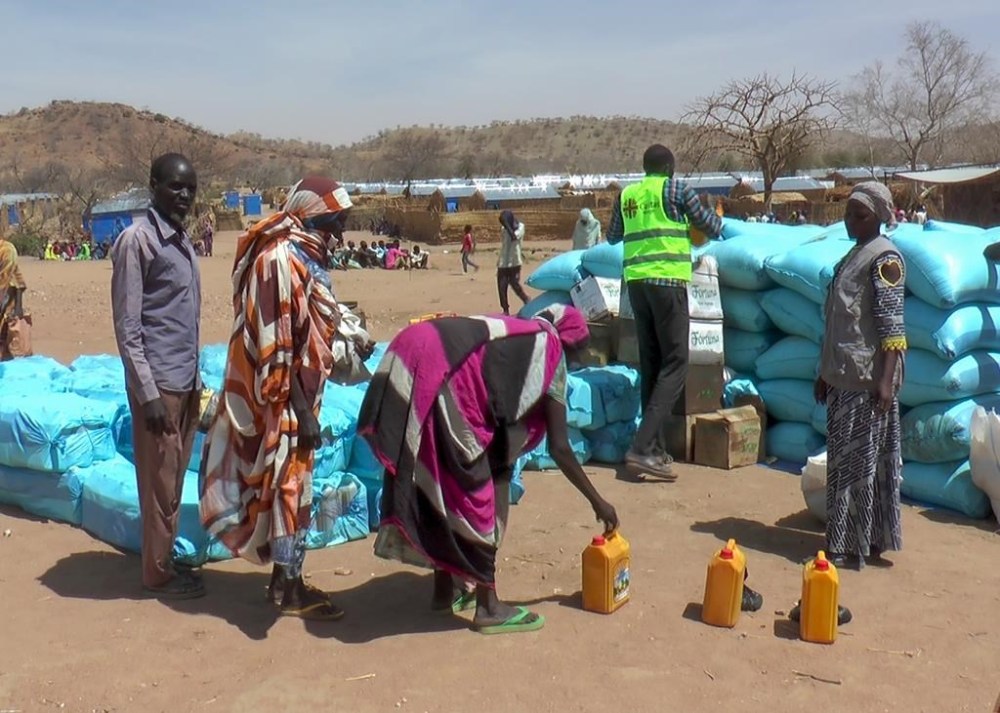
He said the government’s announcement that the Adre crossing will remain open for another three months will enable the U.N. and its partners to continue delivering critically needed aid.
The border crossing, which was closed earlier this year, was reopened in August for three months by the Sovereign Council to address the catastrophic humanitarian situation in Darfur. Famine has been confirmed in the Zamzam displacement camp near El Fasher, North Darfur’s provincial capital.
“Since the crossing was opened in mid-August,” Dujarric said, “we and our partners have now moved more than 337 trucks of humanitarian aid through this route, with more than 11,000 metric tons of food and other relief items that could cover the needs of close to 1.4 million people.”
Some of the aid continues to be distributed around Darfur, and an additional 30,000 metric tons of supplies are already in eastern Chad or on their way, the U.N. spokesman said.
Sudan plunged into conflict in mid-April 2023, when long-simmering tensions between its military and paramilitary leaders broke out in the capital, Khartoum, and spread to other regions, including Darfur, which was wracked by bloodshed and atrocities in 2003.
The war has killed more than 24,000 people and created the world’s largest displacement crisis, with more than 14 million people forced to flee their homes.
Dujarric said U.N. Secretary-General António Guterres spoke to Gen. Abdel Fattah Burhan, who led a military takeover of the Sudanese government in 2021, on the sidelines of the COP29 climate conference in Azerbaijan “on the importance of facilitating humanitarian distribution in Sudan and in particular through the Adre crossing.”
While Adre is “a critical lifeline for millions of people,” Dujarric said it isn’t enough and all routes crossing borders and crossing conflict lines need to be opened to meet the spiraling demand for humanitarian assistance.
Aid groups on Wednesday welcomed the news of the extension and urged all parties to stop obstructing humanitarian assistance.
¨This decision, if sustained and supported with streamlined processes, could be a lifeline for the 5.3 million children and families on the brink of starvation,” Mathilde Vu, advocacy manager in Sudan for the Norwegian Refugee Council, told The Associated Press.
The international community should seize the moment and scale up funding to accelerate the response, she said.
——
This story corrects that El Fasher is the capital of North Darfur, not West Darfur.
—-
Mednick reported from Dakar, Senegal and Lederer from the United Nations.