

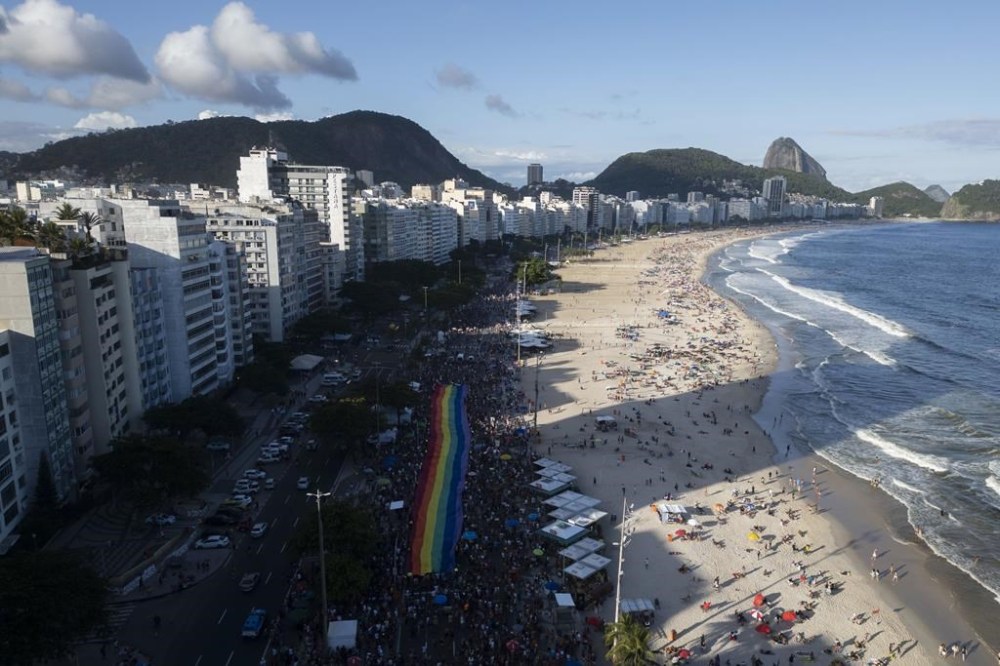
Rainbow-clad revelers hit Copacabana beach for Rio de Janeiro’s pride parade
Advertisement
Read this article for free:
or
Already have an account? Log in here »
To continue reading, please subscribe:

Digital Subscription
One year of digital access for only $205*
- Enjoy unlimited reading on winnipegfreepress.com
- Read the E-Edition, our digital replica newspaper
- Access News Break, our award-winning app
- Play interactive puzzles
*First annual payment billed as $205.00 + GST for one year. This annual subscription will automatically renew at $233.00 + GST every 52 weeks (10% off the regular annual price of $259.35). Offer available to new and qualified returning subscribers only. Cancel any time.
To continue reading, please subscribe:
Add Free Press access to your Brandon Sun subscription for only an additional
$1 for the first 4 weeks*
- Enjoy unlimited reading on winnipegfreepress.com
- Read the E-Edition, our digital replica newspaper
- Access News Break, our award-winning app
- Play interactive puzzles
*Your next Brandon Sun subscription payment will increase by $1.00 and you will be charged $17.95 plus GST for four weeks. After four weeks, your payment will increase to $24.95 plus GST every four weeks.
Read unlimited articles for free today:
or
Already have an account? Log in here »
Hey there, time traveller!
This article was published 24/11/2024 (652 days ago), so information in it may no longer be current.
RIO DE JANEIRO (AP) — Thousands of revelers gathered alongside Copacabana beach for Rio de Janeiro’s annual pride parade on Sunday, many scantily dressed and covered in glitter.
Rainbow-colored flags, towels and fans abounded among the crowd mostly made up of young people who danced and sang along to music blaring from speakers.
While the atmosphere was festive, some spoke of the threat of violence LGBTQ+ people face in Brazil.
“As the sister of a trans woman, I’m scared to death,” said Helen Karajá, a 32-year-old bisexual artist.
At least 230 LGBTQ+ Brazilians were victims of violent deaths in 2023, according to the umbrella watchdog group Observatory of LGBTI+ deaths and violence in Brazil.
And more trans people — 100 — were murdered in Brazil last year than in any other country, according to Transgender Europe, a network of global non-profits that tracks the data.
To be sure, life for gay people is safer now than it used to be, said Carlos da Cunha, a 71-year-old hairdresser.
“In the past, people had to go to ghettos to meet people, because you couldn’t just be anywhere,” said da Cunha. “Now, we can walk down the street without being attacked, without being insulted or humiliated.”
One of the themes of this year’s pride march was sustainability. “Environmental justice will only be possible with racial and social justice, gender equality and sexual diversity” read one banner attached to a truck.

Brazil has faced a series of environmental catastrophes this year, including record drought in the Amazon rainforest, floods in the southern Rio Grande do Sul state, and wildfires across the country.
“If we can’t respect the environment, how can we respect others?” said Alexia Soutinho, a 23-year-old student who identifies as pansexual and lives in the Cidade de Deus favela.