

Protests lay bare a clash of values and interests as Georgia navigates a Russia-West standoff
Advertisement
Read this article for free:
or
Already have an account? Log in here »
To continue reading, please subscribe:

Digital Subscription
One year of digital access for only $205*
- Enjoy unlimited reading on winnipegfreepress.com
- Read the E-Edition, our digital replica newspaper
- Access News Break, our award-winning app
- Play interactive puzzles
*First annual payment billed as $205.00 + GST for one year. This annual subscription will automatically renew at $233.00 + GST every 52 weeks (10% off the regular annual price of $259.35). Offer available to new and qualified returning subscribers only. Cancel any time.
To continue reading, please subscribe:
Add Free Press access to your Brandon Sun subscription for only an additional
$1 for the first 4 weeks*
- Enjoy unlimited reading on winnipegfreepress.com
- Read the E-Edition, our digital replica newspaper
- Access News Break, our award-winning app
- Play interactive puzzles
*Your next Brandon Sun subscription payment will increase by $1.00 and you will be charged $17.95 plus GST for four weeks. After four weeks, your payment will increase to $24.95 plus GST every four weeks.
Read unlimited articles for free today:
or
Already have an account? Log in here »
Hey there, time traveller!
This article was published 02/12/2024 (662 days ago), so information in it may no longer be current.
TBILISI, Georgia (AP) — Georgia is convulsed by political upheaval again after its pro-Moscow government, fresh off parliamentary elections denounced as rigged by its critics, decided to suspend negotiations for the small former Soviet republic to join the European Union.
The small but ancient Caucasus country, which inhabits a crossroads between Slavic, Turkish and Persian cultures, has recently found itself navigating the geopolitical standoff between Russia under strongman President Vladimir Putin and the democratic, wealthy West.
Here’s a look at why the future of Georgia matters, both domestically and internationally.
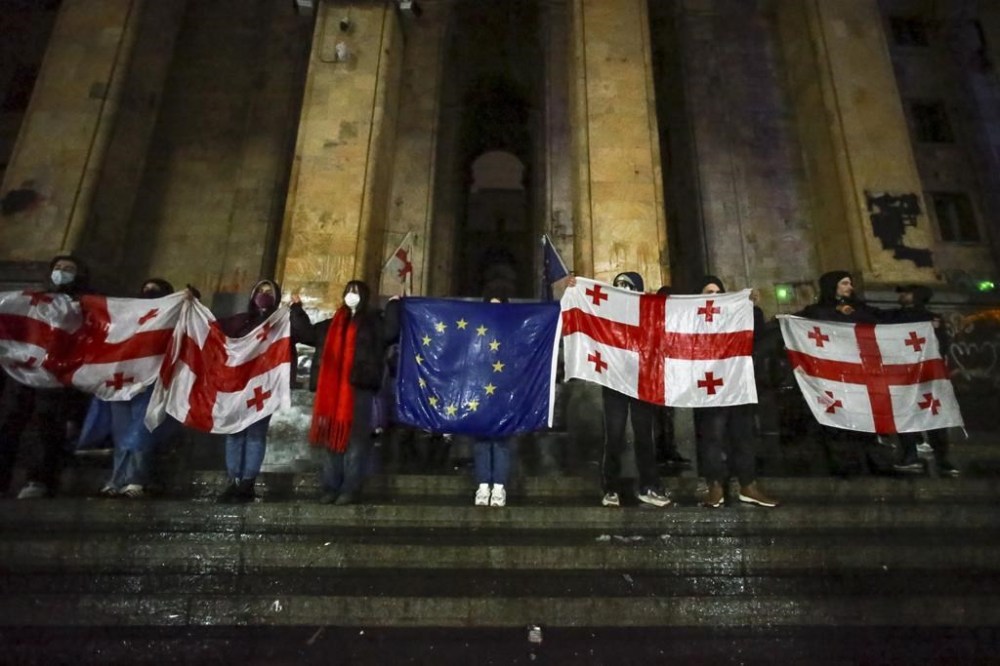
What’s happening in Georgia?
Official results from parliamentary elections on Oct. 26 gave victory to the ruling Georgian Dream party, which was created by Bidzina Ivanishvili, a shadowy billionaire who made his fortune in Russia.
At the same time, opinion polls have repeatedly shown most Georgians want their country to join the European Union — and supporters of accession to the 27-member bloc have turned out in force to protest the government’s move to suspend the process.
Over 200 people have been detained after four nights of protests in the capital, Tbilisi, where tens of thousands of people have rallied outside parliament — a sizable turnout for a country of 3.7 million people.
While parliament is controlled by Georgian Dream, President Salome Zourabichvili, who has a largely ceremonial role, has spoken out against what she calls the ruling party’s crackdown on free speech. She says many arrested protesters had injuries to their heads and faces.
Navigating the standoff between Russia and the West
Some see parallels between the recent protests in Georgia and those in Ukraine, another former Soviet republic, earlier this century as Kyiv sought to move closer to the West.
The Georgian government’s move to suspend the EU membership process came after the European Parliament passed a resolution criticizing the Oct. 26 election as neither free nor fair.
Putin’s spokesman, Dmitry Peskov, said Moscow views the recent events in Georgia as similar to upheaval that rocked Ukraine in 2013 and 2014, when a pro-Russia president decided not to sign an association agreement with the EU — and eventually fled amid ensuing political unrest.
Georgia, like Ukraine, has sought to join the NATO military alliance, which Putin’s Russia considers a step too far for Western expansion into the former Soviet — and Russian — sphere of influence.
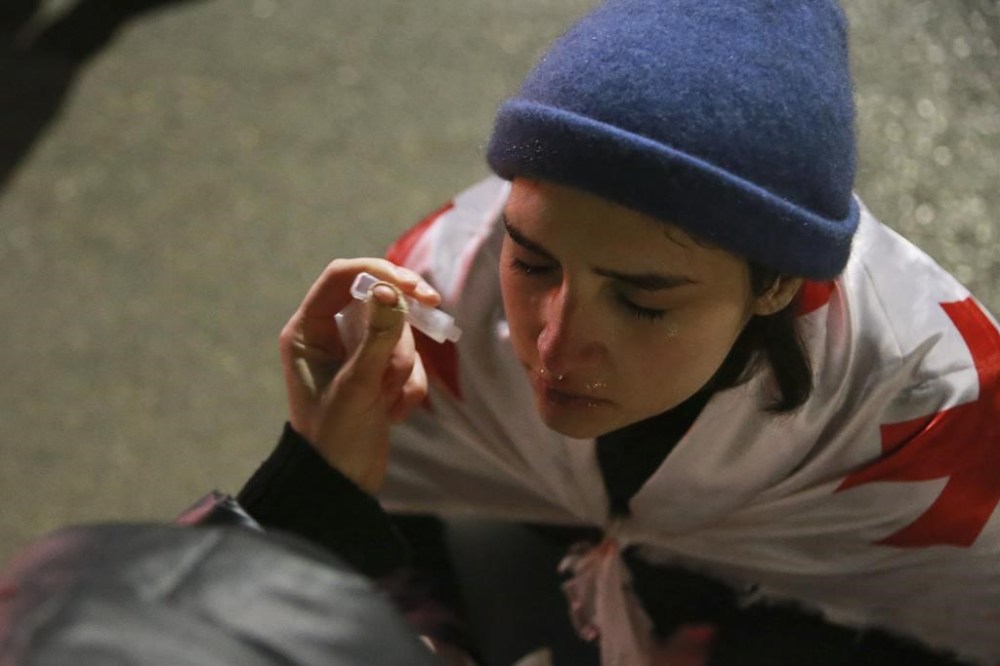
Russia has a long border with Georgia, which is not contiguous with any EU country — though it does share a border with NATO member Turkey.
In August 2008, Russia fought a brief war with Georgia, which had made a botched attempt to regain control over its breakaway province of South Ossetia. Moscow recognized the independence of South Ossetia and another breakaway province, Abkhazia, and set up military bases there.
US and EU try to exert more pressure on Georgian government
On Saturday, the U.S. State Department announced the suspension of its strategic relationship with Georgia and condemned the decision to halt its efforts toward EU accession.
The EU granted Georgia candidate status last December on condition that it meet the bloc’s stringent entry requirements.
But in the spring, the EU put Georgia’s accession on hold and cut financial support after the Georgian parliament passed a “foreign influence” law that was widely seen as a blow to democratic freedoms.