

US can continue using Seattle airport for deportation flights, appeals court says
Advertisement
Read this article for free:
or
Already have an account? Log in here »
To continue reading, please subscribe:

Digital Subscription
One year of digital access for only $205*
- Enjoy unlimited reading on winnipegfreepress.com
- Read the E-Edition, our digital replica newspaper
- Access News Break, our award-winning app
- Play interactive puzzles
*First annual payment billed as $205.00 + GST for one year. This annual subscription will automatically renew at $233.00 + GST every 52 weeks (10% off the regular annual price of $259.35). Offer available to new and qualified returning subscribers only. Cancel any time.
To continue reading, please subscribe:
Add Free Press access to your Brandon Sun subscription for only an additional
$1 for the first 4 weeks*
- Enjoy unlimited reading on winnipegfreepress.com
- Read the E-Edition, our digital replica newspaper
- Access News Break, our award-winning app
- Play interactive puzzles
*Your next Brandon Sun subscription payment will increase by $1.00 and you will be charged $17.95 plus GST for four weeks. After four weeks, your payment will increase to $24.95 plus GST every four weeks.
Read unlimited articles for free today:
or
Already have an account? Log in here »
Hey there, time traveller!
This article was published 03/12/2024 (643 days ago), so information in it may no longer be current.
SEATTLE (AP) — U.S. Immigration and Customs Enforcement can continue using a Seattle airport for chartered deportation flights, a federal appeals court ruled in a decision that rejected a 2019 local order that sought to counter then-President Donald Trump’s immigration policies.
The agency has long used airports around the country to charter flights deporting hundreds of thousands of noncitizens considered lawfully removable from the U.S.
But in 2019, in keeping with efforts in liberal Seattle and Washington state to resist Trump’s priorities, King County Executive Dow Constantine issued an executive order expressing concern that the deportations could constitute human rights abuses. It announced that future leases at the county airport, also known as Boeing Field, would bar operators from servicing deportation flights.
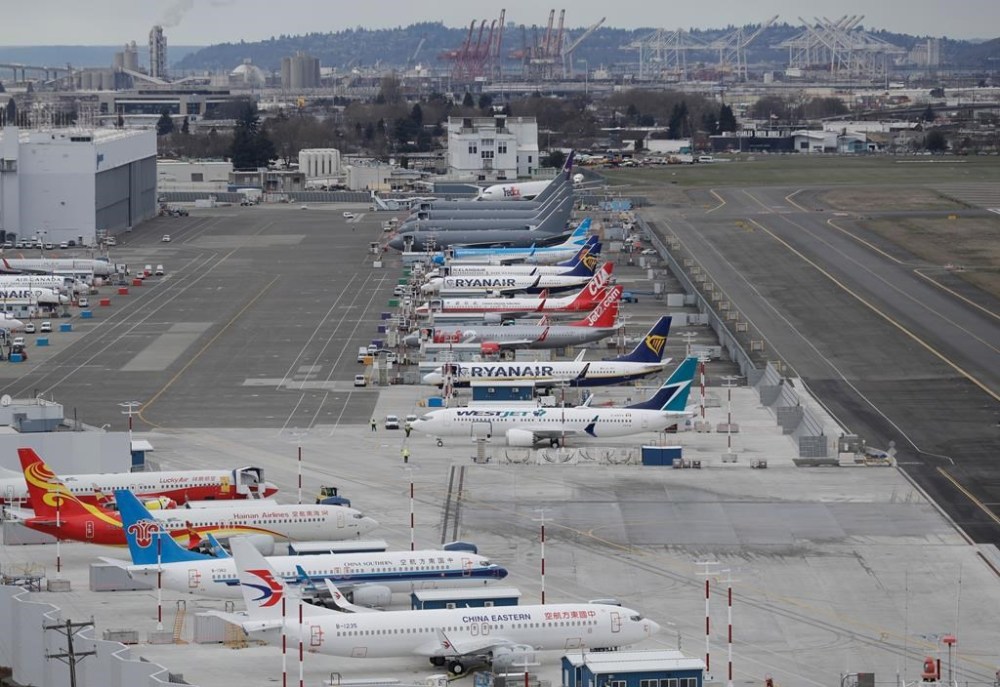
The order prompted ICE to begin using an airport in Yakima — a much farther drive from ICE’s Northwest detention center in Tacoma — for the deportation flights.
The U.S. sued King County in 2020, arguing that Constantine’s order discriminated against the federal government by singling it and its contractors out for unfavorable treatment, and that it violated the terms of a World War II-era contract that guarantees the federal government’s right to use the airport.
U.S. District Judge Robert J. Bryan agreed, and Constantine issued a new executive order superseding his old one early last year. The new order, which was not challenged, does not purport to block deportation flights but instead prevents King County resources from aiding in the deportations beyond what federal law requires.
The new order also calls for transparency around any deportation flights. The airport now offers a conference room where the public can observe deportation flights on a video feed, and the county posts a log of deportation flights from the airport on its website.
The deportation flights resumed by May 2023, following Bryan’s decision and Constantine’s second executive order. In a ruling Friday, a three-judge panel of the 9th U.S. Circuit Court of Appeals unanimously upheld Bryan’s ruling.
“The Executive Order effectively grants King County the ‘power to control’ ICE’s transportation and deportation operations, forcing ICE either to stop using Boeing Field or to use government-owned planes there” — impermissibly overriding the federal government’s discretion, 9th Circuit Judge Daniel A. Bress wrote for the panel.
King County said it would not further appeal the case.
“The Ninth Circuit’s decision allows a raw assertion of federal power to overcome an expression of local values even absent any actual impact,” Amy Enbysk, a spokeswoman for the King County Executive’s Office, said in an emailed statement. “Although King County disagrees with the court’s decision, it will of course follow the court’s dictates.”