

Takeaways from the Supreme Court arguments on transgender health care ban: Conservatives skeptical
Advertisement
Read this article for free:
or
Already have an account? Log in here »
To continue reading, please subscribe:

Digital Subscription
One year of digital access for only $205*
- Enjoy unlimited reading on winnipegfreepress.com
- Read the E-Edition, our digital replica newspaper
- Access News Break, our award-winning app
- Play interactive puzzles
*First annual payment billed as $205.00 + GST for one year. This annual subscription will automatically renew at $233.00 + GST every 52 weeks (10% off the regular annual price of $259.35). Offer available to new and qualified returning subscribers only. Cancel any time.
To continue reading, please subscribe:
Add Free Press access to your Brandon Sun subscription for only an additional
$1 for the first 4 weeks*
- Enjoy unlimited reading on winnipegfreepress.com
- Read the E-Edition, our digital replica newspaper
- Access News Break, our award-winning app
- Play interactive puzzles
*Your next Brandon Sun subscription payment will increase by $1.00 and you will be charged $17.95 plus GST for four weeks. After four weeks, your payment will increase to $24.95 plus GST every four weeks.
Read unlimited articles for free today:
or
Already have an account? Log in here »
Hey there, time traveller!
This article was published 04/12/2024 (657 days ago), so information in it may no longer be current.
WASHINGTON (AP) — The Supreme Court heard the most high-profile case of its term on Wednesday, weighing Tennessee’s ban on gender-affirming health care for transgender minors.
Similar laws have been passed by other conservative-leaning states. Challengers say they deprive kids of treatment they need, while the states defend them as protecting minors from life-changing decisions.
The conservative-majority court appeared ready to uphold Tennessee’s law. It comes against the backdrop of escalating pushback to transgender rights, notably from President-elect Donald Trump.
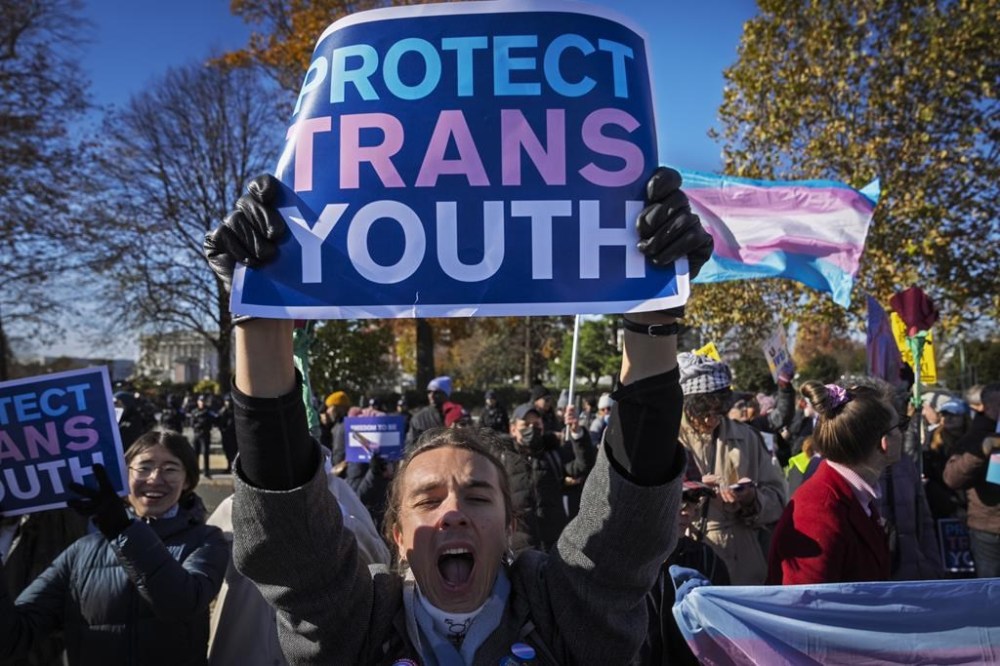
Here are some takeaways from the arguments:
What did key conservative justices say?
In the arguments on Wednesday, five of the court’s six conservatives seemed skeptical of the argument that the ban on gender-affirming care for minors is discriminatory.
Two key conservatives, Chief Justice John Roberts and Justice Amy Coney Barrett, repeatedly challenged the arguments from lawyers challenging the ban.
Roberts questioned whether judges should be weighing in on a question of regulating medical procedures, an area usually left to state lawmakers. Barrett sounded skeptical of the administration’s argument that the law discriminates because of sex.
Conservative Justice Neil Gorsuch was notably silent, asking no questions.
The court’s other three conservatives seemed to favor Tennessee. The three liberals largely backed the challengers, with Justice Sonia Sotomayor highlighting the risks of suicide among kids with gender dysphoria.
What’s the court’s track record on the issue?
The litigation marked only the second time the high court has heard a case that represented a fundamental test of transgender rights.
In a case involving LGBTQ+ rights four years ago, two conservative justices, Roberts and Gorsuch, joined with its liberals to expand protections for transgender workers. Barrett wasn’t on the bench at the time and had no record on transgender rights.

Gorsuch wrote the opinion, which left open claims of discrimination in other situations.
What happens next?
The court isn’t expected to rule for several months. The decision could have direct effects in the 26 states that have passed versions of the bans, and might have ripple effects on other measures that restrict sports participation and bathroom use by transgender people.
Supporters of the health care laws argue the gender-affirming treatments are risky, and the laws protect kids from making decisions before they’re ready.
Challengers say many medical interventions come with some degree of risk, and families should be able to weigh those against the benefits. The arguments in favor of Tennessee’s ban could also be used to back federal restrictions, said Chase Strangio, the ACLU attorney who represented three families challenging the law.
Tennessee Attorney General Jonathan Skrmetti said that his state’s arguments would still let each state set its own policy.