

Judge upholds use of race in Naval Academy admissions, saying a diverse military is stronger
Advertisement
Read this article for free:
or
Already have an account? Log in here »
To continue reading, please subscribe:

Digital Subscription
One year of digital access for only $205*
- Enjoy unlimited reading on winnipegfreepress.com
- Read the E-Edition, our digital replica newspaper
- Access News Break, our award-winning app
- Play interactive puzzles
*First annual payment billed as $205.00 + GST for one year. This annual subscription will automatically renew at $233.00 + GST every 52 weeks (10% off the regular annual price of $259.35). Offer available to new and qualified returning subscribers only. Cancel any time.
To continue reading, please subscribe:
Add Free Press access to your Brandon Sun subscription for only an additional
$1 for the first 4 weeks*
- Enjoy unlimited reading on winnipegfreepress.com
- Read the E-Edition, our digital replica newspaper
- Access News Break, our award-winning app
- Play interactive puzzles
*Your next Brandon Sun subscription payment will increase by $1.00 and you will be charged $17.95 plus GST for four weeks. After four weeks, your payment will increase to $24.95 plus GST every four weeks.
Read unlimited articles for free today:
or
Already have an account? Log in here »
Hey there, time traveller!
This article was published 06/12/2024 (663 days ago), so information in it may no longer be current.
BALTIMORE (AP) — A federal judge on Friday ruled that the U.S. Naval Academy can continue considering race in its admissions process, finding that military cohesion and other national security factors mean the school should not be subjected to the same standards as civilian universities.
During a two-week bench trial in September, attorneys for the academy argued that prioritizing diversity in the military makes it stronger, more effective and more widely respected.
The group behind the case, Students for Fair Admissions, also brought the lawsuit challenging affirmative action that resulted in a landmark U.S. Supreme Court ruling last year. The high court’s conservative majority broadly prohibited the consideration of race and ethnicity in college admissions, ending a longstanding practice meant to boost opportunities for historically marginalized groups and sending shockwaves through higher education. But it carved out a potential exemption for military academies, suggesting that national security interests could affect the legal analysis.
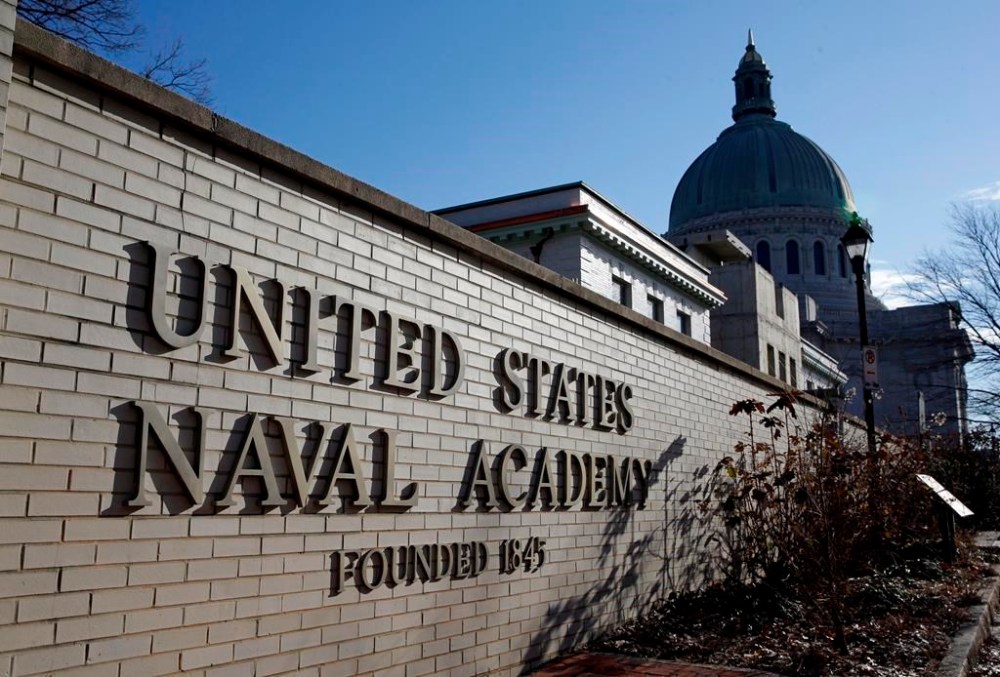
Students for Fair Admissions later sued the Annapolis-based Naval Academy challenging the exemption.
But Judge Richard Bennett rejected their arguments in a lengthy opinion released Friday.
A George W. Bush appointee who served for over 20 years in the U.S. Army Reserve and the Maryland National Guard, Bennett wrote that the school had “established a compelling national security interest in a diverse officer corps.”
“Specifically, the Academy has tied its use of race to the realization of an officer corps that represents the country it protects and the people it leads,” he wrote. “The Academy has proven that this national security interest is indeed measurable and that its admissions program is narrowly tailored to meet that interest.”
Bennett noted that demographics are a minor factor in Naval Academy admissions — no one is admitted solely on the basis of race. He also noted that Students for Fair Admissions includes among its membership “four individuals whose prior applications to the U.S. Naval Academy were denied.”
In a statement Friday, President Edward Blum said the group would appeal the decision.
“It is our hope that the U.S. military academies ultimately will be compelled to follow the Supreme Court’s prohibition of race in college admissions,” he said.
Attorneys for the group argued during trial that prioritizing minority candidates is unfair to qualified white applicants and that cohesion should arise from other sources such as training and command structure.
The group also sued West Point last year, but the Naval Academy case was the first case to go to trial.
Witness testimony included accounts from current and former high-ranking military officials who expressed varying opinions on how race affects the experiences of service members and the organization as a whole. Some argued that performance standards alone should be used to evaluate candidates while others emphasized the importance of fostering diversity.
The court also heard from historians who described the military’s fraught history of racial tension, which on some occasions erupted into violence and jeopardized its wartime readiness.
“The United States military has long made the judgment that developing and maintaining a fighting force that is qualified and demographically diverse at all levels is critical for mission effectiveness,” Bennet wrote in his ruling.
The Legal Defense Fund, which filed a brief in support of the Naval Academy, celebrated the outcome.
“The military is keenly aware that a climate of distrust caused by a lack of equal opportunity along racial lines risks mission failure and loss of life,” senior counsel Michaele Turnage Young said in a statement. “It is unfortunate that some are willing to undermine the safety of our sailors and risk our country’s national security by promoting exclusion.”
Currently, the Naval Academy’s admissions process considers many factors, including grades, extracurricular activities, life experience and socioeconomic status, according to court testimony. Race often plays no role in the process, but sometimes it comes under consideration in a “limited fashion,” attorneys for the academy wrote in court papers.