

Supreme Court will decide if Palestinian authorities can be sued in US over attacks in Middle East
Advertisement
Read this article for free:
or
Already have an account? Log in here »
To continue reading, please subscribe:

Digital Subscription
One year of digital access for only $205*
- Enjoy unlimited reading on winnipegfreepress.com
- Read the E-Edition, our digital replica newspaper
- Access News Break, our award-winning app
- Play interactive puzzles
*First annual payment billed as $205.00 + GST for one year. This annual subscription will automatically renew at $233.00 + GST every 52 weeks (10% off the regular annual price of $259.35). Offer available to new and qualified returning subscribers only. Cancel any time.
To continue reading, please subscribe:
Add Free Press access to your Brandon Sun subscription for only an additional
$1 for the first 4 weeks*
- Enjoy unlimited reading on winnipegfreepress.com
- Read the E-Edition, our digital replica newspaper
- Access News Break, our award-winning app
- Play interactive puzzles
*Your next Brandon Sun subscription payment will increase by $1.00 and you will be charged $17.95 plus GST for four weeks. After four weeks, your payment will increase to $24.95 plus GST every four weeks.
Read unlimited articles for free today:
or
Already have an account? Log in here »
Hey there, time traveller!
This article was published 06/12/2024 (649 days ago), so information in it may no longer be current.
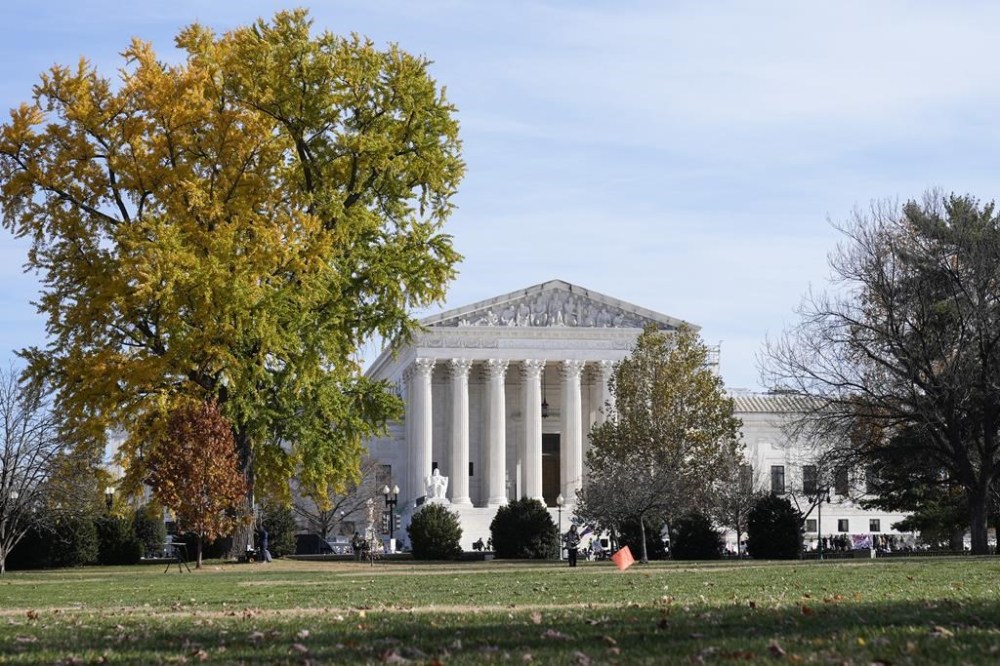
WASHINGTON (AP) — The Supreme Court agreed Friday to settle a years-long legal dispute over whether Palestinian authorities can be sued in U.S. courts by Americans killed or wounded in terrorism attacks in the Middle East.
The federal appeals court in New York has repeatedly ruled in favor of the Palestine Liberation Organization and the Palestinian Authority, despite Congress’ efforts to allow the victims’ lawsuits to be heard.
That court’s latest decision, last year, struck down a law enacted in 2019 specifically to allow the lawsuits to move forward. The Supreme Court typically takes on cases in which lower courts have invalidated federal laws.
The question for the justices is whether the 2019 law is unconstitutional, as the 2nd U.S. Circuit Court of Appeals found, because it denies fair legal process to the PLO and PA. The case probably will be argued in the spring.
Both the victims and the Biden administration had urged the high court to step in.
The attacks occurred in the early 2000s, killing 33 people and wounding hundreds more, and in 2018, when a U.S.-born settler was stabbed to death by a Palestinian assailant outside a busy mall in the West Bank.
The victims and their families assert that Palestinian agents either were involved in the attacks or incited them.
The 2nd U.S. Circuit Court of Appeals first ruled in 2016 against the victims of the attacks from 20 years ago, tossing out a $654 million jury verdict in their favor. In that earlier ruling, the appeals court held U.S. courts can’t consider lawsuits against foreign-based groups over random attacks that were not aimed at the United States.
The victims had sued under the Anti-Terrorism Act, signed into law in 1992. The law was passed to open U.S. courts to victims of international terrorism, spurred by the killing of American Leon Klinghoffer during a 1985 terrorist attack aboard the Achille Lauro cruise ship.
The jury found the PLO and Palestinian Authority liable for six attacks and awarded $218 million in damages. The award was automatically tripled under the law.
After the Supreme Court rejected the victims’ appeal in 2018, Congress again amended the law to make clear it did not want to close the courthouse door to the victims.