

Florida prosecutor seeks to clear records of people charged with buying police-made crack in 1980s
Advertisement
Read this article for free:
or
Already have an account? Log in here »
To continue reading, please subscribe:
Monthly Digital Subscription
$0 for the first 4 weeks*
- Enjoy unlimited reading on winnipegfreepress.com
- Read the E-Edition, our digital replica newspaper
- Access News Break, our award-winning app
- Play interactive puzzles
*No charge for 4 weeks then price increases to the regular rate of $19.00 plus GST every four weeks. Offer available to new and qualified returning subscribers only. Cancel any time.
Monthly Digital Subscription
$4.75/week*
- Enjoy unlimited reading on winnipegfreepress.com
- Read the E-Edition, our digital replica newspaper
- Access News Break, our award-winning app
- Play interactive puzzles
*Billed as $19 plus GST every four weeks. Cancel any time.
To continue reading, please subscribe:
Add Free Press access to your Brandon Sun subscription for only an additional
$1 for the first 4 weeks*
*Your next subscription payment will increase by $1.00 and you will be charged $16.99 plus GST for four weeks. After four weeks, your payment will increase to $23.99 plus GST every four weeks.
Read unlimited articles for free today:
or
Already have an account? Log in here »
Hey there, time traveller!
This article was published 07/12/2024 (369 days ago), so information in it may no longer be current.
FORT LAUDERDALE, Fla. (AP) — A Florida prosecutor says he will seek to vacate as many as 2,600 convictions of people who bought crack cocaine manufactured by the Broward County Sheriff’s Office for sting operations between 1988 and 1990.
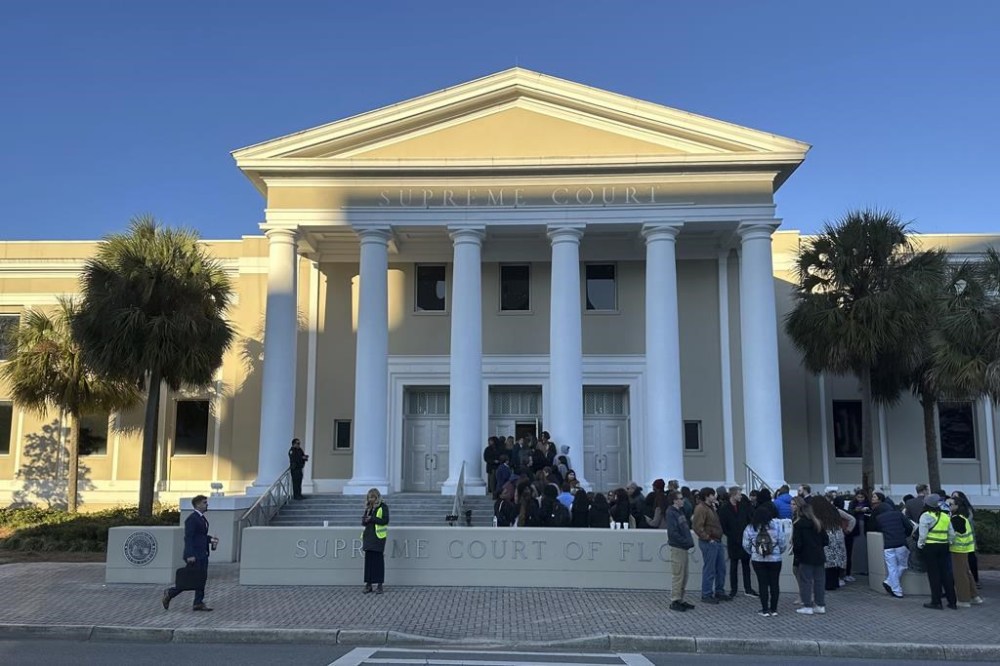
The Florida Supreme Court ruled in 1993 that people couldn’t be charged in cases where the sheriff’s office had made the crack cocaine and undercover deputies then sold it to buyers who were arrested and charged.
Broward County State Attorney Harold F. Pryor said on Friday that while his office was reviewing old records, prosecutors realized that many of people may still have criminal charges or convictions on their records because of the sting operation.
“It is never too late to do the right thing,” Pryor said in a statement.
It’s just one example of how the crack cocaine epidemic of the 1980s and early 1990s led to harsh police practices and heavy criminal penalties.
Some people may have been convicted of serious felonies because they bought drugs within 1,000 feet (300 meters) of a school. Conviction under that law required at the time that defendants be sentenced to at least three years in prison.
“They were arresting people not for selling, but for purchasing,” Ed Hoeg, a defense lawyer, told the Sun Sentinel of Fort Lauderdale. At the time, Hoeg was a public defender who represented Leon Williams, whose appeal led to the state Supreme Court outlawing the practice.
“They had detention deputies posing as dealers,” Hoeg said. “They would sell it, and these poor people who were addicts were buying it. And they were selling it within 1,000 feet of schools, so the penalties would be greater.”
The sheriff’s office said at the time that it began making crack because it didn’t have enough of the seized drug to use in its sting operations and because it didn’t have to later test the cocaine content of crack made by a sheriff’s office chemist.
“We find that the law enforcement’s conduct here was so outrageous as to violate Florida’s due process clause,” the state Supreme Court wrote in the decision.
Pryor said he notified Broward County Sheriff Gregory Tony that Pryor would ask judges to vacate the convictions. Pryor said Tony supports the plan. Some defendants may also be able to seal or expunge the records, the prosecutor said.
The review will take “a considerable amount of time,” Pryor said. He said his office will contact people who may be affected.