

EU to suspend visas for Georgian officials over the security crackdown on opposition protestors
Advertisement
Read this article for free:
or
Already have an account? Log in here »
To continue reading, please subscribe:

Digital Subscription
One year of digital access for only $205*
- Enjoy unlimited reading on winnipegfreepress.com
- Read the E-Edition, our digital replica newspaper
- Access News Break, our award-winning app
- Play interactive puzzles
*First annual payment billed as $205.00 + GST for one year. This annual subscription will automatically renew at $233.00 + GST every 52 weeks (10% off the regular annual price of $259.35). Offer available to new and qualified returning subscribers only. Cancel any time.
To continue reading, please subscribe:
Add Free Press access to your Brandon Sun subscription for only an additional
$1 for the first 4 weeks*
- Enjoy unlimited reading on winnipegfreepress.com
- Read the E-Edition, our digital replica newspaper
- Access News Break, our award-winning app
- Play interactive puzzles
*Your next Brandon Sun subscription payment will increase by $1.00 and you will be charged $17.95 plus GST for four weeks. After four weeks, your payment will increase to $24.95 plus GST every four weeks.
Read unlimited articles for free today:
or
Already have an account? Log in here »
Hey there, time traveller!
This article was published 16/12/2024 (621 days ago), so information in it may no longer be current.
BRUSSELS (AP) — The European Union on Monday moved to impose visa restrictions on Georgian diplomats and government officials over the police crackdown on opposition protesters demanding a rerun of October’s contested election.
Tens of thousands of people have filled the streets regularly in recent weeks since the governing party decided to suspend negotiations on joining the EU. Police have increasingly used force in their attempts to break up the rallies.
Former soccer player Mikheil Kavelashvili became Georgia’s president on Saturday as the governing Georgian Dream party tightened its grip on power in the election that the opposition alleges was rigged with Moscow’s help.
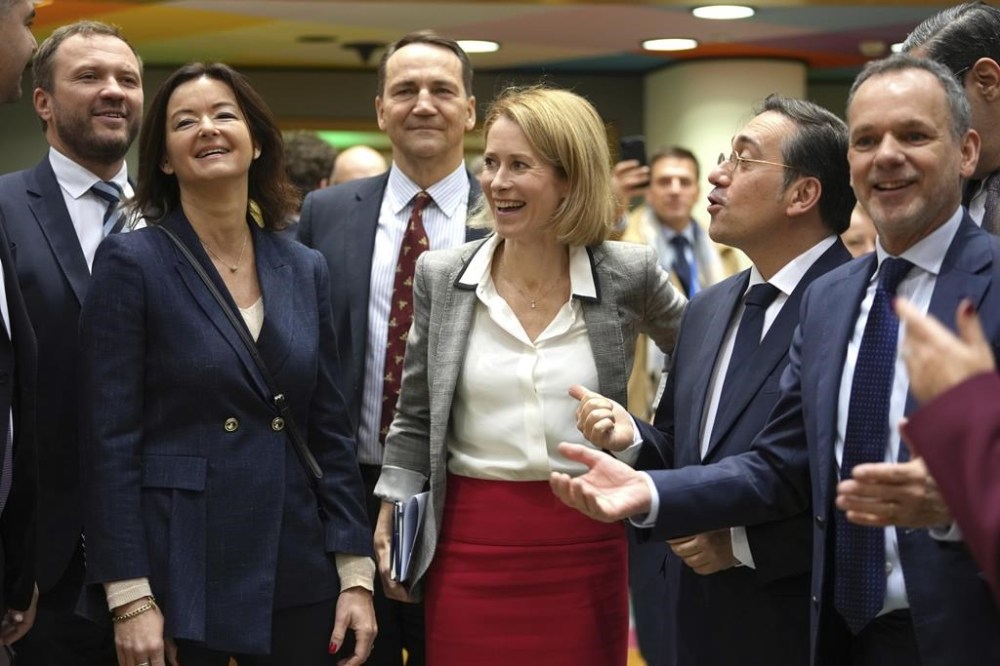
After chairing what she described as a “very tense discussion” among the bloc’s foreign ministers, EU foreign policy chief Kaja Kallas said they had decided “to suspend the visa free regime for diplomatic passports and service passports.”
The EU’s executive branch, the European Commission, was tasked to prepare the measure.
Kallas also tabled a list of Georgian officials for the ministers to weigh sanctions against them, but Hungary and Slovakia — considered the most Russia-friendly of the 27 EU countries — blocked the move.
“With sanctions, we need 27 on board,” Kallas said. But she called the imposition of visa restrictions an important first step.
Chairing her first meeting since taking office on Dec. 1, Kallas added: “It’s my first Hungarian veto but I can guarantee it’s not the last.”
Hungary holds the EU’s rotating presidency until the end of the month, when Poland takes over. Over the past year it has routinely blocked joint moves against Russia or in support of Ukraine, complicating procedures.
Lithuanian Foreign Minister Kęstutis Budrys told reporters that a visa ban is the “minimum we should do,” adding that “we have to send the message to Georgian people in the streets that Europe doesn’t abandon you.”
The EU granted Georgia candidate status for membership in December 2023 but put the accession bid on hold and cut financial support in June after the passage of a “foreign influence” law that was widely seen as a blow to democratic freedoms.