

UN announces initiative to overcome political deadlock in Libya
Advertisement
Read this article for free:
or
Already have an account? Log in here »
To continue reading, please subscribe:

Digital Subscription
One year of digital access for only $205*
- Enjoy unlimited reading on winnipegfreepress.com
- Read the E-Edition, our digital replica newspaper
- Access News Break, our award-winning app
- Play interactive puzzles
*First annual payment billed as $205.00 + GST for one year. This annual subscription will automatically renew at $233.00 + GST every 52 weeks (10% off the regular annual price of $259.35). Offer available to new and qualified returning subscribers only. Cancel any time.
To continue reading, please subscribe:
Add Free Press access to your Brandon Sun subscription for only an additional
$1 for the first 4 weeks*
- Enjoy unlimited reading on winnipegfreepress.com
- Read the E-Edition, our digital replica newspaper
- Access News Break, our award-winning app
- Play interactive puzzles
*Your next Brandon Sun subscription payment will increase by $1.00 and you will be charged $17.95 plus GST for four weeks. After four weeks, your payment will increase to $24.95 plus GST every four weeks.
Read unlimited articles for free today:
or
Already have an account? Log in here »
Hey there, time traveller!
This article was published 16/12/2024 (656 days ago), so information in it may no longer be current.
UNITED NATIONS (AP) — The top U.N. official in Libya announced a new initiative Monday to overcome a three-year deadlock and move the divided oil-rich North African nation toward a national election.
The U.N. deputy special envoy for Libya, Stephanie Koury, told the U.N. Security Council that as a first step, the U.N. political mission in Libya known as UNSMIL intends to establish an advisory committee, with a deadline to develop options to resolve outstanding electoral issues and a road map for holding an election.
“The committee will be composed of experts and respected personalities, who are reflective of the spectrum of Libyan political forces, social, cultural and geographical components,” she said.
Koury stressed that the committee isn’t “a dialogue group to take decisions,” but to generate options for follow-on action by Libyan decision-makers.
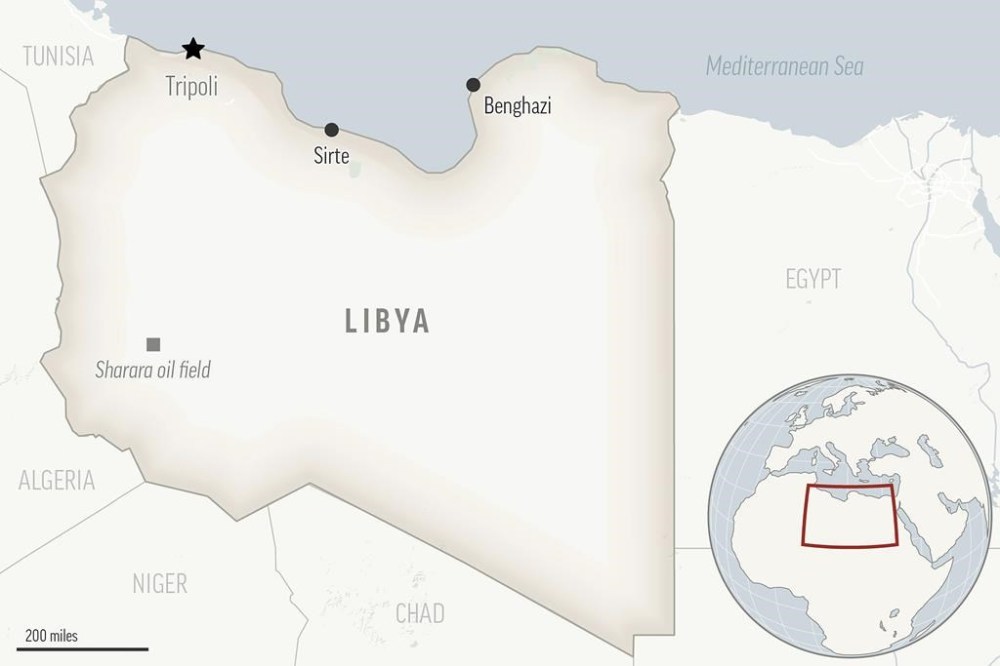
Libya plunged into chaos after a NATO-backed uprising toppled and killed longtime dictator Moammar Gadhafi in 2011. The country split, with rival administrations in the east and west backed by rogue militias and foreign governments.
The country’s political crisis stems from the failure to hold an election on Dec. 24, 2021, and the refusal of Prime Minister Abdul Hamid Dbeibah — who led a transitional government in the capital of Tripoli in the west — to step down.
In response, Libya’s parliament based in the east appointed a rival prime minister who was replaced, while the powerful military commander Khalifa Hifter continues to hold sway in the east.
Koury said the polarization and unresolved electoral issues are threatening Libya’s national unity and territorial integrity, crumbling the country’s transitional architecture. And she said competition between armed groups for control of territory and access to Libya’s resources threatens stability.
Over the past several weeks, Koury said that she shared the initiative’s broad framework with key Libyan actors and regional and international partners. On Sunday night, she presented UNSMIL’s plan to overcome political deadlock to the Libyan people.
The key objectives are stability, pursuing “Libyan ownership,” helping unify and strengthen Libyan institutions, and promoting the inclusivity of Libyan political forces and cultural groups.
U.S. Ambassador to the U.N. Linda Thomas-Greenfield, this month’s council president, said that a new political process is needed in Libya and otherwise it will face deeper divisions, a further erosion of sovereignty and a return to violence.
“We continue to believe the U.N. is the best-placed international actor to lead that process,” she said. “We call on the entire international community to stand behind these U.N.-led efforts.”
Libyan U.N. Ambassador Taher El-Sonni, who represents the internationally recognized government in the west based in Tripoli, said Security Council members should apologize to the Libyan people for repeating plans with slight changes that procrastinate and won’t lead to elections.
“A national dialogue remains the ideal process to overcome the differences and to reach a consensus on general elections as soon as possible,” he said. “Such consensus will address the pending issues to develop electoral laws that can be achieved and implemented.”