

Russian opposition figure says fears of his mother’s poisoning in Berlin proved false
Advertisement
Read this article for free:
or
Already have an account? Log in here »
To continue reading, please subscribe:
Digital Subscription
One year of digital access for only $1.44 a week*
- Enjoy unlimited reading on winnipegfreepress.com
- Read the E-Edition, our digital replica newspaper
- Access News Break, our award-winning app
- Play interactive puzzles
*Billed as $5.77 plus GST every four weeks. After 52 weeks, price increases to the regular rate of $19.95 plus GST every four weeks. Offer available to new and qualified returning subscribers only. Cancel any time.
To continue reading, please subscribe:
Add Free Press access to your Brandon Sun subscription for only an additional
$1 for the first 4 weeks*
- Enjoy unlimited reading on winnipegfreepress.com
- Read the E-Edition, our digital replica newspaper
- Access News Break, our award-winning app
- Play interactive puzzles
*Your next Brandon Sun subscription payment will increase by $1.00 and you will be charged $17.95 plus GST for four weeks. After four weeks, your payment will increase to $24.95 plus GST every four weeks.
Read unlimited articles for free today:
or
Already have an account? Log in here »
Hey there, time traveller!
This article was published 17/12/2024 (672 days ago), so information in it may no longer be current.
BERLIN (AP) — A prominent Russian opposition politician freed as part of the largest East-West civilian prisoner swap since the Cold War said Tuesday that fears of his mother’s poisoning in Berlin have proven false.
Vladimir Kara-Murza, a dual Russian-U.K. citizen and one of the leading Russian opposition figures, said that the worries that his mother could have been poisoned or suffered a heart attack haven’t been corroborated. He added that she remains in a Berlin hospital where she continues to undergo examination.
“My mom is indeed in a hospital in Berlin, but suspicions of poisoning or a heart attack haven’t been confirmed, thank God,” he said on the messaging app Telegram.
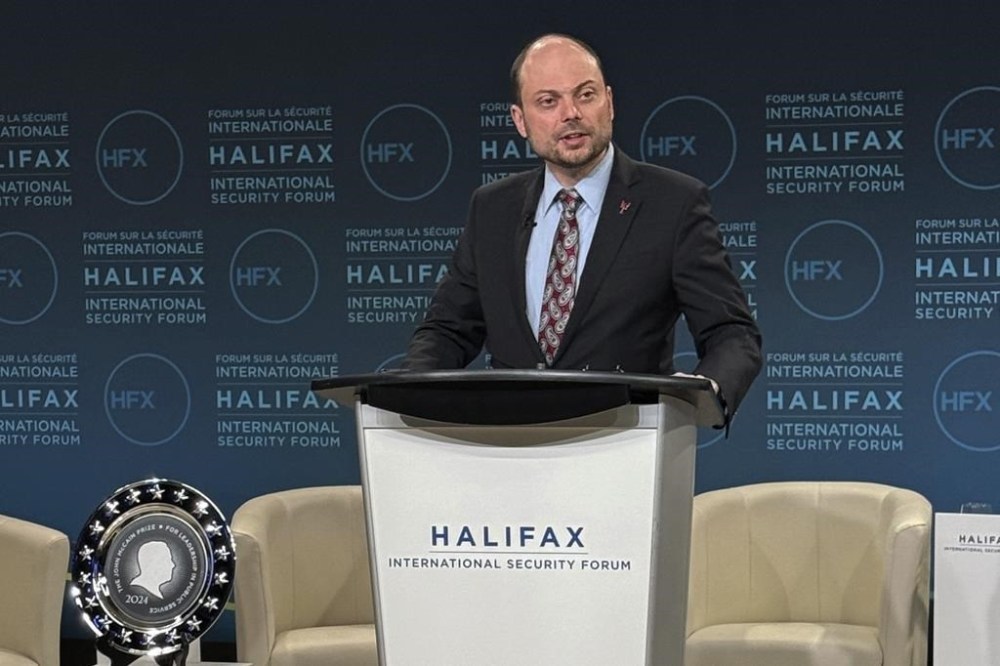
Kara-Murza was arrested in 2022 after criticizing the war in Ukraine that had begun weeks earlier. He was convicted in 2023 of treason and other charges, and sentenced to 25 years in prison in a case he called politically motivated. He fell ill in 2015 and 2017 from two near-fatal poisonings he blamed on the Kremlin.
Kara-Murza was among 16 prisoners that Russia and its ally Belarus released in an August swap — Americans, Germans and Russian dissidents, most of whom were imprisoned on charges widely seen as politically motivated. Those freed in the historic exchange included journalists Evan Gershkovich and Alsu Kurmasheva and former U.S. Marine Paul Whelan.
Moscow in return got eight Russians jailed in the West for spying, hacking computers and even a brazen daylight murder.
The deal took a long time to negotiate, and officials were discussing a possible swap that would involve Russian opposition leader Alexei Navalny just before his sudden and unexplained death in an Arctic penal colony in February. Navalny’s family and his allies blamed his death on the Kremlin, accusations it has rejected.
Navalny had been jailed since January 2021, when he returned to Moscow after recuperating in Germany from nerve agent poisoning he blamed on the Kremlin. The Kremlin vehemently denied it was behind the poisoning.
Last month, Kara-Murza, who was awarded the Pulitzer Prize this year, was among opposition figures who organized a march of at least 1,000 people in central Berlin who rallied against Russian President Vladimir Putin and his war in Ukraine.
German police said earlier Tuesday that a German-Russian woman was taken to an isolation ward at the German capital’s Charite hospital after informing medical staff that she suspected she had been poisoned.
Police, which didn’t identify the woman, said the woman was taken to the ward at Charite after voicing her suspicion to staff at a clinic. They said that blood tests for “all kinds of poisonous substances” were being conducted.
They said they were investigating a possible attempted killing, and that all necessary measures were being taken to find any possible suspects.