

Men who were lynched more than a century ago are innocent, judge finds
Advertisement
Read this article for free:
or
Already have an account? Log in here »
To continue reading, please subscribe:

Digital Subscription
One year of digital access for only $205*
- Enjoy unlimited reading on winnipegfreepress.com
- Read the E-Edition, our digital replica newspaper
- Access News Break, our award-winning app
- Play interactive puzzles
*First annual payment billed as $205.00 + GST for one year. This annual subscription will automatically renew at $233.00 + GST every 52 weeks (10% off the regular annual price of $259.35). Offer available to new and qualified returning subscribers only. Cancel any time.
To continue reading, please subscribe:
Add Free Press access to your Brandon Sun subscription for only an additional
$1 for the first 4 weeks*
- Enjoy unlimited reading on winnipegfreepress.com
- Read the E-Edition, our digital replica newspaper
- Access News Break, our award-winning app
- Play interactive puzzles
*Your next Brandon Sun subscription payment will increase by $1.00 and you will be charged $17.95 plus GST for four weeks. After four weeks, your payment will increase to $24.95 plus GST every four weeks.
Read unlimited articles for free today:
or
Already have an account? Log in here »
Hey there, time traveller!
This article was published 20/12/2024 (625 days ago), so information in it may no longer be current.
CULPEPER, Va. (AP) — Three Black men who were lynched by mobs in Virginia during the 1800s and early 1900s have been declared innocent by a judge.
The Washington Post reported Friday that the men were Charles Allie Thompson, William Thompson and William Grayson. Each was killed in rural Culpeper County, which is about 75 miles (121 kilometers) from Washington.
Circuit Court Judge Dale B. Durrer on Monday found that the men “were and remain to this day innocent of their charges” because they were denied due process. Durrer did so at the request of prosecutor Russell L. Rabb III.
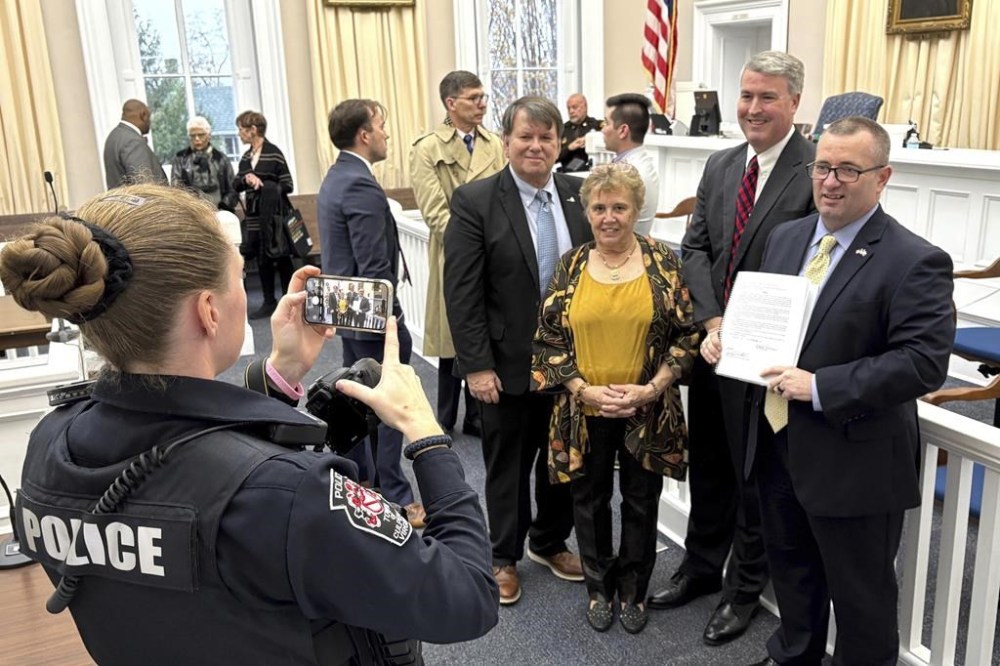
The ruling requires that documents about their treatment remain unsealed in court records for future generations to see.
“The best history helps us recognize the mistakes that we’ve made and the evil corners in which humanity can dwell,” Durrer said. “This discomfort causes us to learn and grow and harness the great collective power we have as a community.”
Zann Nelson, 76, is credited with making the ruling possible. She spent nearly 20 years researching the cases and pestering local officials.
“There are those who might say, ‘Well, it was so long ago, why is it so important?’” Nelson said. “Well, because it brings closure. Not just to families, but to the community.”
Charles Allie Thompson was lynched in 1918 after a white woman accused him of rape. He was held in jail for five days before a mob kidnapped and hung him.
In 1877, William Thompson was accused of raping an 11-year-old white girl. Three days after his arrest, 50 men dragged him out of jail and hung him from a poplar tree. It’s unknown if he was related to Charles Allie Thompson.
William Grayson, a free Black man, was charged with killing a white man in 1849. Virginia’s Supreme Court overturned two of his convictions following two trials because he was known to have been elsewhere. He was in jail facing a third trial when a “lawless mob” overpowered the sheriff and lynched Grayson.