

Census officials defend the method that led to an increase in the count of multiracial people
Advertisement
Read this article for free:
or
Already have an account? Log in here »
To continue reading, please subscribe:
Monthly Digital Subscription
$1 per week for 24 weeks*
- Enjoy unlimited reading on winnipegfreepress.com
- Read the E-Edition, our digital replica newspaper
- Access News Break, our award-winning app
- Play interactive puzzles
*Billed as $4.00 plus GST every four weeks. After 24 weeks, price increases to the regular rate of $19.95 plus GST every four weeks. Offer available to new and qualified returning subscribers only. Cancel any time.
Monthly Digital Subscription
$4.99/week*
- Enjoy unlimited reading on winnipegfreepress.com
- Read the E-Edition, our digital replica newspaper
- Access News Break, our award-winning app
- Play interactive puzzles
*Billed as $19.95 plus GST every four weeks. Cancel any time.
To continue reading, please subscribe:
Add Free Press access to your Brandon Sun subscription for only an additional
$1 for the first 4 weeks*
*Your next subscription payment will increase by $1.00 and you will be charged $16.99 plus GST for four weeks. After four weeks, your payment will increase to $23.99 plus GST every four weeks.
Read unlimited articles for free today:
or
Already have an account? Log in here »
Hey there, time traveller!
This article was published 16/01/2025 (436 days ago), so information in it may no longer be current.
The U.S. Census Bureau says improvements to the design of the 2020 census questions and the tabulating of answers led to an increase in the count of multiracial people in the United States, defending its method against arguments that the jump was mostly a statistical illusion.
The United States’ largest statistical agency said in a statement this week to The Associated Press that millions more people reported multiple responses to the race question in 2020 than they did in 2010.
“The 2020 Census race and ethnicity results reveal the complex way people identify themselves,” the Census Bureau said.
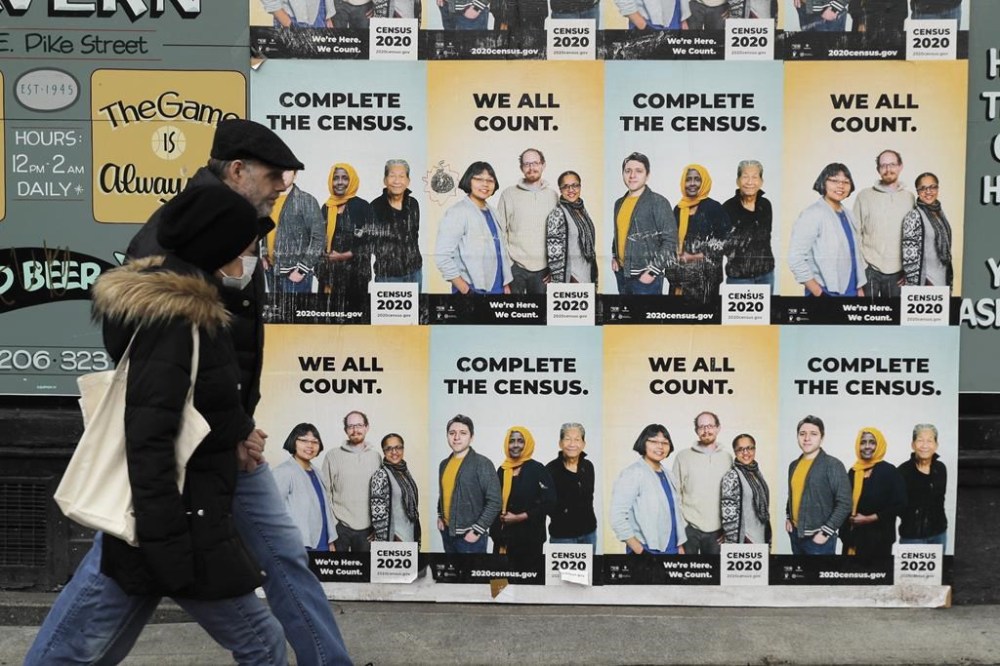
The Census Bureau’s statement was made in response to a paper published last month by two Princeton University sociologists which argued that the 276% increase from 2010 to 2020 in people classified as multiracial was largely due to a change in how people were classified by census officials rather than strong shifts in racial or ethnic identity or major growth. The Census Bureau for the first time provided space on the census form for people to write in their families’ origins, which guided how the statistical agency categorized them by race.
People classified as being two or more races rose from 2.9% to 10.2% of the U.S. population from 2010 to 2020, and the increase was most noticeable among Hispanic people. The share of the “white alone” population dropped from 72.4% to 61.6%
Some researchers have argued that census officials should rerun the 2020 data using the 2010 method so an “apples to apples” comparison of demographic changes can be made. But the Census Bureau said that doing so would lead to an inaccurate comparison because the 2020 census had more write-in areas and collected more responses than the 2010 census.
Princeton sociologist Paul Starr, a co-author of the paper, said Thursday in an email that the bureau could just make the data available so researchers can make their own judgments on the impact of the methodological changes. The bureau’s response also didn’t address the Princeton sociologists’ arguments that the statistical agency equated “origins” with racial identity and national origins with a specific race, Starr said.
Andrew Beveridge, a sociology professor at Queens College and the CUNY Graduate School and University Center, said that while bureau officials call the new method an improvement they still aren’t willing to show how much of the change in the multiracial count was caused by them.
“As one survey methodologist said to me, this constitutes ‘survey method malpractice,’ ” Beveridge said.
___ Follow Mike Schneider on the social platform X: @MikeSchneiderAP.