

Indian police volunteer convicted of rape, murder of a trainee doctor that led to protests
Advertisement
Read this article for free:
or
Already have an account? Log in here »
To continue reading, please subscribe:

Digital Subscription
One year of digital access for only $205*
- Enjoy unlimited reading on winnipegfreepress.com
- Read the E-Edition, our digital replica newspaper
- Access News Break, our award-winning app
- Play interactive puzzles
*First annual payment billed as $205.00 + GST for one year. This annual subscription will automatically renew at $233.00 + GST every 52 weeks (10% off the regular annual price of $259.35). Offer available to new and qualified returning subscribers only. Cancel any time.
To continue reading, please subscribe:
Add Free Press access to your Brandon Sun subscription for only an additional
$1 for the first 4 weeks*
- Enjoy unlimited reading on winnipegfreepress.com
- Read the E-Edition, our digital replica newspaper
- Access News Break, our award-winning app
- Play interactive puzzles
*Your next Brandon Sun subscription payment will increase by $1.00 and you will be charged $17.95 plus GST for four weeks. After four weeks, your payment will increase to $24.95 plus GST every four weeks.
Read unlimited articles for free today:
or
Already have an account? Log in here »
Hey there, time traveller!
This article was published 18/01/2025 (630 days ago), so information in it may no longer be current.
NEW DELHI (AP) — An Indian court on Saturday found a police volunteer guilty for the rape and murder of a trainee doctor, a crime that sparked countrywide protests and hospital strikes last year amid renewed concerns over lack of safety for women.
The killing of the 31-year-old physician while she was on duty at a hospital in the eastern city of Kolkata in August highlighted once again the chronic issue of violence against women in the country. The trial in the case was fast-tracked through India’s notoriously sluggish legal system and arguments began in November.
Judge Anirban Das said the sentence for 33-year-old Sanjay Roy will be announced on Monday and could range from life imprisonment to the death penalty.
Police discovered the bloodied body of the woman at the city’s R.G. Kar Medical College and Hospital’s seminar hall on Aug. 9. An autopsy later found the victim had been strangled and confirmed sexual assault.
Roy was arrested a day after the crime. He has since consistently maintained his innocence and told the court that he was not guilty.
The case was initially being investigated by the Kolkata police but later the court handed over the probe to federal investigators after state government officers were accused of mishandling the investigation.
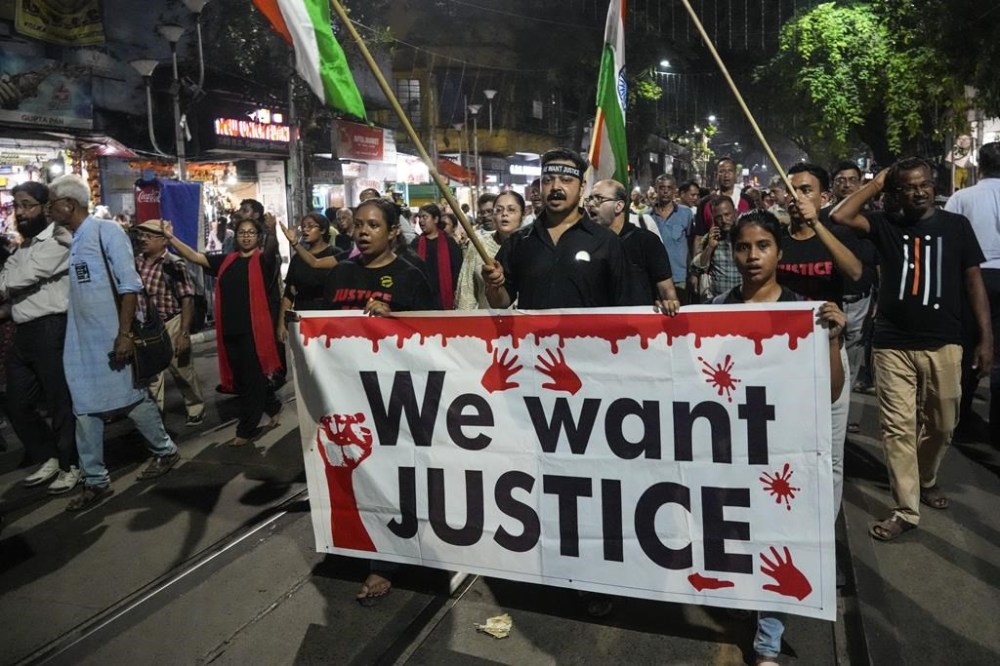
After the incident, doctors and medical students across India held protests and rallies demanding justice and better security for them. Thousands of women across the country also protested on the streets, demanding justice for the victim as they participated in “Reclaim The Night” marches. Some protesters called for the perpetrator of the crime to be given the death penalty.
The incident highlighted rising sexual violence against women in India and prompted India’s Supreme Court to set up a national task force that suggested ways to enhance safety measures in government hospitals.
Many cases of crimes against women go unreported in India due to the stigma surrounding sexual violence, as well as a lack of faith in the police. Women’s rights activists say the problem is particularly acute in rural areas, where the community sometimes shames victims of sexual assault and families worry about their social standing.
Still, the number of recorded rape cases in the country has increased. In 2022, police recorded 31,516 reports of rape — a 20% jump from 2021, according to the National Crime Records Bureau.
In 2012, the gang rape and killing of a 23-year-old student on a New Delhi bus galvanized massive protests across India. It inspired lawmakers to order harsher penalties for such crimes, as well as the creation of fast-track courts dedicated to rape cases. The government also introduced the death penalty for repeat offenders.
The rape law amended in 2013 also criminalized stalking and voyeurism and lowered the age at which a person can be tried as an adult from 18 to 16.