

Extreme cold and snow across the South isn’t a threat to most native plants and animals, experts say
Advertisement
Read this article for free:
or
Already have an account? Log in here »
To continue reading, please subscribe:
Monthly Digital Subscription
$1 per week for 24 weeks*
- Enjoy unlimited reading on winnipegfreepress.com
- Read the E-Edition, our digital replica newspaper
- Access News Break, our award-winning app
- Play interactive puzzles
*Billed as $4.00 plus GST every four weeks. After 24 weeks, price increases to the regular rate of $19.95 plus GST every four weeks. Offer available to new and qualified returning subscribers only. Cancel any time.
Monthly Digital Subscription
$4.99/week*
- Enjoy unlimited reading on winnipegfreepress.com
- Read the E-Edition, our digital replica newspaper
- Access News Break, our award-winning app
- Play interactive puzzles
*Billed as $19.95 plus GST every four weeks. Cancel any time.
To continue reading, please subscribe:
Add Free Press access to your Brandon Sun subscription for only an additional
$1 for the first 4 weeks*
*Your next subscription payment will increase by $1.00 and you will be charged $16.99 plus GST for four weeks. After four weeks, your payment will increase to $23.99 plus GST every four weeks.
Read unlimited articles for free today:
or
Already have an account? Log in here »
Hey there, time traveller!
This article was published 21/01/2025 (429 days ago), so information in it may no longer be current.
About 8 inches (20 centimeters) of snow covered the ground and plants outside Braden Doucet’s Lafayette, Louisiana, home Tuesday afternoon.
It’s also cold. Much colder than normal. The temperature Tuesday night is expected to sink to 12 degrees F (minus 11 Celsius) and evening lows are predicted to be below freezing through Friday.
For people, the freeze and snow have brought most things to a standstill. But wildlife natives like cypress trees and prairie plants, and cold-blooded gators and snakes, should be alright.
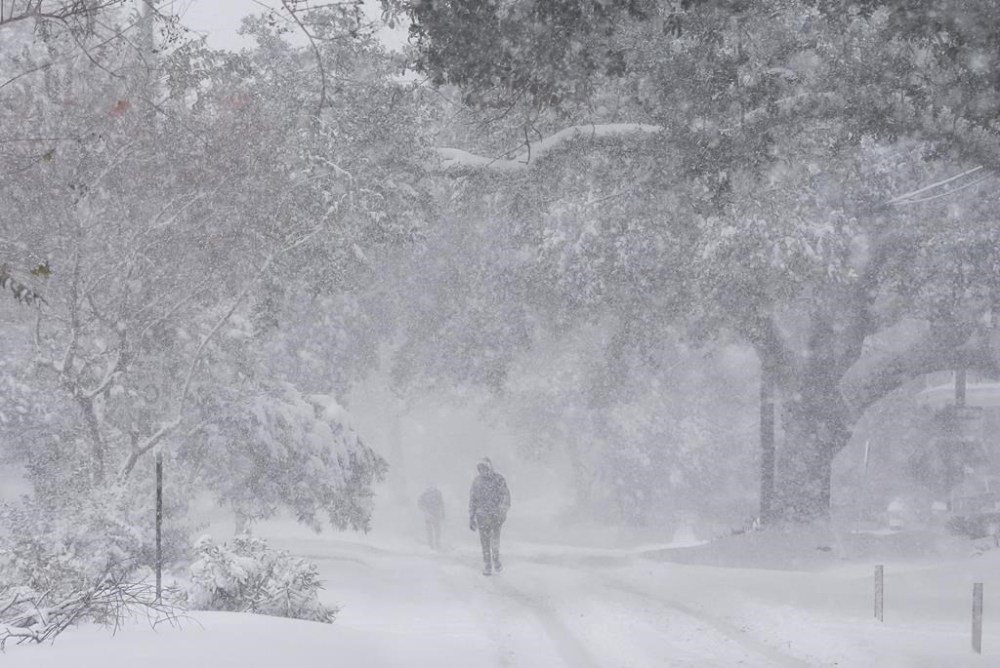
“I’ve never seen snow like this in Louisiana, for sure,” said Doucet, a graduate student at the University of Louisiana at Lafayette who works in a climate change adaptation lab for plants.
“You might see a couple dead plants, but as a rule, most plants should be fine,” Doucet added. “The individual plants, themselves, haven’t seen this level of snowfall and extreme weather, but the populations of these native plants have been here for millennia. They have evolved in this ecological context. In terms of a plant population, a hundred years is nothing. Their genetics have good memory.”
Phyllis Baudoin Griffard, a retired biology professor at the school, says it’s all about “evolution and adaptions” when it comes to plants.
“While this has been a (once in a) hundred-year snow — this is a big deal and we’re all just delighting in it — biology works on a bigger scale,” Griffard said. “All the species of plants have experienced extremes. On the surface, things are going to look beat up. It will look dead, just like up North, but it will bounce back.”
But Griffard is not sure how Spanish moss, which drapes oak and cypress trees in swampy areas, will respond to this week’s extremes.
“They’re kind of picky,” she said of Spanish moss — which really isn’t a moss. “They are a green plant, a flowering plant. It’s not the freeze so much. I don’t know what its adaptations are with dealing with snow,” Griffard said.
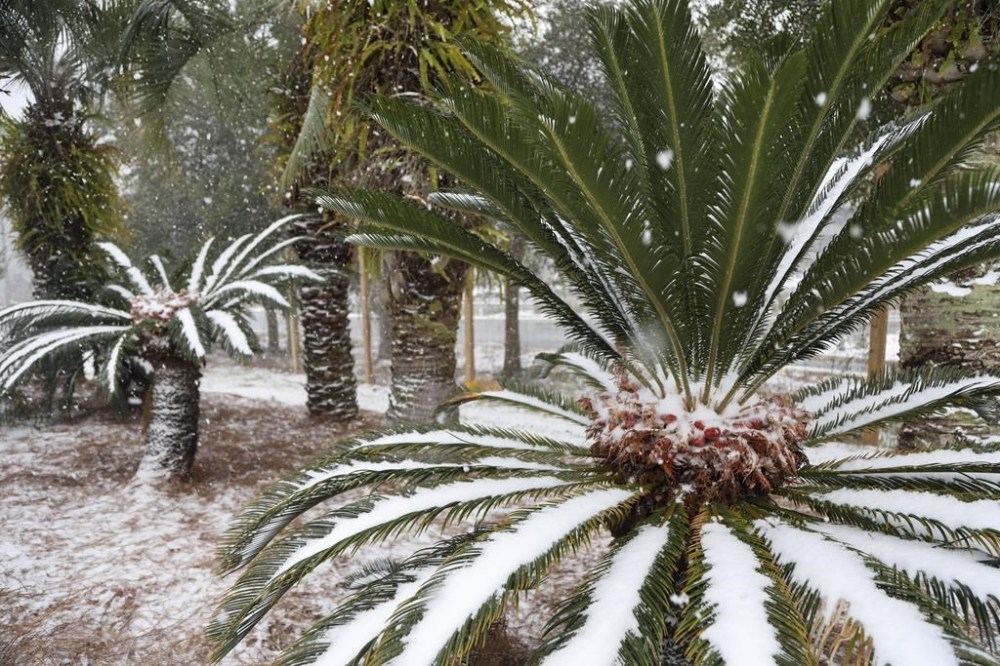
Florida’s native plants also should make it through the cold stretch, according to Mark Tancig, a horticulture extension agent in Florida’s Leon County.
Native plants are used to the cold, even when the temperature gets this low, he added.
“They’re used to the heat,” Tancig said. “They are adapted to bugs, to the diseases and fungus. Everything that’s naturally occurring, they found a way to live with all that.”
The temperature in Houston is expected to drop to 18 degrees F (minus 7.7 Celsius) Tuesday night. Kevin Hodge is one of 66 staffers who will stay the night at the Houston Zoo to make sure its animals are cared for and kept warm.
Hodge, vice president of animal programs, said the facility is closed to the public through Wednesday but that some workers have been there since Monday afternoon.
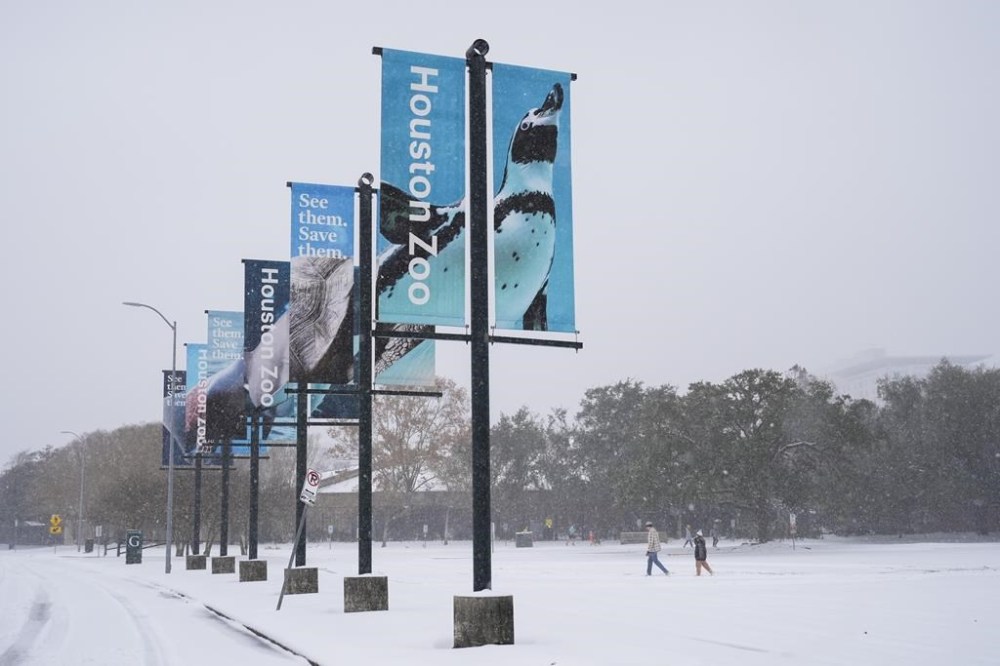
The zoo has indoor facilities where its animals can seek shelter and warmth. The zoo also has generators on hand in case the power is interrupted.
But there are some species living in the wild around Houston and along the Gulf Coast that can be at risk, according to Hodge.
“Sea turtles are one of the ones we worry about when there is a sudden change in temperature,” he said. “If it changes rapidly overnight … they can get cold-stunned.”
Hodge says the zoo partners with U.S. Fish and Wildlife and the Gulf Center for Sea Turtle Research to rescue the turtles and give them veterinary care before they are released when the weather warms.
Other animals in the wild like skunks, possums, raccoons, nutria and shorebirds should be okay and usually will just “ride” the drop in temperatures out, he added.
“Snakes will normally go underneath logs, branches, holes in the ground underneath rocks,” Hodge said. “When the temperature drops, so does the snake’s breathing and heart rate. They go into a mild hibernation. They always seem to do just fine.”
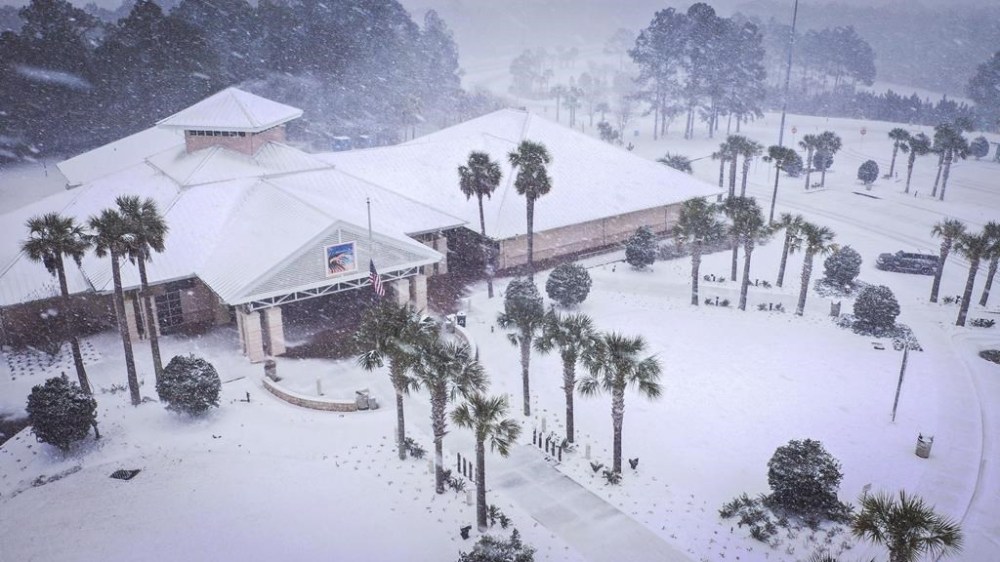
Even Miami, the sunniest part of Florida, may not be immune to the cold surge that could arrive later this week. If temperatures drop below 40 F (5 C), iguanas could start dropping from trees. The cold-blooded reptiles become immobilized until temperatures increase enough for them to move around again.
“Cold weather can kill them, if you define cold as something below 40 over the long term,” said Tom Portuallo, owner of Blue Iguana Pest Control. “If it’s a healthy iguana, one night won’t matter.”