

Long forgotten, Black servicemen who died in WWI are finally honored with a memorial in South Africa
Advertisement
Read this article for free:
or
Already have an account? Log in here »
To continue reading, please subscribe:
Monthly Digital Subscription
$1 per week for 24 weeks*
- Enjoy unlimited reading on winnipegfreepress.com
- Read the E-Edition, our digital replica newspaper
- Access News Break, our award-winning app
- Play interactive puzzles
*Billed as $4.00 plus GST every four weeks. After 24 weeks, price increases to the regular rate of $19.95 plus GST every four weeks. Offer available to new and qualified returning subscribers only. Cancel any time.
Monthly Digital Subscription
$4.99/week*
- Enjoy unlimited reading on winnipegfreepress.com
- Read the E-Edition, our digital replica newspaper
- Access News Break, our award-winning app
- Play interactive puzzles
*Billed as $19.95 plus GST every four weeks. Cancel any time.
To continue reading, please subscribe:
Add Free Press access to your Brandon Sun subscription for only an additional
$1 for the first 4 weeks*
*Your next subscription payment will increase by $1.00 and you will be charged $16.99 plus GST for four weeks. After four weeks, your payment will increase to $23.99 plus GST every four weeks.
Read unlimited articles for free today:
or
Already have an account? Log in here »
Hey there, time traveller!
This article was published 22/01/2025 (428 days ago), so information in it may no longer be current.
CAPE TOWN, South Africa (AP) — The names are carved on poles of African hardwood that are set upright as if reaching for the sun. No one knows where the men they represent were buried.
But their names, forgotten for more than a century, have been revived and are now written in the records of history.
Black South African servicemen who died in non-combat roles on the Allied side during World War I and have no known grave have been recognized with a memorial featuring 1,772 names.
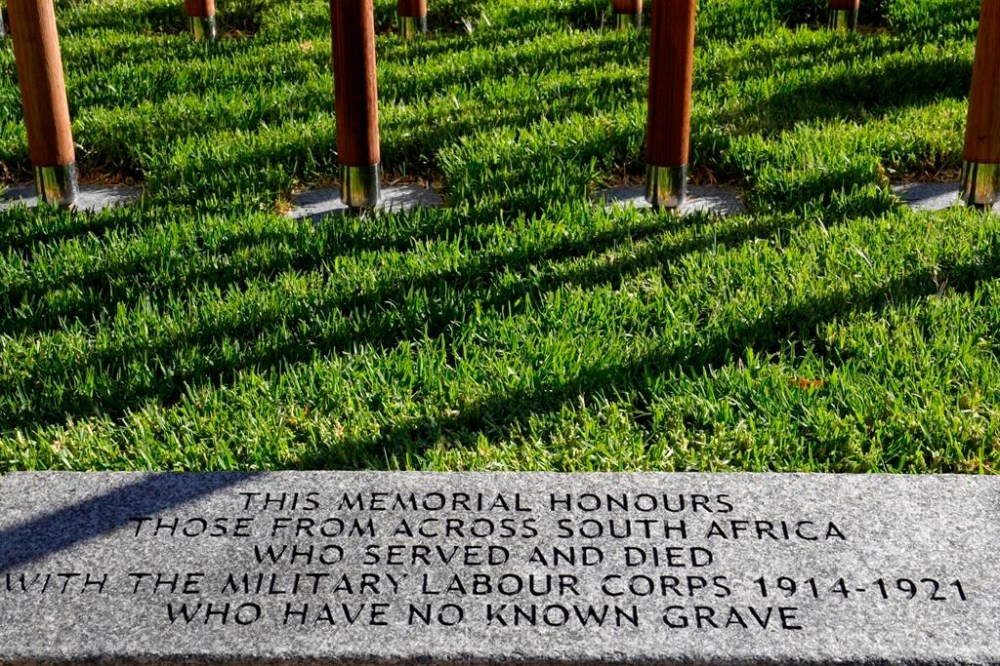
An inscription on a granite block at the memorial in Cape Town says: “Your legacies are preserved here.”
Because they were Black, they were not allowed to carry arms. They were members of the Cape Town Labor Corps, transporting food, ammunition and other supplies and building roads and bridges during the Great War.
They didn’t serve in Europe but in the fringe battles in Africa, where Allied forces fought in the then-German colonies of German South West Africa (now Namibia) and German East Africa (now Tanzania).
The men made the same ultimate sacrifice as around 10 million others who died serving in armies in the 1914-1918 war.
After the war, they were not recognized because of the racial policies of British colonialism and then South Africa’s apartheid regime.
The memorial finally rights a historical wrong, said the Commonwealth War Graves Commission, the British organization that looks after war graves and built the new memorial in Cape Town’s oldest public garden.
The memorial was opened Wednesday by Britain’s Princess Anne, the commission’s president.
“It ensures the names and stories of those who died will echo in history for future generations,” Princess Anne said. “It is important to recognize that those we have come to pay tribute to have gone unacknowledged for too long. We will remember them.”
When her speech ended, a lone soldier played “The Last Post” on his bugle to commemorate the Black servicemen as war dead, 106 years, two months and 11 days after the end of World War I.
While South Africa has several memorials dedicated to its white soldiers who died in both world wars, the Black servicemen’s contribution was ignored for decades.
It was in danger of being lost forever until a researcher found evidence of their service in South African army documents around 10 years ago, said Commonwealth War Graves Commission operational manager David McDonald, who oversaw the South African project.
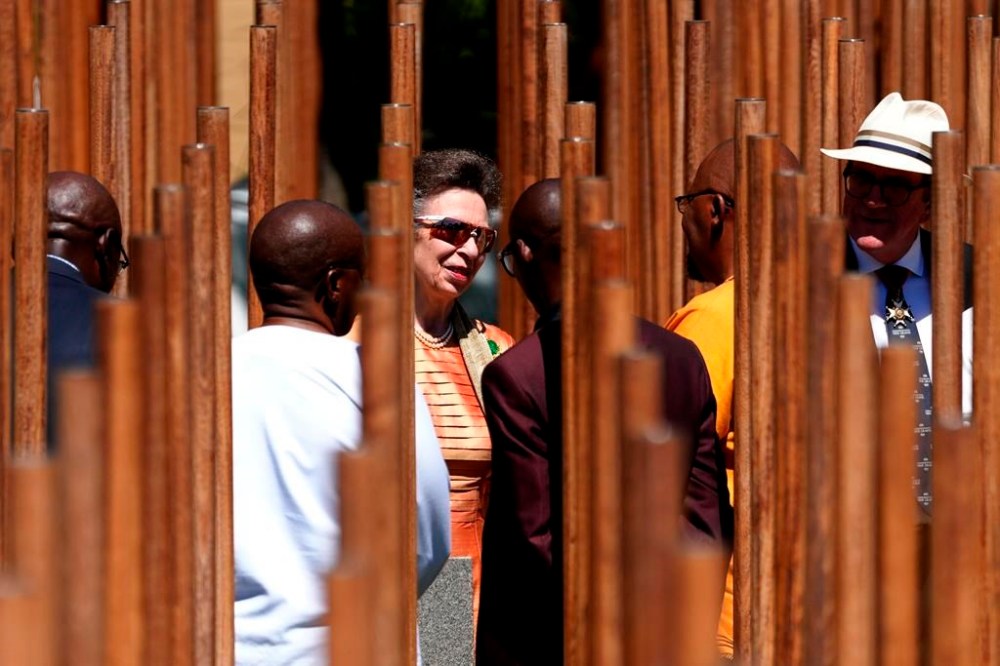
Researchers discovered the more than 1,700 Black servicemen. It also led the commission to the families of six of the dead, most of them from deeply rural South African regions.
Four of those families were represented at Wednesday’s ceremony. They laid wreaths at the foot of the memorial and were able to touch the individual poles dedicated to their lost relatives and where their names are inscribed.
“It made us very proud. It made us very happy,” said Elliot Malunga Delihlazo, whose great-grandfather, Bhesengile, was among those honored.
Delihlazo said his family only knew that Bhesengile went to war and never came back.
“Although it pains us … that we can’t find the remains, at last we know that he died in 1917,” Delihlazo said. “Now the family knows. Now, at last, we know.”
___
AP Africa news: https://apnews.com/hub/africa