

A golden spike that completed the Alaska Railroad is up for auction. Alaskans want to bring it home
Advertisement
Read this article for free:
or
Already have an account? Log in here »
To continue reading, please subscribe:

Digital Subscription
One year of digital access for only $205*
- Enjoy unlimited reading on winnipegfreepress.com
- Read the E-Edition, our digital replica newspaper
- Access News Break, our award-winning app
- Play interactive puzzles
*First annual payment billed as $205.00 + GST for one year. This annual subscription will automatically renew at $233.00 + GST every 52 weeks (10% off the regular annual price of $259.35). Offer available to new and qualified returning subscribers only. Cancel any time.
To continue reading, please subscribe:
Add Free Press access to your Brandon Sun subscription for only an additional
$1 for the first 4 weeks*
- Enjoy unlimited reading on winnipegfreepress.com
- Read the E-Edition, our digital replica newspaper
- Access News Break, our award-winning app
- Play interactive puzzles
*Your next Brandon Sun subscription payment will increase by $1.00 and you will be charged $17.95 plus GST for four weeks. After four weeks, your payment will increase to $24.95 plus GST every four weeks.
Read unlimited articles for free today:
or
Already have an account? Log in here »
Hey there, time traveller!
This article was published 23/01/2025 (615 days ago), so information in it may no longer be current.
ANCHORAGE, Alaska (AP) — President Warren G. Harding drove a golden spike into the final coupling of the Alaska Railroad more than a century ago, a ceremonial act that marked the launch of a system to easily bring coal and other natural resources out of the wilderness.
Harding would die of a massive heart attack just a few days later, on his way back to Washington, D.C. The spike he pounded with such fanfare — weighing nearly a pound and valued at up to $50,000 — has been in private hands outside of the state ever since.
Now, two Alaska institutions want to bring that piece of history home. The Anchorage Museum, with financial backing from the Alaska Railroad, will bid on the 14-karat solid gold spike when it goes up for auction Friday in New York as part of the Christie’s Important Americana collection, said Aaron Leggett, the museum’s senior curator of Alaska history and Indigenous cultures.
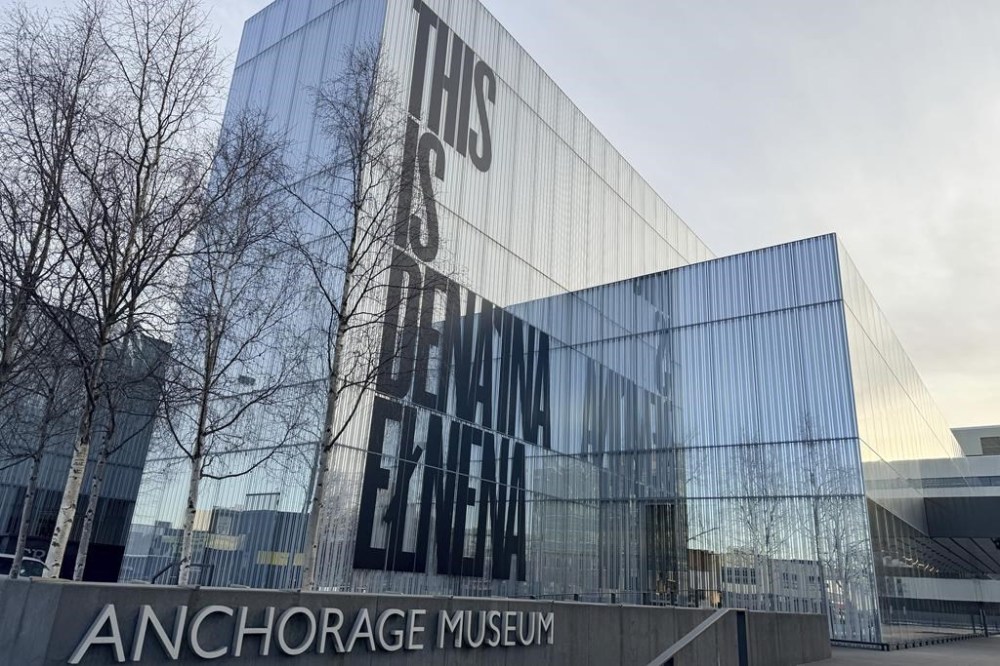
“The whole history of our state and really the whole history of this town begins with the Alaska Railroad,” Leggett said of Alaska and its biggest city, Anchorage.
The 5 1/2-inch (14-centimeter) spike is being offered by an unidentified California resident who has owned it since 1983. The Alaska Railroad, originally constructed, owned and operated by the federal government, was sold to the state for $22 million in 1985.
The railroad was built to open what was then the Alaska territory to development. It connected Seward, a Pacific Ocean port city on the south-central coast, to Fairbanks, 470 miles (756 kilometers) away in interior Alaska.
The construction project lasted from 1914 to 1923. Laying tracks across the untamed Alaska wilderness had a “transformational impact on the last century of Alaska’s history,” said Meghan Clemens, the railroad’s director of external affairs. Alaska would not become a state until 1959.
Even today, there are few highways in the nation’s largest state; one of the busiest is along the same passenger and freight rail corridor from Seward to Fairbanks. About 75% of Alaska’s 740,000 residents also live along that stretch, called the rail belt, which Clemens said is a testament to how instrumental the railroad has been to the economic development and growth of Alaska.
“Anchorage, as we know it today, would not exist were it not for the fact that the Alaska Railroad selected Anchorage as the headquarters,” Leggett said. The logical choice would have been Seward, but the government instead chose a muddy site along Ship Creek in what is now downtown Anchorage.
U.S. Army Col. Frederick Mears worked as an engineer on the construction of the Panama Canal. His work there caught the eye of President Woodrow Wilson, who had plans for a new railroad for the Alaska territory. In his 1913 State of the Union address, Wilson touted the railroad as key to providing access to Alaska’s coal and other minerals.
With the project nearly complete, the Army sent Mears to Seattle in March 1923, four months before Harding’s visit. Before Mears left, the city of Anchorage presented him with the golden spike in appreciation of his work. He sent the spike back from Seattle for the Harding event in Nenana, a community in interior Alaska. Harding was the first president to visit Alaska.
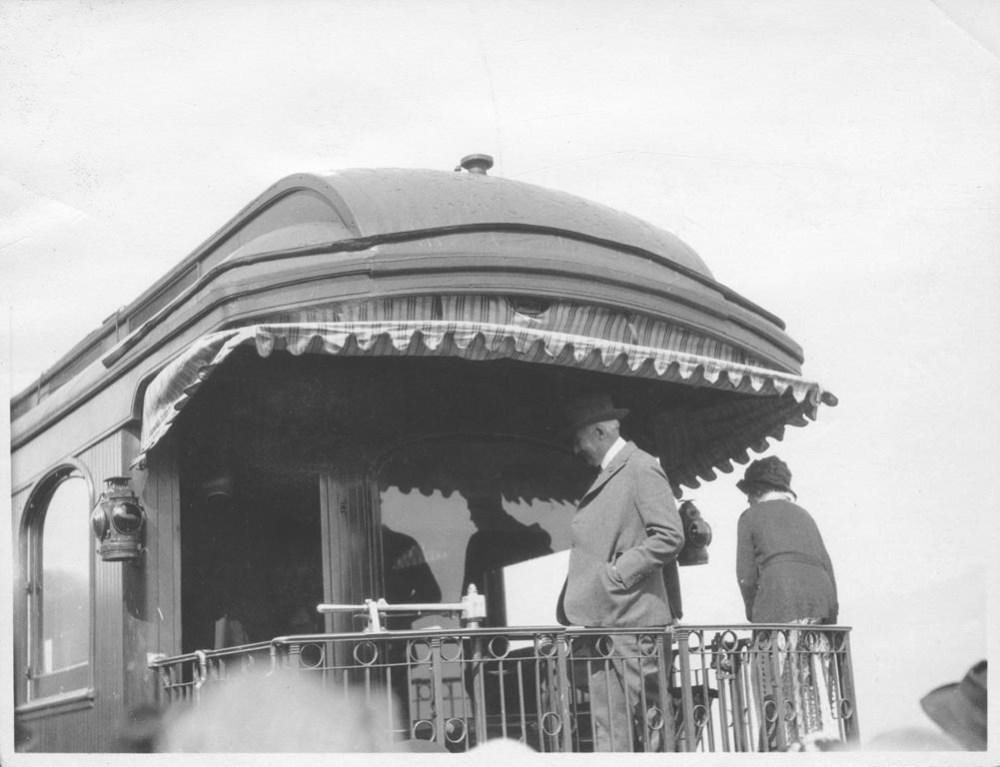
During the ceremonial launch of the railroad on July 15, 1923, Harding lightly tapped the golden spike twice with a maul, a hammer now behind glass at the railroad headquarters, before driving a regular spike. Shortly after, the golden spike was returned to Mears, and Harding began the long trip back to Washington. He suffered a fatal heart attack and died in San Francisco on Aug. 2, 1923.
Since then, the spike has remained out of the public eye, except for a brief display during the 1967 centennial of the U.S. purchase of Alaska from Russia.
It’s in perfect condition, and shows little evidence of where it was tapped, said Christopher June, a junior specialist at Christie’s who grew up in Anchorage and remembers field trips on the Alaska Railroad as a child.
“I think it definitely has a lot of interest and importance to the state,” June said. “I would not be surprised at all if the eventual buyer was Alaskan.”