

German opposition leader plans migration proposals to parliament in risky pre-election move
Advertisement
Read this article for free:
or
Already have an account? Log in here »
To continue reading, please subscribe:
Monthly Digital Subscription
$1 per week for 24 weeks*
- Enjoy unlimited reading on winnipegfreepress.com
- Read the E-Edition, our digital replica newspaper
- Access News Break, our award-winning app
- Play interactive puzzles
*Billed as $4.00 plus GST every four weeks. After 24 weeks, price increases to the regular rate of $19.95 plus GST every four weeks. Offer available to new and qualified returning subscribers only. Cancel any time.
Monthly Digital Subscription
$4.99/week*
- Enjoy unlimited reading on winnipegfreepress.com
- Read the E-Edition, our digital replica newspaper
- Access News Break, our award-winning app
- Play interactive puzzles
*Billed as $19.95 plus GST every four weeks. Cancel any time.
To continue reading, please subscribe:
Add Free Press access to your Brandon Sun subscription for only an additional
$1 for the first 4 weeks*
*Your next subscription payment will increase by $1.00 and you will be charged $16.99 plus GST for four weeks. After four weeks, your payment will increase to $23.99 plus GST every four weeks.
Read unlimited articles for free today:
or
Already have an account? Log in here »
Hey there, time traveller!
This article was published 24/01/2025 (427 days ago), so information in it may no longer be current.
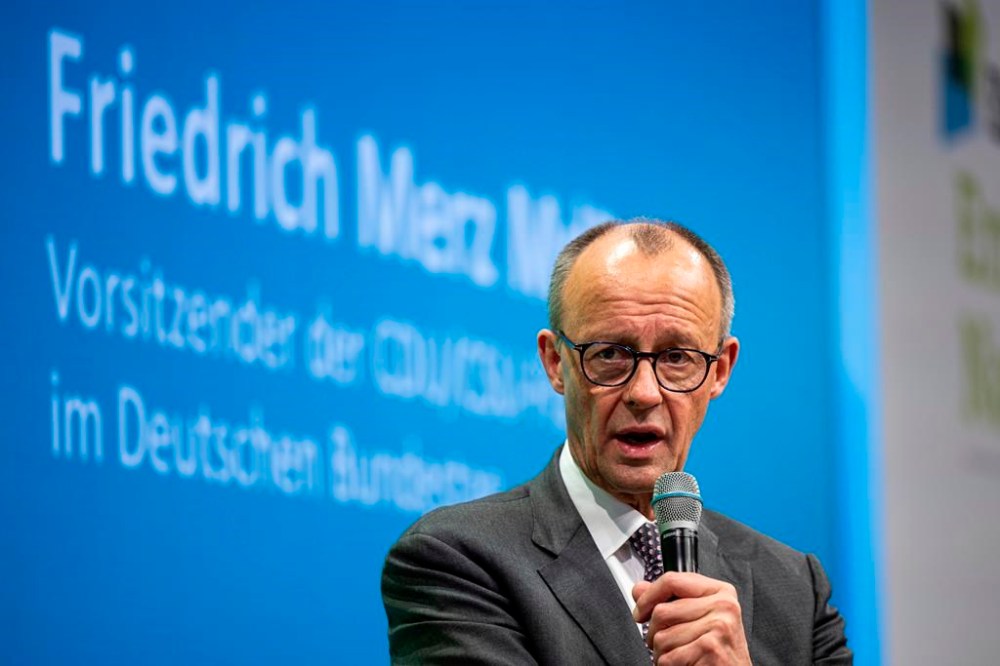
BERLIN (AP) — Germany’s opposition leader said Friday his party will bring motions to toughen migration policy to parliament next week in one of its last sessions before the country’s election, a risky move if they go to a vote and pass with the help of a far-right party.
Friedrich Merz, whose center-right Union bloc leads polls ahead of Germany’s Feb. 23 election, vowed Thursday to bar people from entering the country without proper papers and to step up deportations if he is elected chancellor. Those comments came after a knife attack in Aschaffenburg by a rejected asylum-seeker, which left a man and a 2-year-old boy dead, spilled over into the election campaign.
On Friday, he said that the Union will bring motions to parliament next week “that correspond solely to our conviction” and added: “We will introduce them independently of who approves them.”
That potentially leaves Merz open to accusations of breaking longstanding pledges not to work directly or indirectly with the far-right and anti-immigration Alternative for Germany, or AfD. The party is polling strongly and has long called on the Union to abandon the “firewall” that it and other mainstream parties have vowed to maintain against it.
Merz said his position toward AfD remains clear and his party won’t approve any AfD motion, won’t go into government or work with it and won’t negotiate with it on any motions. His bloc insisted that it is looking for votes from other mainstream parties.
Merz didn’t specify exactly what would be in the proposals. Motions can urge the government or parliament to take action, but are nonbinding
It’s also not clear whether any vote will actually happen before the election. Motions and bills usually have three readings before lawmakers vote on them, a process that typically stretches over weeks and can only be shortened with a vote by a two-thirds majority.
The general secretary of Chancellor Olaf Scholz’s center-left Social Democrats warned of a potential “political dam breach.”
Matthias Miersch told German news agency dpa that there had been a consensus among mainstream parties weeks ago that no laws should be agreed with AfD votes, but “apparently Friedrich Merz is now terminating this consensus and not only breaking through the firewall but sending a disastrous signal.”
Center-left parties that Merz may need to form a coalition government have cast doubt on the feasibility of his migration demands.