

Front-runner in German election says his party will ‘never’ work with the far right
Advertisement
Read this article for free:
or
Already have an account? Log in here »
To continue reading, please subscribe:
Monthly Digital Subscription
$1 per week for 24 weeks*
- Enjoy unlimited reading on winnipegfreepress.com
- Read the E-Edition, our digital replica newspaper
- Access News Break, our award-winning app
- Play interactive puzzles
*Billed as $4.00 plus GST every four weeks. After 24 weeks, price increases to the regular rate of $19.95 plus GST every four weeks. Offer available to new and qualified returning subscribers only. Cancel any time.
Monthly Digital Subscription
$4.99/week*
- Enjoy unlimited reading on winnipegfreepress.com
- Read the E-Edition, our digital replica newspaper
- Access News Break, our award-winning app
- Play interactive puzzles
*Billed as $19.95 plus GST every four weeks. Cancel any time.
To continue reading, please subscribe:
Add Free Press access to your Brandon Sun subscription for only an additional
$1 for the first 4 weeks*
*Your next subscription payment will increase by $1.00 and you will be charged $16.99 plus GST for four weeks. After four weeks, your payment will increase to $23.99 plus GST every four weeks.
Read unlimited articles for free today:
or
Already have an account? Log in here »
Hey there, time traveller!
This article was published 03/02/2025 (418 days ago), so information in it may no longer be current.
BERLIN (AP) — The front-runner in Germany’s upcoming election said Monday that the far-right Alternative for Germany is his “most important opponent” and his party will “never” work with it, following a week in which he was accused of breaking a taboo on dealing with the far right.
Center-right opposition leader Friedrich Merz’s Union bloc has been leading polls ahead of the Feb. 23 election. But he drew protests after he put a motion to parliament last week calling for Germany to turn back many more migrants at its borders. It passed narrowly thanks to support from the far-right party.
That was a first that prompted strong criticism from his opponents and a public rebuke from ex-Chancellor Angela Merkel, who once led his own party. Tens of thousands of protesters took to the streets over the weekend.
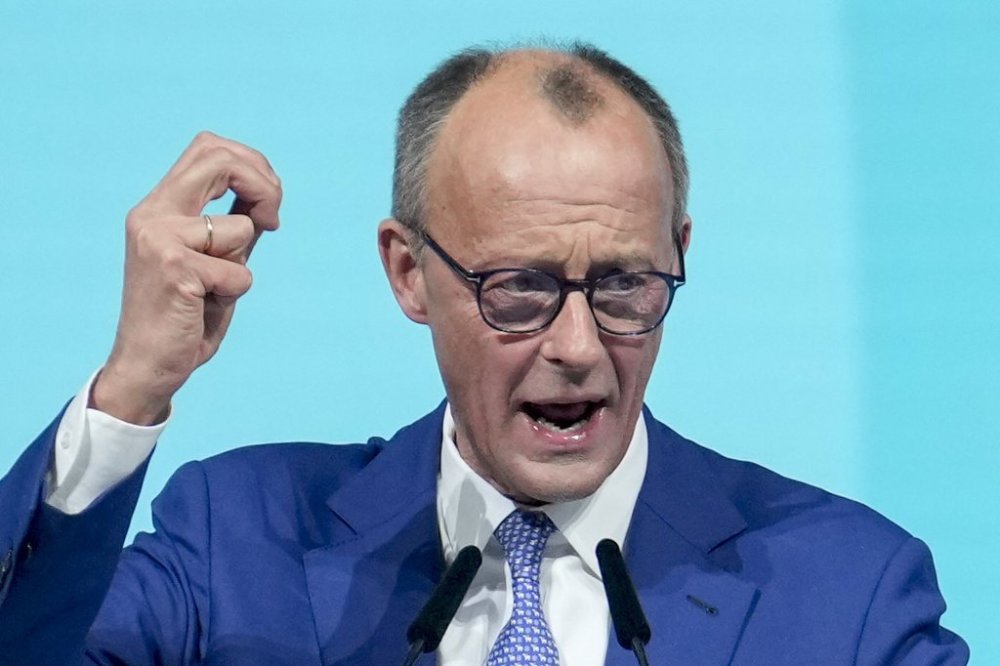
Merz, determined to prove his party’s commitment to a tougher approach to migration, rejects the criticism. He says his position is unchanged and that he didn’t and won’t work with Alternative for Germany (AfD), which is in second place in recent polls. He points the finger at the center-left governing parties for being unwilling to approve changes to migration rules.
“I can assure voters in Germany very clearly of one thing: We will not work with the party that calls itself Alternative for Germany — not before (the election), not after, never,” he told a convention of his Christian Democratic Union on Monday, to applause. “This party stands against everything our party and our country built up in Germany over the past years and decades. It stands against our Western orientation, it stands against the euro, it stands against NATO.”
“It is the most important opponent for us in this election campaign — we want to make it small again,” Merz said to applause, adding that there won’t be a minority government with its support or any other variation on cooperation. “There are no ifs, there are no buts.”
The governing parties say Merz broke his word not to allow any measures to pass thanks to AfD’s votes in an outgoing parliament in which there are no clear majorities. Chancellor Olaf Scholz has suggested Merz can no longer be trusted not to form a government with AfD, which Merz angrily denies.
“We are being attacked, and there are protests against our policy,” he said Monday, but “it’s important to hold our course” on migration.