

UN food agency worker dies in a Yemeni prison after being detained by Houthi rebels
Advertisement
Read this article for free:
or
Already have an account? Log in here »
To continue reading, please subscribe:
Monthly Digital Subscription
$1 per week for 24 weeks*
- Enjoy unlimited reading on winnipegfreepress.com
- Read the E-Edition, our digital replica newspaper
- Access News Break, our award-winning app
- Play interactive puzzles
*Billed as $4.00 plus GST every four weeks. After 24 weeks, price increases to the regular rate of $19.95 plus GST every four weeks. Offer available to new and qualified returning subscribers only. Cancel any time.
Monthly Digital Subscription
$4.99/week*
- Enjoy unlimited reading on winnipegfreepress.com
- Read the E-Edition, our digital replica newspaper
- Access News Break, our award-winning app
- Play interactive puzzles
*Billed as $19.95 plus GST every four weeks. Cancel any time.
To continue reading, please subscribe:
Add Free Press access to your Brandon Sun subscription for only an additional
$1 for the first 4 weeks*
*Your next subscription payment will increase by $1.00 and you will be charged $16.99 plus GST for four weeks. After four weeks, your payment will increase to $23.99 plus GST every four weeks.
Read unlimited articles for free today:
or
Already have an account? Log in here »
Hey there, time traveller!
This article was published 11/02/2025 (410 days ago), so information in it may no longer be current.
CAIRO (AP) — The United Nations World Food Program said Tuesday one of its staffers has died in a Yemeni prison three weeks after his detention by Houthi rebels.
The announcement came a day after the U.N. suspended its operations in the rebel’s stronghold in northern Yemen, over security concerns following the detentions of dozens of U.N. workers and others in recent months.
No cause of death was given in the World Food Program statement. The man was one of seven WFP staffers detained by the Houthi rebels on Jan. 23.
“Heartbroken and outraged by the tragic loss of WFP team member, Ahmed, who lost his life while arbitrarily detained in Yemen,” WFP executive director Cindy McCain wrote on the social media platform X.
She said the worker, who is survived by his wife and two children, “played a crucial role in our mission to deliver lifesaving food assistance.”
U.N. Secretary-General António Guterres called the death a “deplorable tragedy” and the continued detention of other staffers for the world body and aid groups “unacceptable.”
“The United Nations is urgently seeking explanations from the Houthi de facto authorities,” he said in a statement. “I call for an immediate, transparent and thorough investigation and for those responsible to be held accountable.”
A Houthi spokesman didn’t immediately respond to requests for comment.
The 40-year-old Yemeni national, who joined the U.N. food agency in 2017, died Monday in a prison in the northern province of Saada, and the circumstances weren’t immediately known, said a WFP official who spoke on condition of anonymity because they were not authorized to speak on the matter.
Security concerns
The U.N. said Monday it was suspending its humanitarian operations in Saada after the Houthis detained eight more U.N. staffers.
A U.N. statement said the “extraordinary” decision to pause all operations and programs in Saada was due to the lack of necessary security conditions and guarantees. It called for the Houthis to release all detained U.N. staff.
The rebels have detained dozens of U.N. staffers as well as people associated with aid groups, civil society and the once-open U.S. Embassy in Sanaa, Yemen’s capital, accusing them of espionage — charges that rights groups call baseless. None of the U.N. staffers has been released.
The U.N. decision will affect the global response to one of the world’s worst humanitarian disasters. Seven U.N, agencies operate in Saada, including WFP, the World Health Organization and UNICEF, along with several international aid organizations, according to the U.N. humanitarian agency.
At least 350,000 people in Saada benefited from U.N.-funded assistance in 2024, including food and other life-saving support to migrants and displaced people, said U.N. spokesman Farhan Haq.
A decade of war
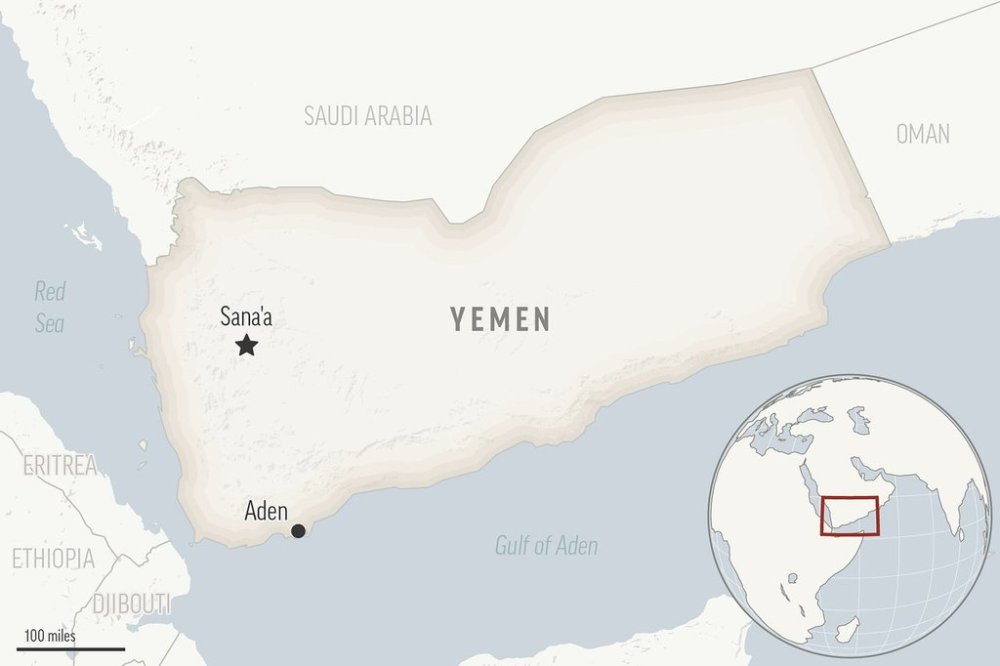
Yemen’s civil war began in 2014, when the Iran-backed Houthi rebels took control of Sanaa and much of the country’s north, forcing the government to flee to the south, then to Saudi Arabia.
A Saudi-led coalition entered the war in March 2015, backed at the time by the U.S., in an effort to restore the internationally recognized government to power.
The war has killed more than 150,000 people including civilians and combatants, and in recent years deteriorated largely into a stalemate.
The U.N. had projected that over 19 million people across Yemen will need humanitarian assistance this year as many deal with climate shocks, malnutrition, cholera and the economic effects of war.