

A free speech dispute over a New England town’s pastry shop painting heads to trial
Advertisement
Read this article for free:
or
Already have an account? Log in here »
To continue reading, please subscribe:

Digital Subscription
One year of digital access for only $205*
- Enjoy unlimited reading on winnipegfreepress.com
- Read the E-Edition, our digital replica newspaper
- Access News Break, our award-winning app
- Play interactive puzzles
*First annual payment billed as $205.00 + GST for one year. This annual subscription will automatically renew at $233.00 + GST every 52 weeks (10% off the regular annual price of $259.35). Offer available to new and qualified returning subscribers only. Cancel any time.
To continue reading, please subscribe:
Add Free Press access to your Brandon Sun subscription for only an additional
$1 for the first 4 weeks*
- Enjoy unlimited reading on winnipegfreepress.com
- Read the E-Edition, our digital replica newspaper
- Access News Break, our award-winning app
- Play interactive puzzles
*Your next Brandon Sun subscription payment will increase by $1.00 and you will be charged $17.95 plus GST for four weeks. After four weeks, your payment will increase to $24.95 plus GST every four weeks.
Read unlimited articles for free today:
or
Already have an account? Log in here »
Hey there, time traveller!
This article was published 12/02/2025 (566 days ago), so information in it may no longer be current.
CONCORD, N.H. (AP) — A First Amendment dispute over a bright painting that shows sunbeams shining down on a mountain range made of sprinkle-covered chocolate and strawberry doughnuts, a blueberry muffin, a cinnamon roll and other pastries is scheduled for trial Thursday.
A federal judge in New Hampshire will consider whether a town is infringing on the free speech rights of the bakery owner who’s displaying the mural over his business.
“I think the whole town is following this story,” said Sean Young, the owner of Leavitt’s Country Bakery in Conway, a community of more than 10,000 people near the White Mountains that draws skiers, nature lovers and shoppers. Some residents want regulations enforced as they worry about overdevelopment in the tourist town.
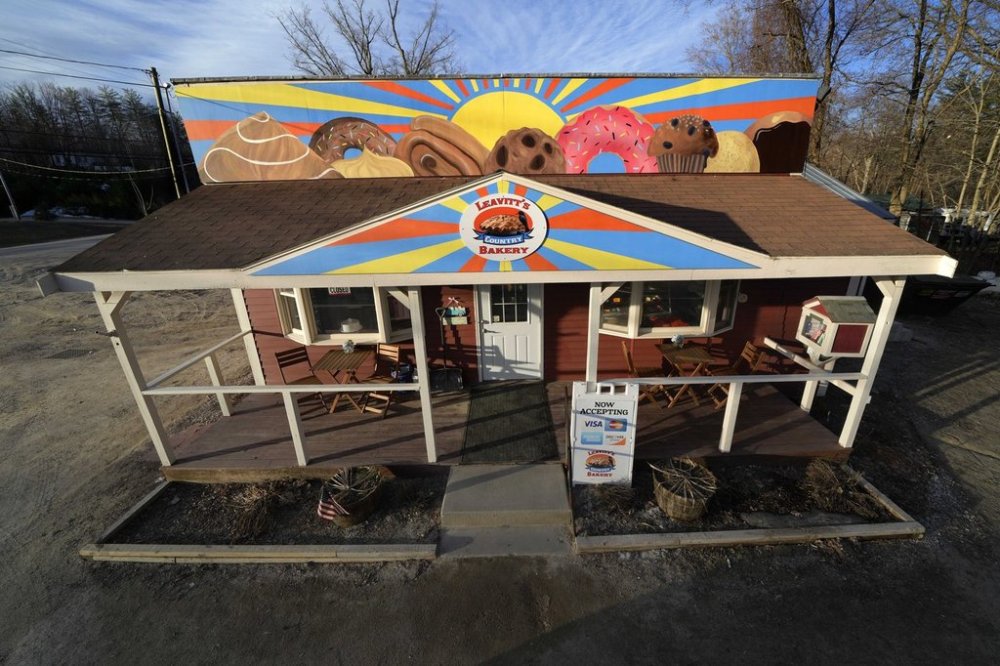
The mural atop the bakery, which was founded over 45 years ago, is a creation of local high school art students. When it went up in June 2022, the painting attracted a lot of compliments and visitors, including one from a town zoning officer.
The zoning board decided that the painting was not so much art as advertising. The board determined it was a sign, and so it could not remain as is because of its size. At about 90 square feet (8.6 square meters), it’s four times bigger than the local sign code allows.
If the painting didn’t show what’s sold inside — baked goods — it wouldn’t be considered a sign and could stay, board members said.
Lawyers for the town say that it has shown that “restricting the size of signs serves the significant government interest of preserving the town’s aesthetics, promoting safety, and ensuring equal enforcement,” according to a court document.
Young was told to modify or remove the painting. Faced with possible misdemeanor criminal charges and fines after his appeals were rejected, he sued the town in federal court in 2023, saying his freedom of speech rights were violated.
“Government officials don’t get to tell people, including entrepreneurs and businesses, what they can and can’t paint,” the Virginia-based Institute for Justice, which is representing Young, said in a news release at the time. “And no one can say with a straight face that Leavitt’s mural would be any safer, healthier or more aesthetically pleasing if it portrayed flowers instead of pastries.”
Young is asking for $1 in damages. His lawyers say the town’s definition of a sign is overly broad and that the town hasn’t shown that anything bad will happen if the painting continues to stay up. It hasn’t been removed.
Part of Conway’s sign code states that the town “has no intention of restricting individual free speech, but the town does recognize its right to place reasonable restrictions upon commercial speech.”
The town has enforced its sign code against other businesses. In 2006, for example, it said an ice cream parlor’s trash cans, which were shaped like ice cream cones, were signs. The business asked for and got permission from the town to use the cans. In another case, a sporting goods store agreed to remove window screens with photos of mountain bikes and skis after the town determined they were signs.
Young’s lawsuit was paused for a few months in 2023 as residents considered revising how the town defines signs, in a way that would have allowed the painting to stay up. But that measure was seen as too broad and complex, and it failed to pass.
Last year, voters passed a new ordinance that requires applicants to meet criteria for art on public and commercial property but it has not applied to Young’s case.