

Germany extends border controls by 6 months as election rivals focus on migration ahead of poll
Advertisement
Read this article for free:
or
Already have an account? Log in here »
To continue reading, please subscribe:
Monthly Digital Subscription
$1 per week for 24 weeks*
- Enjoy unlimited reading on winnipegfreepress.com
- Read the E-Edition, our digital replica newspaper
- Access News Break, our award-winning app
- Play interactive puzzles
*Billed as $4.00 plus GST every four weeks. After 24 weeks, price increases to the regular rate of $19.95 plus GST every four weeks. Offer available to new and qualified returning subscribers only. Cancel any time.
Monthly Digital Subscription
$4.99/week*
- Enjoy unlimited reading on winnipegfreepress.com
- Read the E-Edition, our digital replica newspaper
- Access News Break, our award-winning app
- Play interactive puzzles
*Billed as $19.95 plus GST every four weeks. Cancel any time.
To continue reading, please subscribe:
Add Free Press access to your Brandon Sun subscription for only an additional
$1 for the first 4 weeks*
*Your next subscription payment will increase by $1.00 and you will be charged $16.99 plus GST for four weeks. After four weeks, your payment will increase to $23.99 plus GST every four weeks.
Read unlimited articles for free today:
or
Already have an account? Log in here »
Hey there, time traveller!
This article was published 12/02/2025 (409 days ago), so information in it may no longer be current.
BERLIN (AP) — Germany’s outgoing government on Wednesday extended by six months the border checks it imposed on all its frontiers last fall as it attempts to cut the number of migrants arriving in the country, an issue that has become a top issue in the campaign for the Feb. 23 election.
Chancellor Olaf Scholz said his government notified the European Union’s executive commission of the extension to Sept. 15. “With the border controls, we are pushing irregular migration down successfully. The figures prove this,” he said.
Germany turned back 47,000 people back at its borders, seeing one-third fewer asylum requests year-on-year and arresting 1,900 smugglers.
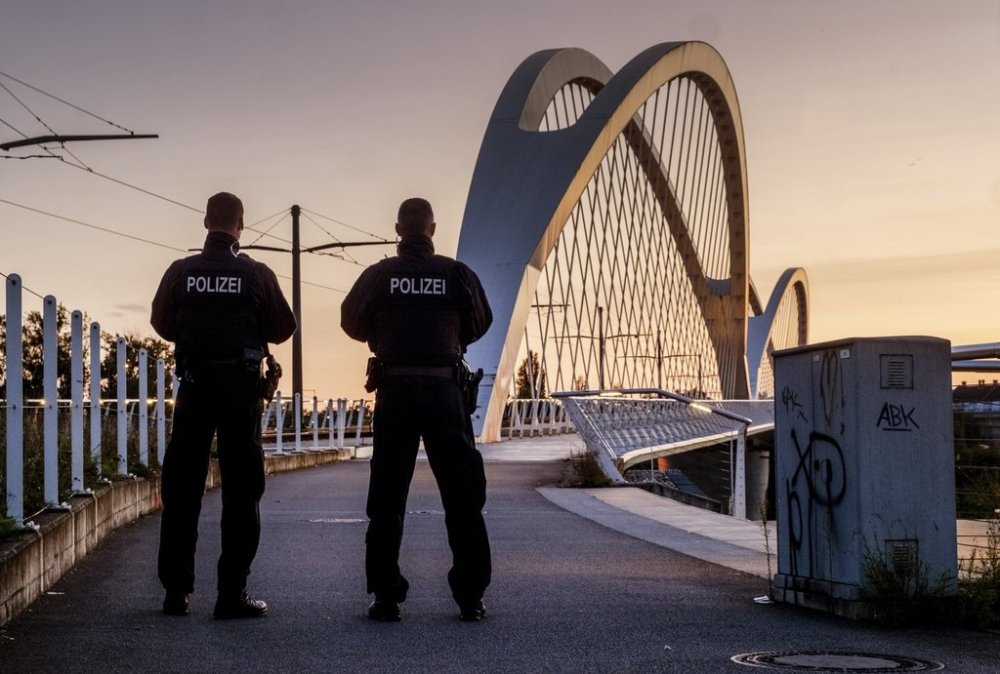
The country was already controlling its borders with Poland, the Czech Republic, Austria and Switzerland before it extended the checks last September to its remaining borders, with France, Luxembourg, the Netherlands, Belgium and Denmark.
The EU has a visa-free travel area known as Schengen that allows citizens of most member states to travel easily across borders for work and pleasure. Switzerland also belongs to Schengen although it is not an EU member.
According to the EU, member states are allowed can temporarily reintroduce border controls in cases of a serious threat, like internal security. But it also says border controls should be applied as a last resort in exceptional situations, and must be limited in time.
German opposition leader Friedrich Merz, the front-runner in the election, wants to go further than the current government. He has said that if he becomes chancellor, he would order the Interior Ministry on his first day in office to control all of Germany’s borders permanently and “turn back all attempts at illegal entry without exception.” He argued that EU rules are “recognizably dysfunctional” and Germany must exert a right to the primacy of national law.
Scholz argues that Merz’s proposal is incompatible with German and EU law and would lead to the EU’s most populous member undermining the bloc.