

Including people without legal status in census has had little impact on House seats, study finds
Advertisement
Read this article for free:
or
Already have an account? Log in here »
To continue reading, please subscribe:
Monthly Digital Subscription
$1 per week for 24 weeks*
- Enjoy unlimited reading on winnipegfreepress.com
- Read the E-Edition, our digital replica newspaper
- Access News Break, our award-winning app
- Play interactive puzzles
*Billed as $4.00 plus GST every four weeks. After 24 weeks, price increases to the regular rate of $19.95 plus GST every four weeks. Offer available to new and qualified returning subscribers only. Cancel any time.
Monthly Digital Subscription
$4.99/week*
- Enjoy unlimited reading on winnipegfreepress.com
- Read the E-Edition, our digital replica newspaper
- Access News Break, our award-winning app
- Play interactive puzzles
*Billed as $19.95 plus GST every four weeks. Cancel any time.
To continue reading, please subscribe:
Add Free Press access to your Brandon Sun subscription for only an additional
$1 for the first 4 weeks*
*Your next subscription payment will increase by $1.00 and you will be charged $16.99 plus GST for four weeks. After four weeks, your payment will increase to $23.99 plus GST every four weeks.
Read unlimited articles for free today:
or
Already have an account? Log in here »
Hey there, time traveller!
This article was published 13/02/2025 (407 days ago), so information in it may no longer be current.
Republicans are trying again to exclude people who are in the U.S. illegally from the numbers used to portion out congressional seats among the states. But a new study says their inclusion in the past four censuses has had little impact on presidential elections or control of Congress.
If residents lacking permanent legal status had been excluded from the census numbers used in the apportionment process from 1980 to 2020, no more than two seats in the House of Representatives and three Electoral College votes would have shifted between Democrats and Republicans, according to the study by two demographers from the University of Minnesota and the Center for Migration Studies of New York.
The impact of including people who are in the U.S. illegally has been “negligible,” wrote the researchers.
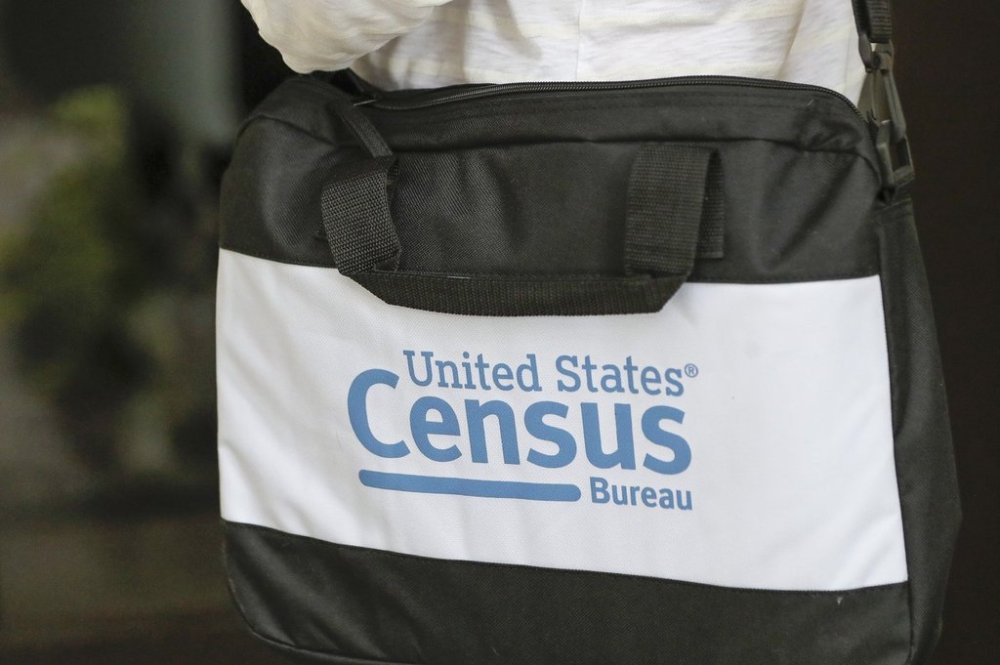
“This would have had no bearing on party control of the House or the outcome of presidential elections,” they said.
Why does this matter?
The 14th Amendment states “the whole number of persons in each state” should be counted for the numbers used for apportionment, the process of allocating congressional seats and Electoral College votes among the states, based on population after each census. As a result, the U.S. Census Bureau has counted all U.S. residents in the once-a-decade censuses, regardless of their citizenship or legal status, and those numbers have been used for apportionment.
But some Republicans have argued that only citizens should be counted for apportionment. A Republican redistricting expert wrote in the past decade that using citizen voting-age population instead of the total population for the purpose of redrawing congressional and legislative districts could be advantageous to Republicans and non-Hispanic whites.
“Americans deserve fair and equal representation, something that will not be possible until we eliminate the influence of noncitizens in our elections,” U.S. Rep. Chuck Edwards, R-NC, said earlier this year when introducing legislation to prohibit noncitizens from being included in the apportionment count.
The GOP attorneys general of Kansas, Louisiana, Ohio and West Virginia last month filed a lawsuit attempting to exclude people in the U.S. illegally from the apportionment numbers. Voters in California and Texas, supported by the Democratic-affiliated National Redistricting Foundation, have asked to intervene, saying the GOP lawsuit would harm them by taking away congressional representation and Electoral College votes from their states.
What’s the history behind this?
During his first term, President Donald Trump signed an order that would have excluded people in the U.S. illegally from being included in the 2020 census numbers used for apportionment. The Republican president also later mandated the collection of citizenship data through administrative records.
Trump issued the memos after the U.S. Supreme Court blocked an earlier attempt to add a citizenship question to the 2020 census questionnaire. The high court said the administration’s justification for the question “seems to have been contrived.”
Both Trump orders were rescinded when President Joe Biden arrived at the White House in January 2021, before the 2020 census figures were released by the Census Bureau. Upon returning to the White House last month, Trump rescinded the Biden order.
What does the research show?
Because the number of House seats is set at 435, apportionment is a zero-sum game.
Under the hypothetical scenario of not counting people who were in the country illegally, two seats would have switched states in 1980, with California and New York each losing a seat and Indiana and Georgia each gaining one, according to the demographers.
In 1990, California would have lost two seats, Texas would have lost a single seat and Kentucky, Massachusetts and Montana each would have gained a seat. In 2000, Indiana, Michigan, Mississippi and Montana each would have gained a seat, California would have lost three seats and Texas would have lost a single seat, under the scenario.
After the 2010 census, Louisiana, Missouri, Montana, Ohio and North Carolina each would have gained a seat, California would have lost three seats and Texas and Florida each would have lost a single seat. After the 2020 census, California and Texas each would have lost a seat, and Ohio and New York would have gained a seat each. ___
Follow Mike Schneider on the social platform X: @MikeSchneiderAP.