

Idaho judge declines to throw out genetic evidence in University of Idaho killings
Advertisement
Read this article for free:
or
Already have an account? Log in here »
To continue reading, please subscribe:

Digital Subscription
One year of digital access for only $205*
- Enjoy unlimited reading on winnipegfreepress.com
- Read the E-Edition, our digital replica newspaper
- Access News Break, our award-winning app
- Play interactive puzzles
*First annual payment billed as $205.00 + GST for one year. This annual subscription will automatically renew at $233.00 + GST every 52 weeks (10% off the regular annual price of $259.35). Offer available to new and qualified returning subscribers only. Cancel any time.
To continue reading, please subscribe:
Add Free Press access to your Brandon Sun subscription for only an additional
$1 for the first 4 weeks*
- Enjoy unlimited reading on winnipegfreepress.com
- Read the E-Edition, our digital replica newspaper
- Access News Break, our award-winning app
- Play interactive puzzles
*Your next Brandon Sun subscription payment will increase by $1.00 and you will be charged $17.95 plus GST for four weeks. After four weeks, your payment will increase to $24.95 plus GST every four weeks.
Read unlimited articles for free today:
or
Already have an account? Log in here »
Hey there, time traveller!
This article was published 19/02/2025 (597 days ago), so information in it may no longer be current.
BOISE, Idaho (AP) — An Idaho judge declined to throw out key evidence against the man charged with murder in connection with the killings of four University of Idaho students, saying Wednesday that the genetic investigation process that it hinges on was not unconstitutional.
Judge Steven Hippler was not swayed by legal arguments made by Bryan Kohberger’s defense team that law enforcement violated his constitutional rights when they used a process called Investigative Genetic Genealogy, or IGG, to identify possible suspects.
The decision came nearly a month after a two-day hearing on the matter, removing what could have been a major wrench in the prosecution’s case before trial starts in August.
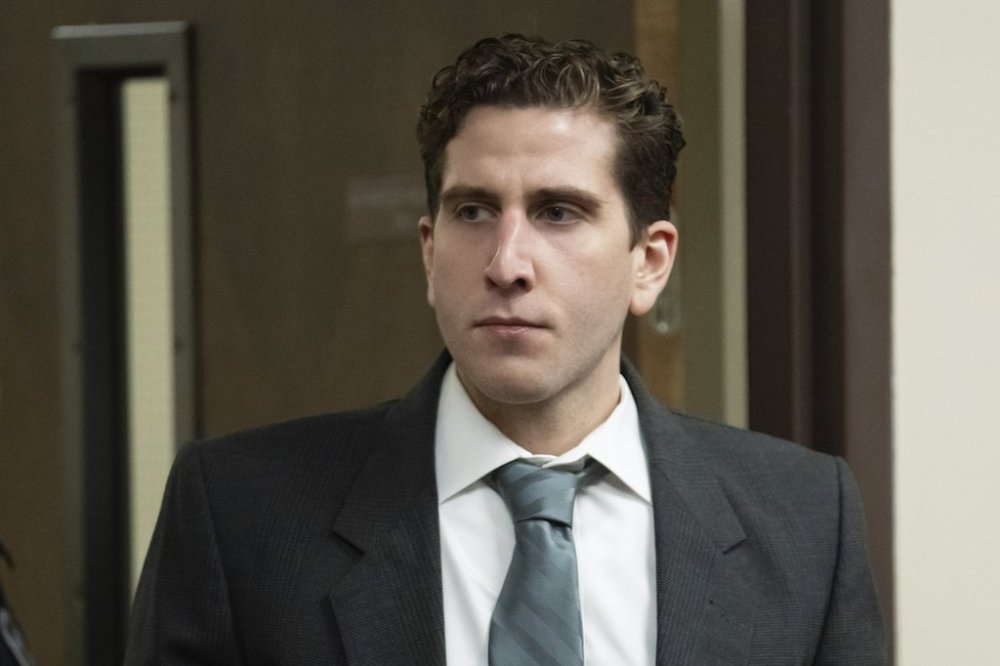
Kohberger is charged with four counts of murder in the deaths of Ethan Chapin, Xana Kernodle, Madison Mogen and Kaylee Goncalves, who were killed in the early morning of Nov. 13, 2022, at a rental home near campus in Moscow, Idaho. When asked to enter a plea last year, Kohberger stood silent, prompting a judge to enter a not-guilty plea on his behalf. Prosecutors have said they will seek the death penalty if Kohberger is convicted.
The IGG process often starts when DNA found at the scene of a crime doesn’t yield any results through standard law enforcement databases. When that happens, investigators may look at all the variations, or single nucleotide polymorphisms, that are in the DNA sample. Those SNPs, or “snips,” are then uploaded to a genealogy database like GEDmatch or FamilyTreeDNA to look for possible relatives of the person whose DNA was found at the scene.
In Kohberger’s case, investigators said they found “touch DNA,” or trace DNA, on the sheath of a knife that was found in the home where the students were fatally stabbed. The FBI used the IGG process on that DNA and the information identified Kohberger as a possible suspect.
Defense attorney Anne Taylor had argued that police never sought warrants to analyze the DNA found at the crime scene, nor did they get warrants to analyze the DNA of potential relatives that had been submitted to genealogy databases. She argued the court should suppress the IGG identification and everything that came from it.
The judge said that in order to throw out evidence based on a warrantless search, Kohberger’s defense would need to “show that he had legitimate expectation of privacy in the item or place searched.”
“Any privacy interest he can claim in this DNA was abandoned along with the sheath, to which he claims no ownership or knowledge,” said Hippler. “Even if no such abandonment occurred, defendant has not demonstrated it is reasonable to recognize a privacy interest in DNA left at a crime scene.”
The judge also ruled against three other defense motions objecting to the way warrants were issued and to suppress evidence such as cellphone data.