

Netanyahu says Israel won’t allow Syrian forces ‘south of Damascus’
Advertisement
Read this article for free:
or
Already have an account? Log in here »
To continue reading, please subscribe:

Digital Subscription
One year of digital access for only $205*
- Enjoy unlimited reading on winnipegfreepress.com
- Read the E-Edition, our digital replica newspaper
- Access News Break, our award-winning app
- Play interactive puzzles
*First annual payment billed as $205.00 + GST for one year. This annual subscription will automatically renew at $233.00 + GST every 52 weeks (10% off the regular annual price of $259.35). Offer available to new and qualified returning subscribers only. Cancel any time.
To continue reading, please subscribe:
Add Free Press access to your Brandon Sun subscription for only an additional
$1 for the first 4 weeks*
- Enjoy unlimited reading on winnipegfreepress.com
- Read the E-Edition, our digital replica newspaper
- Access News Break, our award-winning app
- Play interactive puzzles
*Your next Brandon Sun subscription payment will increase by $1.00 and you will be charged $17.95 plus GST for four weeks. After four weeks, your payment will increase to $24.95 plus GST every four weeks.
Read unlimited articles for free today:
or
Already have an account? Log in here »
Hey there, time traveller!
This article was published 23/02/2025 (569 days ago), so information in it may no longer be current.
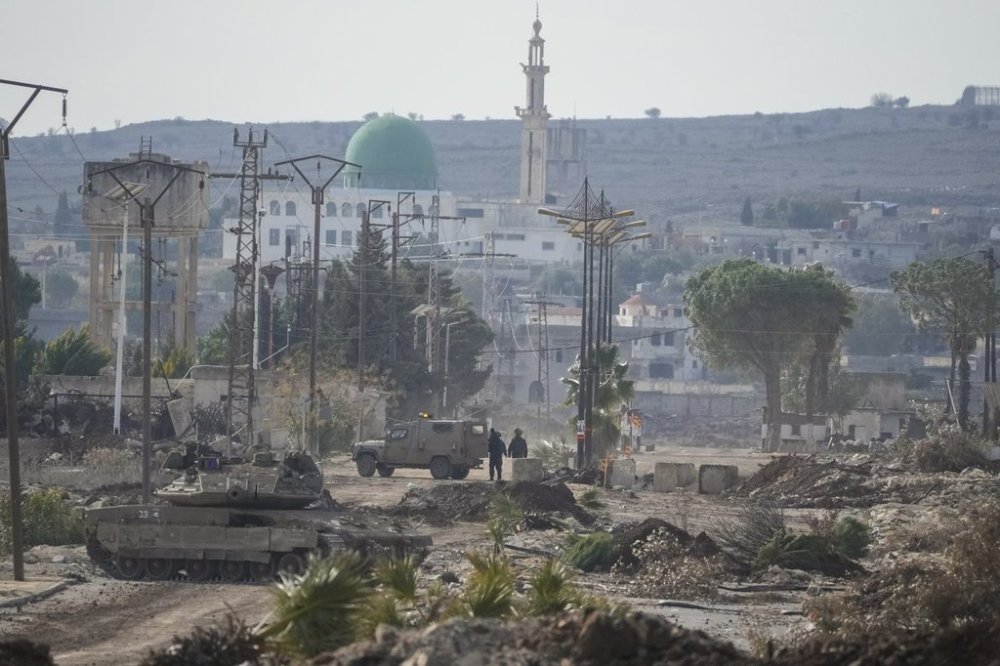
JERUSALEM (AP) — Israeli Prime Minister Benjamin Netanyahu says Israel will not allow Syria’s new army or the insurgent group that led the ouster of former President Bashar Assad to “enter the area south of Damascus” as his government made clear Israeli forces would stay in parts of southern Syria for an indefinite period.
Netanyahu’s comments Sunday at a military graduation led to new concerns over the Israeli presence, and sway, in a swath of southern Syria as Damascus’ new leaders attempt to consolidate control after years of civil war.
“Take note: We will not allow HTS forces or the new Syrian army to enter the area south of Damascus,” Netanyahu said, referring to Syria’s new authorities as well as Hayat Tahrir al-Sham, the main former rebel group.
“We demand the complete demilitarization of southern Syria in the provinces of Quneitra, Daraa and Suwayda from the forces of the new regime. Likewise, we will not tolerate any threat to the Druze community in southern Syria.”
There was no immediate response from Syrian authorities.
Defense Minister Israel Katz added that Israeli forces will remain on the peak of Mt. Hermon in southern Syria and in a buffer zone “for an indefinite period of time to protect our communities and thwart any threat.”
He said Israeli forces have built two posts on the mountain and another seven in the buffer zone “to ensure defense and offense against any challenge.”
After the fall of Assad in December, Israel seized the U.N.-patrolled buffer zone on Syrian territory. The zone was set up under a 1974 ceasefire agreement. Syria’s new authorities and U.N. officials have called for Israel to withdraw.
Meanwhile, Netanyahu’s government has been under pressure to protect Israelis living near border areas in the north.
Katz said Israel will “strengthen ties with friendly populations in the region,” notably the Druze, a religious minority who live in both southern Syria and in Israel’s Golan Heights, where Druze navigate their historically Syrian identity while living under Israeli rule.
“We will not tolerate any threat to the Druze community in southern Syria,” Netanyahu said.
More broadly, Israeli forces “will not allow hostile forces to establish themselves and be present in the security zone in southern Syria from here to Damascus. And we will act against any threat,” Katz said.