

Supreme Court turns back challenges to laws keeping abortion opponents away from clinics, patients
Advertisement
Read this article for free:
or
Already have an account? Log in here »
To continue reading, please subscribe:

Digital Subscription
One year of digital access for only $205*
- Enjoy unlimited reading on winnipegfreepress.com
- Read the E-Edition, our digital replica newspaper
- Access News Break, our award-winning app
- Play interactive puzzles
*First annual payment billed as $205.00 + GST for one year. This annual subscription will automatically renew at $233.00 + GST every 52 weeks (10% off the regular annual price of $259.35). Offer available to new and qualified returning subscribers only. Cancel any time.
To continue reading, please subscribe:
Add Free Press access to your Brandon Sun subscription for only an additional
$1 for the first 4 weeks*
- Enjoy unlimited reading on winnipegfreepress.com
- Read the E-Edition, our digital replica newspaper
- Access News Break, our award-winning app
- Play interactive puzzles
*Your next Brandon Sun subscription payment will increase by $1.00 and you will be charged $17.95 plus GST for four weeks. After four weeks, your payment will increase to $24.95 plus GST every four weeks.
Read unlimited articles for free today:
or
Already have an account? Log in here »
Hey there, time traveller!
This article was published 24/02/2025 (569 days ago), so information in it may no longer be current.
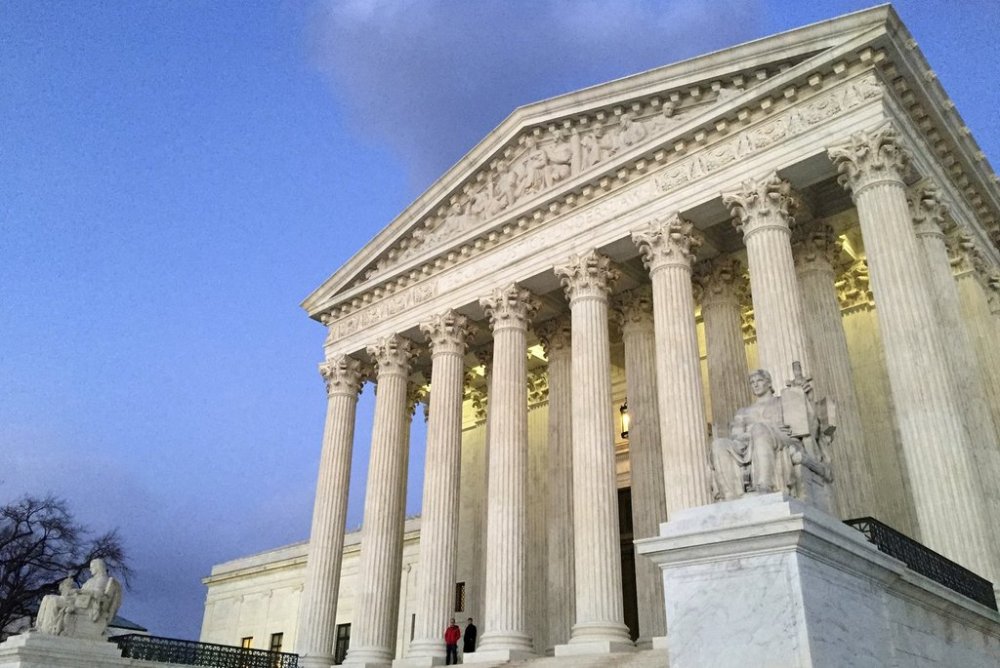
WASHINGTON (AP) — The Supreme Court refused Monday to hear a pair of cases from abortion opponents who say laws limiting anti-abortion demonstrations near clinics violate their First Amendment rights.
The majority did not explain their reasoning for turning down the appeals, as is typical, but two conservative justices, Samuel Alito and Clarence Thomas, disagreed.
The cities said the laws were passed to address disturbing behavior from protesters outside of health care clinics. But anti-abortion activists said the measures violate free-speech rights and should be on their “deathbed” after the justices overturned Roe v. Wade and the nationwide right to abortion.
One case comes from Carbondale, Illinois, which is located near the state’s southern border and passed an ordinance after becoming a destination for patients from nearby states with abortion bans. The measure was quickly challenged in court, and has never been enforced. The city argued the appeal should be tossed because the ordinance was repealed shortly before abortion opponents went to the Supreme Court.
The other case is from New Jersey, where activist Jeryl Turco says she has approached women in Englewood for years to try to convince them not to have abortions. She says an 8-foot demonstration-free zone the city passed in 2014 in response to an aggressive group of protesters also wrongly kept her from approaching women.
Englewood argues that Turco has still been able to share her message outside of the immediate area near clinic entrances. Lower courts have ultimately upheld the ordinance, finding it isn’t a major First Amendment burden.
Both challengers pointed out that the high court struck down a Massachusetts law creating 35-foot demonstration free “buffer zones” around clinic doors in 2014. They say the Illinois and New Jersey laws should meet the same fate.
But cities say their rules are in line with a different Supreme Court decision from 2000, when the high court allowed a Colorado law to stand. It barred people from getting within 8 feet of others without permission in a 100-foot “bubble zone” around clinics.
Thomas said that case, known as Hill v. Colorado, was wrongly decided. In a dissent from the decision to decline the Illinois case, he said that the court wrongly treated it differently than other First Amendment cases because abortion was involved. “Hill has been seriously undermined, if not completely eroded, and our refusal to provide clarity is an abdication of our judicial duty,” he wrote.