

Former Hong Kong lawmaker sentenced to over 3 years in jail on charge of riot during 2019 protests
Advertisement
Read this article for free:
or
Already have an account? Log in here »
To continue reading, please subscribe:
Digital Subscription
One year of digital access for only $1.44 a week*
- Enjoy unlimited reading on winnipegfreepress.com
- Read the E-Edition, our digital replica newspaper
- Access News Break, our award-winning app
- Play interactive puzzles
*Billed as $5.77 plus GST every four weeks. After 52 weeks, price increases to the regular rate of $19.95 plus GST every four weeks. Offer available to new and qualified returning subscribers only. Cancel any time.
To continue reading, please subscribe:
Add Free Press access to your Brandon Sun subscription for only an additional
$1 for the first 4 weeks*
- Enjoy unlimited reading on winnipegfreepress.com
- Read the E-Edition, our digital replica newspaper
- Access News Break, our award-winning app
- Play interactive puzzles
*Your next Brandon Sun subscription payment will increase by $1.00 and you will be charged $17.95 plus GST for four weeks. After four weeks, your payment will increase to $24.95 plus GST every four weeks.
Read unlimited articles for free today:
or
Already have an account? Log in here »
Hey there, time traveller!
This article was published 27/02/2025 (602 days ago), so information in it may no longer be current.
HONG KONG (AP) — A Hong Kong judge on Thursday sentenced a former pro-democracy lawmaker to three years and one month in prison on a charge of riot after an incident in which he was beaten up at a subway station during the city’s anti-government protests in 2019.
Lam Cheuk-ting was among dozens injured when a group of men armed with wooden poles and metal rods attacked protesters and bystanders at Yuen Long train station on July 21, 2019. The attackers, wearing white shirts that contrasted with protesters’ black attire, claimed they were protecting their homeland in Yuen Long, a residential district in Hong Kong’s New Territories.
Last December, district court judge Stanley Chan convicted Lam of rioting, ruling that his words to the white-shirted men had “fanned the flames.” Chan rejected Lam’s claim that he was acting as a mediator or protecting residents in his role as a lawmaker at the scene, saying he had tried to exploit the situation for political gain.
The landmark verdict could shape the city’s historical narrative of the 2019 incident, a turning point that intensified the protest movement as the public criticized police for their delayed response. About 10 white-shirted men have been convicted in other cases related to the clash in the subway station, local media reported.
In Thursday’s hearing, the judge said although Lam had not engaged in violent acts, his presence as a lawmaker and political figure led to a deterioration of the confrontational situation. Lam did not show remorse in his letter meant to plead for a lesser sentence, Chan said.
The former lawmaker said in a letter to the judge that what he once believed was right had become wrong or even a crime.
“For this, I have no resentment, no regrets. But my guilt comes from causing pain to my dear ones who raised and nurtured me,” he said.
In the same case, Chan also ordered six less prominent defendants to be jailed for terms from two years and one month to two years and seven months, including some who had hurled objects or shot jets of water at the white-shirted men with a hosepipe. Chan dismissed arguments that some of them were acting in self-defense in his December verdict.
As Chan read out the sentences, some people sitting in the public gallery wept.
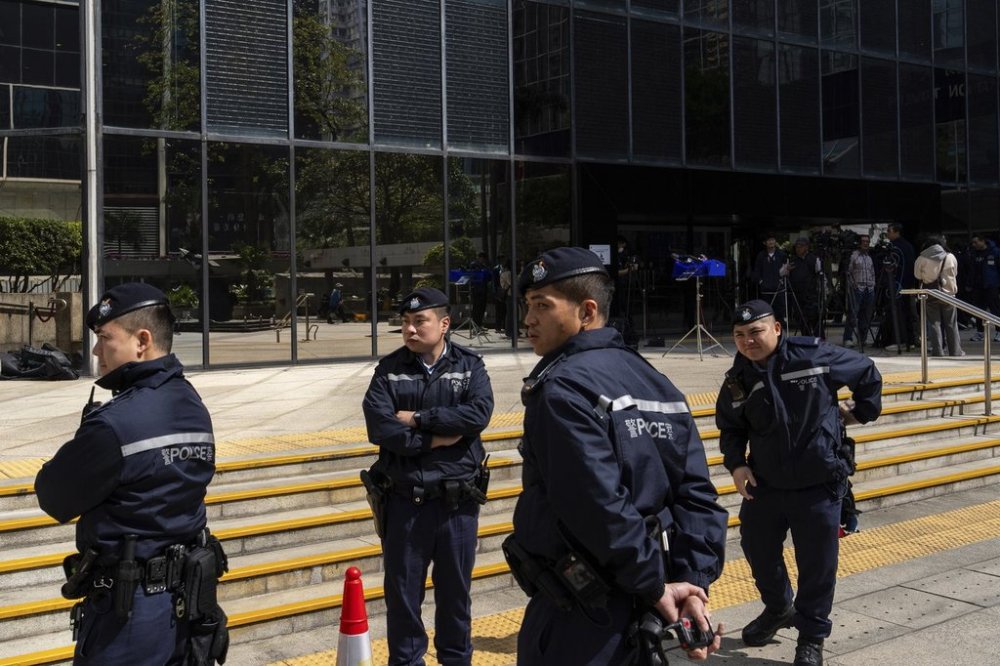
Hours before the hearing, several supporters of the defendants waved at prison vans outside the court building and chanted “ga yau,” a common phrase of encouragement in Cantonese. Lam smiled at supporters as he entered the courtroom.
The 2019 protests were sparked by a proposed extradition law that would have allowed criminal suspects in Hong Kong to be sent to the mainland for trial. The government withdrew the bill, but the protesters widened their demands to include direct elections for the city’s leaders and police accountability.
The social movement was the biggest challenge to the Hong Kong government since the former British colony returned to Chinese rule in 1997. In response, Beijing imposed a national security law in 2020, leading to the arrest of many activists. Others were silenced or went into exile.
Lam is already serving a sentence of six years and nine months in the city’s biggest national security case. Chan said he can serve three months of the newly given 37-month term concurrently with that sentence.
Last week, the political party he belonged to took an initial step toward dissolving, another sign of the drastic political changes in the city since Beijing imposed the security law, which it said was necessary to restore Hong Kong’s stability.