

Mushers begin rugged Iditarod race after lack of snow forces major changes to iconic Alaska event
Advertisement
Read this article for free:
or
Already have an account? Log in here »
To continue reading, please subscribe:

Digital Subscription
One year of digital access for only $205*
- Enjoy unlimited reading on winnipegfreepress.com
- Read the E-Edition, our digital replica newspaper
- Access News Break, our award-winning app
- Play interactive puzzles
*First annual payment billed as $205.00 + GST for one year. This annual subscription will automatically renew at $233.00 + GST every 52 weeks (10% off the regular annual price of $259.35). Offer available to new and qualified returning subscribers only. Cancel any time.
To continue reading, please subscribe:
Add Free Press access to your Brandon Sun subscription for only an additional
$1 for the first 4 weeks*
- Enjoy unlimited reading on winnipegfreepress.com
- Read the E-Edition, our digital replica newspaper
- Access News Break, our award-winning app
- Play interactive puzzles
*Your next Brandon Sun subscription payment will increase by $1.00 and you will be charged $17.95 plus GST for four weeks. After four weeks, your payment will increase to $24.95 plus GST every four weeks.
Read unlimited articles for free today:
or
Already have an account? Log in here »
Hey there, time traveller!
This article was published 03/03/2025 (579 days ago), so information in it may no longer be current.
ANCHORAGE, Alaska (AP) — The rugged Iditarod started Monday, but a dearth of snow forced the iconic dog sled race to start further north and added a new route that allows mushers to bypass barren land, lengthening by more than 100 miles (160.93 kilometers) an unforgiving journey often measured in grit and attrition.
The new course reroutes mushers and their dog teams around a difficult stretch of trail north of the Alaska Range, which is treacherous with snow and ice but mostly unpassable in dry conditions for sleds.
The Iditarod Trail Sled Dog Race is usually billed as a 1,000-mile (1,609-kilometer) race across Alaska. The route change means it’s now 1,128 miles (1,815 kilometers). Mushers began their trek to the finish line in Nome from Fairbanks, the fourth time this century the race has been forced north from the Anchorage area.
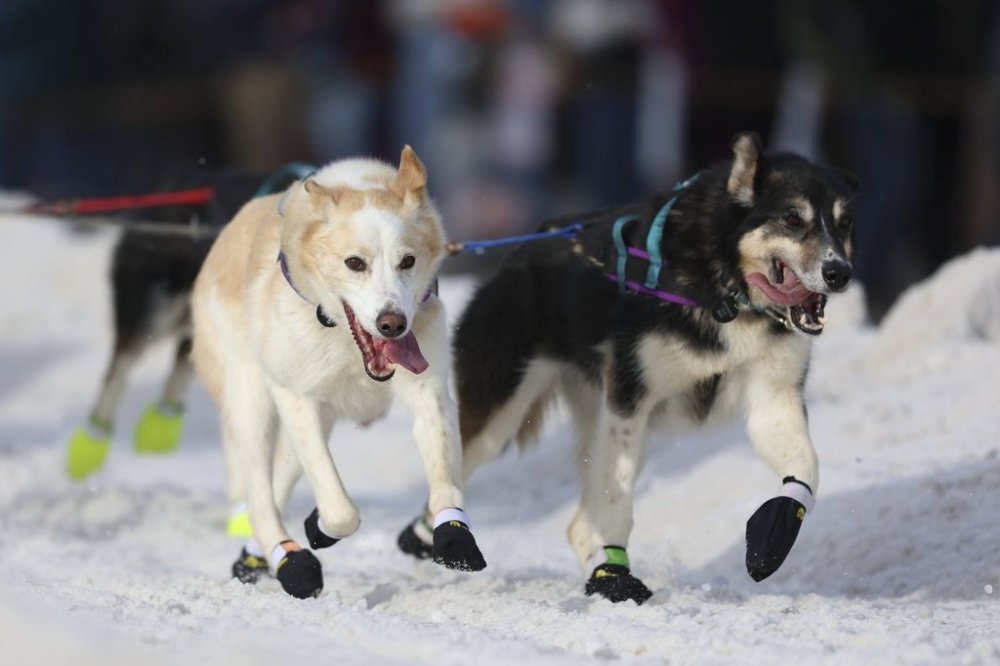
A lack of snow in the Anchorage area also caused headaches for race organizers Saturday during the ceremonial start. The parade-like route in Anchorage usually has mushers taking a leisurely course over 11 miles (17.70 kilometers) of city streets and trails with an auction winner riding in their sled.
However, weeks of little-to-no new snowfall and warm temperatures in Alaska’s largest city forced organizers to shorten the ceremonial start to less than 2 miles (3.22 kilometers), run over snow that was trucked in to cover downtown city streets.
There are 33 mushers in this year’s race, tied with the 2023 race for smallest field ever. Among them are two former champions, Ryan Redington and three-time winner Mitch Seavey.
Mushers and their dog teams will battle the worst of what wild Alaska can throw at them — from bad trails, mushing on frozen rivers and sea ice and possible encounters with wildlife with the winner expected in the old Gold Rush town of Nome on the Bering Sea coast in about 10 days.
This year the Iditarod will honor another famous mushing event, the 1925 Serum Run, in which sled dog teams saved Nome from a deadly diphtheria outbreak.