Despite weather concerns, New Orleans celebrates Mardi Gras Day and bids farewell to Carnival season
Advertisement
Read this article for free:
or
Already have an account? Log in here »
To continue reading, please subscribe:

Digital Subscription
One year of digital access for only $205*
- Enjoy unlimited reading on winnipegfreepress.com
- Read the E-Edition, our digital replica newspaper
- Access News Break, our award-winning app
- Play interactive puzzles
*First annual payment billed as $205.00 + GST for one year. This annual subscription will automatically renew at $233.00 + GST every 52 weeks (10% off the regular annual price of $259.35). Offer available to new and qualified returning subscribers only. Cancel any time.
To continue reading, please subscribe:
Add Free Press access to your Brandon Sun subscription for only an additional
$1 for the first 4 weeks*
- Enjoy unlimited reading on winnipegfreepress.com
- Read the E-Edition, our digital replica newspaper
- Access News Break, our award-winning app
- Play interactive puzzles
*Your next Brandon Sun subscription payment will increase by $1.00 and you will be charged $17.95 plus GST for four weeks. After four weeks, your payment will increase to $24.95 plus GST every four weeks.
Read unlimited articles for free today:
or
Already have an account? Log in here »
Hey there, time traveller!
This article was published 03/03/2025 (588 days ago), so information in it may no longer be current.
NEW ORLEANS (AP) — The good times and parades still rolled in New Orleans for Mardi Gras Day celebrations early Tuesday, ahead of expected severe winds, thunderstorms and tornado warnings in the afternoon.
Carnival Season’s final parades in Louisiana’s most populous city, which is world-famous for its Mardi Gras bash, were moved to earlier time slots — with masked riders on elaborate floats and costumed revelers determined to beat the bad weather and partake in the conclusion of the pre-Lenten jollification.
As the sun rose on Fat Tuesday, people donning skeleton masks and antlers on their heads gathered in New Orleans’ historic Treme neighborhood. Members of the Northside Skull and Bones Gang woke up the city with drums and chants, spreading a message of peace.
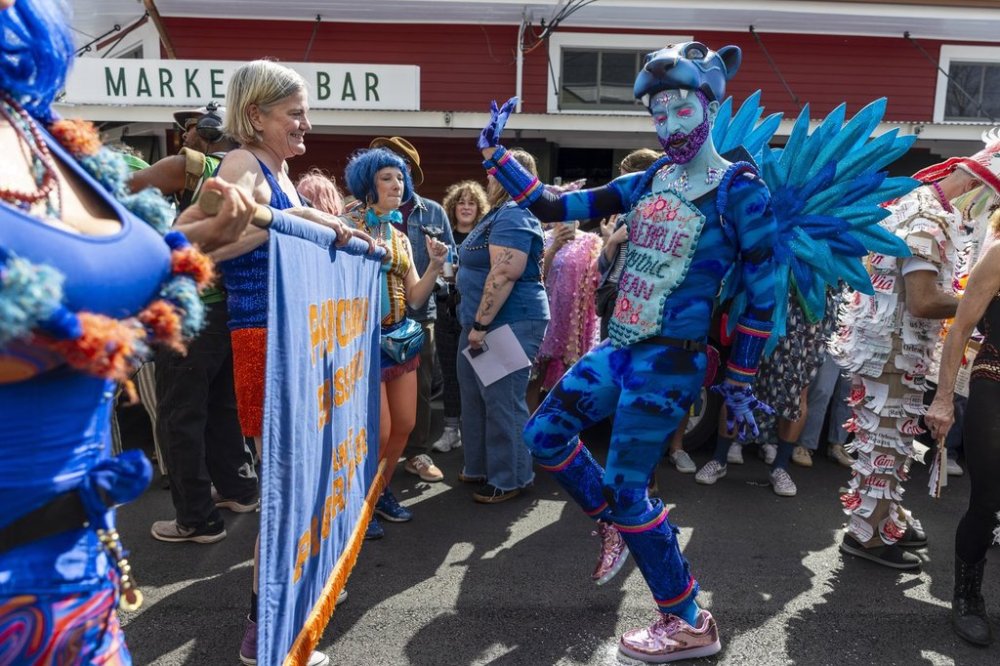
“Mardi Gras is all about having these moments. This city is like nowhere else in the country right now,” said Kendall Calyen, 41, marveling at the 200-year-old tradition unfolding before his eyes.
The city’s two biggest parades — hosted by the social clubs Krewe of Zulu and Krewe of Rex — started earlier, shortened their routes and are going without marching bands, New Orleans Police Superintendent Anne Kirkpatrick said. The parades wrapped up by the afternoon to avoid worsening weather.
The National Weather Service forecasted thunderstorms and winds up to 60 mph (100 kph) and had issued tornado watches for the area.
New Orleans Mayor LaToya Cantrell told the Associated Press that despite weather challenges, the city was able modify the parades to ensure that there were still traditional Mardi Gras Day festivities.
“My favorite part is the authenticity of the city of New Orleans on full display for the world to see which is woven and embedded in our culture that’s through our people,” Cantrell said.
At the start of the Krewe of Zulu parade, family and friends gathered wearing Mardi Gras purple, gold and green. Many reclined in chairs, ready to enjoy the long haul. Impromptu barbecues wafted smoke from street corners and hip-hop blared.
Jeremy Speed, a 40-year-old Krewe of Zulu member who grew up watching the parade, rode a float and tossed his hand-painted coconut “throws ” to onlookers. He was disappointed that the route had been shortened due to weather but was grateful that the parades weren’t canceled altogether.
“At least they let us roll, they figured it out. They gave us a little something,” Speed said. “… Ain’t nothing like Zulu, the people that show up.”
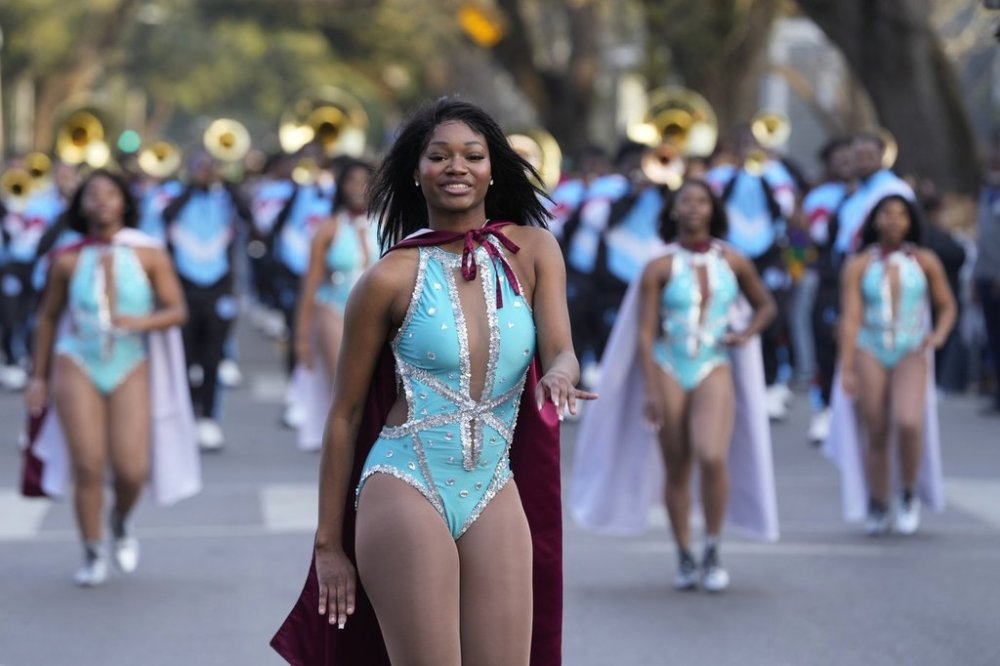
Two other parades which had been scheduled to meander through the city later on Tuesday with nearly 200 truck floats were postponed to Sunday, Kirkpatrick said.
At the start of the year, some seemed skeptical whether Carnival celebrations would take place as normal, following the devastating Jan. 1 truck attack that killed 14 people on Bourbon Street in New Orleans.
The Department of Homeland Security upgraded Mardi Gras to its highest risk rating, leading to an influx of law enforcement agents. A zigzagging layout of barriers paralleled the main parade route to guard against fast-moving vehicles and armored trucks; SWAT teams and helicopters were present.
Amid the weather threat and security measures, Mardi Gras celebrations persevered.
Along with colorful floats and paradegoers with their necks hunched from a hefty haul of shimmery beads, were renowned Black masking Indians, whose spectacular beaded and bejeweled costumes are topped with feathered headdresses. Such groups have taken to the streets to represent a central part of African American culture in the city dating back to the 1800s.
Jasmine Batiste, 28, wore an intricate blue beaded outfit that she spent all year threading beads onto using dental floss. The member of the Wild Magnolias quickly put together a headband the night before Fat Tuesday as a back-up in case her massive feathered headdress flew off in the wind.
And soon, Batiste will be preparing for next year: “For real, you start tomorrow.”
The Krewe of Zulu parade is known for hundreds of marchers tossing trinkets, including highly coveted decorated coconuts.
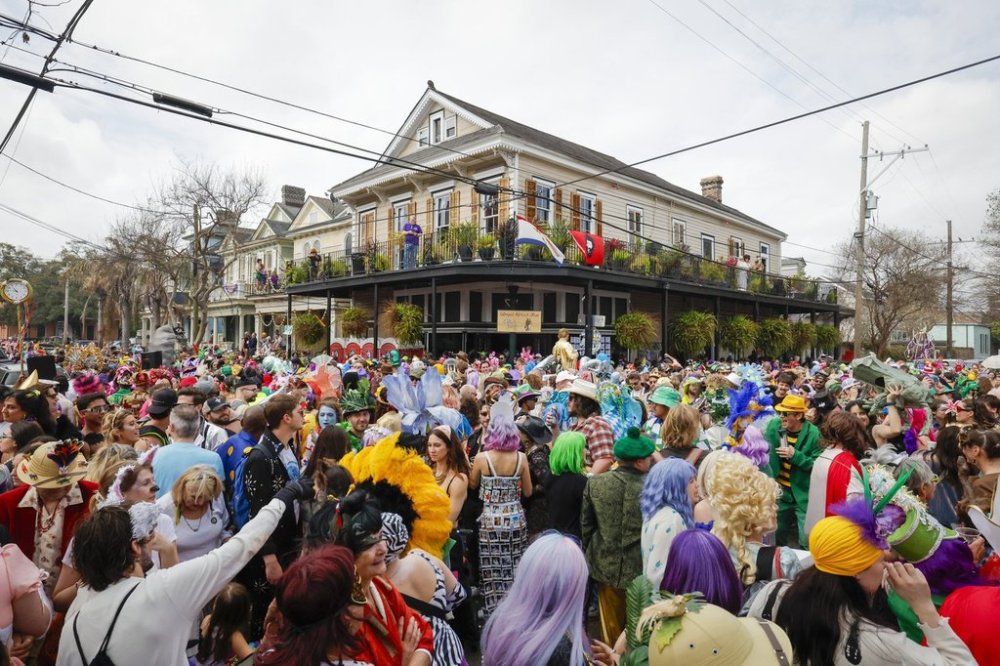
And, the Krewe of Rex — a social club led by the honorary king of Carnival season — bears the traditional colors of purple, green and gold.
Other cities along the Gulf Coast, such as Mobile, Alabama, and Pensacola, Florida, hold their own Mardi Gras Day parades.
The weeks of Carnival culminate with feasting on Fat Tuesday, which precedes Ash Wednesday, the start of Lent. This year’s Mardi Gras Day fell unusually late in the year.
But the outsized culture of street parties, extravagant balls and spirited parades has evolved into a decidedly secular spectacle in the Big Easy.