

China conducts air and sea drills near Taiwan in response to US and Taiwanese statements
Advertisement
Read this article for free:
or
Already have an account? Log in here »
To continue reading, please subscribe:
Monthly Digital Subscription
$1 per week for 24 weeks*
- Enjoy unlimited reading on winnipegfreepress.com
- Read the E-Edition, our digital replica newspaper
- Access News Break, our award-winning app
- Play interactive puzzles
*Billed as $4.00 plus GST every four weeks. After 24 weeks, price increases to the regular rate of $19.95 plus GST every four weeks. Offer available to new and qualified returning subscribers only. Cancel any time.
Monthly Digital Subscription
$4.99/week*
- Enjoy unlimited reading on winnipegfreepress.com
- Read the E-Edition, our digital replica newspaper
- Access News Break, our award-winning app
- Play interactive puzzles
*Billed as $19.95 plus GST every four weeks. Cancel any time.
To continue reading, please subscribe:
Add Free Press access to your Brandon Sun subscription for only an additional
$1 for the first 4 weeks*
*Your next subscription payment will increase by $1.00 and you will be charged $16.99 plus GST for four weeks. After four weeks, your payment will increase to $23.99 plus GST every four weeks.
Read unlimited articles for free today:
or
Already have an account? Log in here »
Hey there, time traveller!
This article was published 17/03/2025 (376 days ago), so information in it may no longer be current.
TAIPEI, Taiwan (AP) — An unusually large number of Chinese military ships, planes and drones entered airspace and waters surrounding Taiwan between Sunday and Monday, the self-governing island’s Defense Ministry said.
China said the drills were a response to recent statements and actions by the United States and Taiwan. Beijing launches such missions on a daily basis, seeking to wear down Taiwanese defenses and morale, although the vast majority of the island’s 23 million people reject its claim of sovereignty over Taiwan.
Taiwanese Defense Minister Wellington Koo told legislators the drills were further evidence China was a “troublemaker” endangering peace in the region.
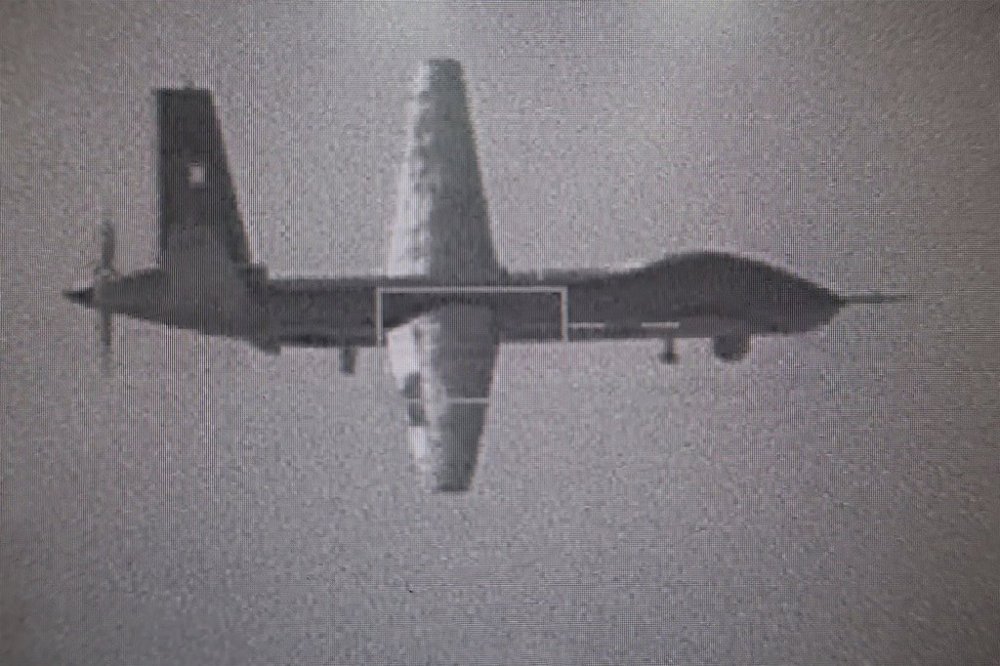
The ministry on Tuesday published on social media images of Chinese drones and ships. It said 43 out of 59 entered Taiwan’s air defense identification zone but that no confrontations were reported. Taiwan monitored the situation and deployed aircraft, navy ships and coastal anti-ship missile defenses in response, the ministry said.
It’s unclear what prompted the large Chinese deployment. Daily figures often vary widely based on statements by the Taiwanese authorities or their U.S. partners.
Chinese Foreign Ministry spokesperson Mao Ning said Monday that the drills were “a resolute response to foreign connivance and support for Taiwan independence, and a serious warning to Taiwan separatist forces.”
China’s military actions are “necessary, legal and justified measures to defend national sovereignty, security and territorial integrity,” Mao said.
“The United States deleted the literal expression that reflected the one-China principle and that did not support Taiwan independence on the website of the U.S. Department of State, which indicates wrong signals to Taiwan separatist forces,” Mao was quoted as saying.
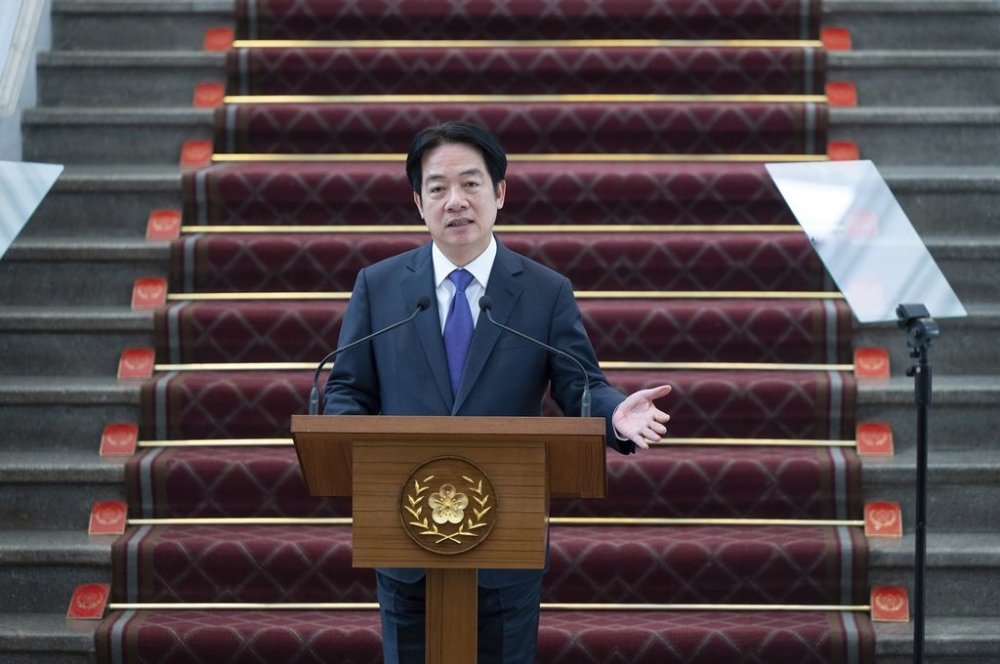
Taiwanese President William Lai Ching-te also raised Beijing’s hackles last week when he said that Taiwan law designates mainland China as a “foreign hostile force” and said tougher measures were being taken to prevent Chinese subversion through the media and civic exchanges. Lai also warned of the danger of influential figures and current and retired military members selling secrets to China.
The Taiwan Strait is an international body of water and one of the most important channels for global trade. While China does not interfere with civilian shipping in the Strait — or in the South China Sea to the south that it claims almost in its entirety — it routinely objects to actions by the U.S. and other foreign navies in the area.
China on Saturday lashed out at accusations by top diplomats from the Group of 7 industrialized democracies who said Beijing is endangering maritime safety.
The G7 in a joint statement condemned China’s “illicit, provocative, coercive and dangerous actions that seek unilaterally to alter the status quo in such a way as to risk undermining the stability of regions, including through land reclamations, and building of outposts, as well as their use for military purpose.”
China said the statement was “filled with arrogance, prejudice and malicious intentions.”
Faced with the rising threat from China, Taiwan has ordered new missiles, aircraft and other armaments from the U.S., while revitalizing its own defense industry.
Taiwan and China split amid civil war 76 years ago, but Chinese leader Xi Jinping has continued to make bringing the island to heel a top priority of his administration even as it faces economic headwinds and a race for high technology with the West.