

Italy approves new decree to use Albanian migration centers as repatriation hubs
Advertisement
Read this article for free:
or
Already have an account? Log in here »
To continue reading, please subscribe:

Digital Subscription
One year of digital access for only $205*
- Enjoy unlimited reading on winnipegfreepress.com
- Read the E-Edition, our digital replica newspaper
- Access News Break, our award-winning app
- Play interactive puzzles
*First annual payment billed as $205.00 + GST for one year. This annual subscription will automatically renew at $233.00 + GST every 52 weeks (10% off the regular annual price of $259.35). Offer available to new and qualified returning subscribers only. Cancel any time.
To continue reading, please subscribe:
Add Free Press access to your Brandon Sun subscription for only an additional
$1 for the first 4 weeks*
- Enjoy unlimited reading on winnipegfreepress.com
- Read the E-Edition, our digital replica newspaper
- Access News Break, our award-winning app
- Play interactive puzzles
*Your next Brandon Sun subscription payment will increase by $1.00 and you will be charged $17.95 plus GST for four weeks. After four weeks, your payment will increase to $24.95 plus GST every four weeks.
Read unlimited articles for free today:
or
Already have an account? Log in here »
Hey there, time traveller!
This article was published 28/03/2025 (522 days ago), so information in it may no longer be current.
ROME (AP) — Italy’s far-right-led government approved a decree that expands the use of Albanian fast-track asylum processing centers to include repatriation hubs, in line with a recent EU proposal.
Under the new decree Friday, the two centers in Albania — originally aimed at processing non-vulnerable migrants rescued in international waters — will now also house migrants who arrived in Italy, had their asylum request rejected and received a deportation order.
In a separate decree, the government also toughened rules to obtain Italian citizenship.
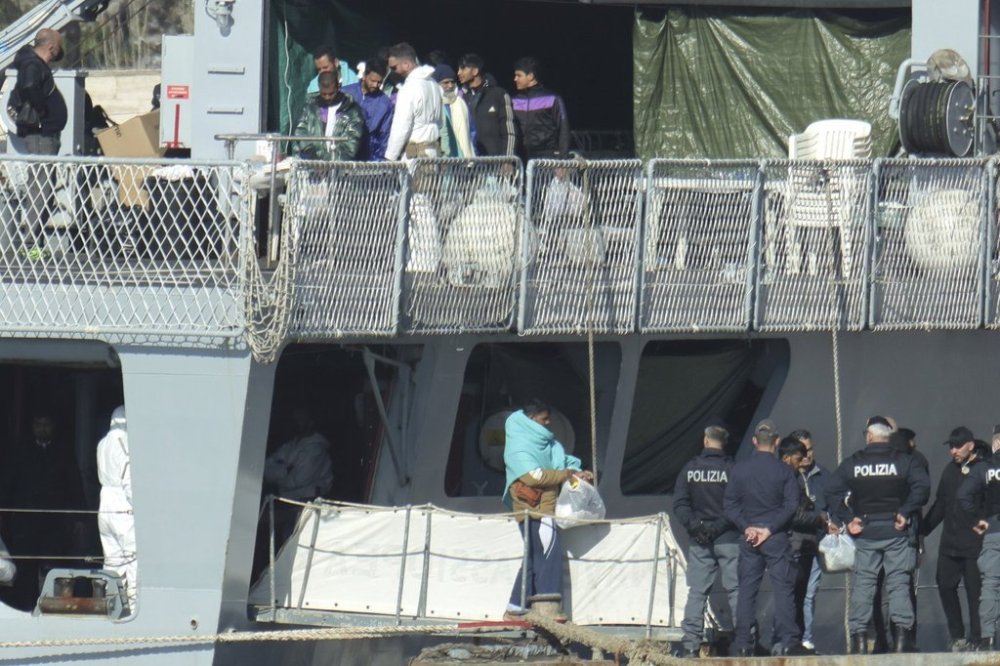
The Albanian centers have remained substantially inactive since their opening in October, due to legal hurdles and amid wide opposition from human rights associations, which believe they violate international laws and put migrants’ rights at risk.
The project — which has cost nearly 800 million euros over a five-year investment — has been a disappointment for the conservative government led by Premier Giorgia Meloni.
After longer than expected construction work, the first three groups of migrants transferred there in October, November and January were sent back to Italy only a few hours later, after Italian magistrates refused to validate their detention in the non-EU country.
Interior Minister Matteo Piantedosi said Friday in a news conference that the new decree didn’t change the bulk of the agreement with Albania, but added new functions for the centers.
“The decree changes the law that ratifies the protocol with Albania, but doesn’t change its content, making it possible to transfer to the already existing (repatriation) center of Gjader also migrants coming from Italy,” Piantedosi explained.
“That would allow us to immediately reactivate that center so that it won’t lose its functions,” he added.
The Italian move, which offers Meloni a new opportunity to relaunch the costly Albanian centers, follows a European Commission proposal unveiled in March to open new “return hubs” to be set up in third countries for rejected asylum-seekers.
Only 20% of people with a deportation order are effectively removed from EU territory, according to the European Commission, which presented the “European System for Returns” as a potential solution.
The proposal aims to set a standard for all 27 members of the bloc and allow national authorities from one country to enforce the deportation order issued by another. Such rules were missing from the EU’s migration and asylum pact approved last year.
The Italian government is also waiting for a ruling by the European Court of Justice, expected this summer, which could enable the Albanian centers to operate as originally intended
STRICTER RULES ON CITIZENSHIP
In a separate decree, the government also toughened laws on Italian citizenship.
Italian descendants born abroad will automatically become citizens for only two generations, and only those with at least one parent or grandparent born in Italy will become citizens from birth.
Minister of Foreign Affairs Antonio Tajani clarified that many descendants of Italian emigrants will still be able to obtain citizenship, but limits will be set to avoid abuse and “commercialization” of Italian passports.
From 2014 to 2024, citizens residing abroad have increased from some 4.6 million to 6.4 million — a jump of 40%. Italy has over 60,000 pending proceedings for citizenship.
___
Follow AP’s global migration coverage at: https://apnews.com/hub/migration