

Russia’s top court lifts terror group designation on Afghanistan’s Taliban
Advertisement
Read this article for free:
or
Already have an account? Log in here »
To continue reading, please subscribe:
Digital Subscription
One year of digital access for only $1.44 a week*
- Enjoy unlimited reading on winnipegfreepress.com
- Read the E-Edition, our digital replica newspaper
- Access News Break, our award-winning app
- Play interactive puzzles
*Billed as $5.77 plus GST every four weeks. After 52 weeks, price increases to the regular rate of $19.95 plus GST every four weeks. Offer available to new and qualified returning subscribers only. Cancel any time.
To continue reading, please subscribe:
Add Free Press access to your Brandon Sun subscription for only an additional
$1 for the first 4 weeks*
- Enjoy unlimited reading on winnipegfreepress.com
- Read the E-Edition, our digital replica newspaper
- Access News Break, our award-winning app
- Play interactive puzzles
*Your next Brandon Sun subscription payment will increase by $1.00 and you will be charged $17.95 plus GST for four weeks. After four weeks, your payment will increase to $24.95 plus GST every four weeks.
Read unlimited articles for free today:
or
Already have an account? Log in here »
Hey there, time traveller!
This article was published 17/04/2025 (551 days ago), so information in it may no longer be current.
MOSCOW (AP) — Russia’s Supreme Court on Thursday lifted a ban on Afghanistan’s ruling Taliban, a group that was designated as a terrorist organization more than two decades ago.
The move was a diplomatic victory for the Taliban, who were put on Russia’s list of terrorist organizations in 2003, making any contact with them punishable under Russian law.
At the same time, Taliban delegations have attended various forums hosted by Russia as Moscow has sought to position itself as a regional power broker.
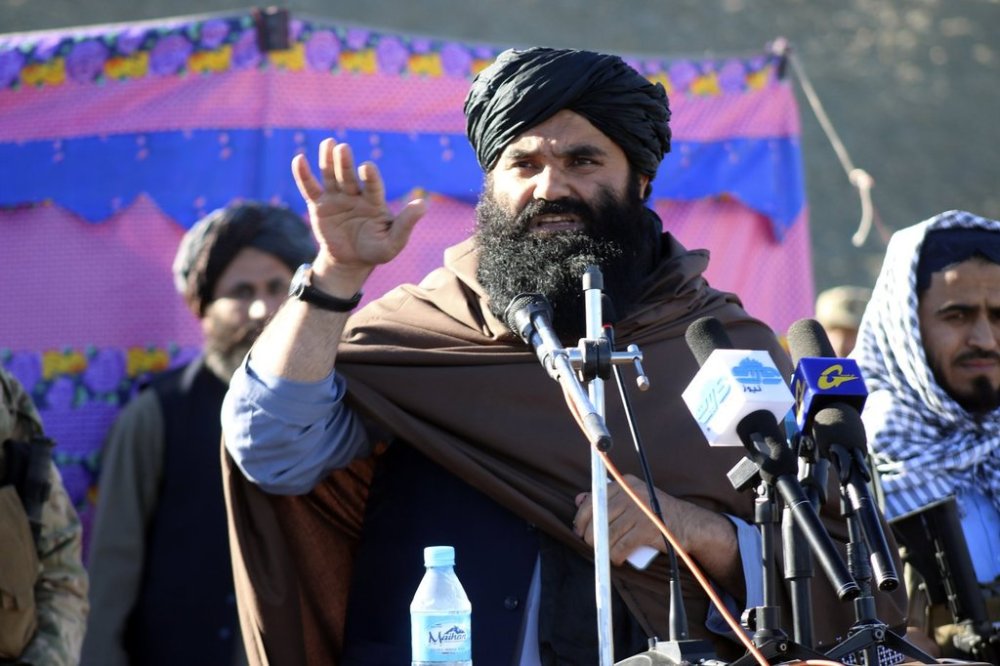
The court’s ruling on a request by the Prosecutor General’s Office followed last year’s adoption of a law stipulating that the official designation as a terrorist organization could be suspended by a court.
The former Soviet Union fought a 10-year war in Afghanistan that ended with Moscow withdrawing its troops in 1989.
Russian officials have recently been emphasizing the need to engage with the Taliban to help stabilize Afghanistan.
In recent years, the Central Asian nations of Kazakhstan and Kyrgyzstan have removed the Taliban from their lists of terrorist groups.
The Taliban seized power in Afghanistan in August 2021 as U.S. and NATO troops were in the final weeks of withdrawing from the country after two decades of war.
The Taliban initially promised a more moderate rule than during their first stint in power from 1996 to 2001, but started to enforce restrictions on women and girls soon after the 2021 takeover. Women are barred from most jobs and public places, including parks, baths and gyms, while girls are banned from education beyond sixth grade.
Such measures have isolated the Taliban on the world stage, although their government has established diplomatic ties with countries including China and the United Arab Emirates.
The U.N. this year renewed its call for the Taliban to lift the bans.
The group’s decrees limiting the participation of girls and women have affected foreign aid to the country. The Taliban also have brought back their strict interpretation of Islamic law, or Shariah, including public executions.
Some Taliban want greater engagement with the international community and want to scrap harsher policies to attract more outside support. In recent months, there has been increased engagement between the Taliban and the U.S. under President Donald Trump, mostly because of prisoner exchanges and releases.
Ibraheem Bahiss, a senior analyst with Crisis Group’s Asia Program, said the Taliban’s listing as a terrorist group was a legal impairment for trade and political ties with Kabul and its lifting reflected Moscow‘s desire to improved relations.
“However, beyond making it easier for individuals and businesses to engage with Afghanistan. I am not sure what other major benefit this will have,” he said.
South Asia analyst Michael Kugelman said the Russian move was not ground-breaking because many countries had never formally designated the Taliban as a terrorist organization. At the same time, he called the decision a “win-win” for bilateral relations.
For Russia, he said it would serve as a confidence-building measure helping pave the way for more engagement and enabling Moscow to better protect its interests in Afghanistan, particularly concerns about anti-Russia terror groups like Islamic State-Khorasan.
“Meanwhile, for the Taliban, the court decision is a legitimacy-boosting outcome they can leverage to point to international acceptance of their rule,” Kugelman observed.
___
Associated Press writer Riazat Butt contributed to this report from Islamabad.