

No power, no problem. How some in Spain and Portugal defied the outage and embraced the present
Advertisement
Read this article for free:
or
Already have an account? Log in here »
To continue reading, please subscribe:
Monthly Digital Subscription
$1 per week for 24 weeks*
- Enjoy unlimited reading on winnipegfreepress.com
- Read the E-Edition, our digital replica newspaper
- Access News Break, our award-winning app
- Play interactive puzzles
*Billed as $4.00 plus GST every four weeks. After 24 weeks, price increases to the regular rate of $19.95 plus GST every four weeks. Offer available to new and qualified returning subscribers only. Cancel any time.
Monthly Digital Subscription
$4.99/week*
- Enjoy unlimited reading on winnipegfreepress.com
- Read the E-Edition, our digital replica newspaper
- Access News Break, our award-winning app
- Play interactive puzzles
*Billed as $19.95 plus GST every four weeks. Cancel any time.
To continue reading, please subscribe:
Add Free Press access to your Brandon Sun subscription for only an additional
$1 for the first 4 weeks*
*Your next subscription payment will increase by $1.00 and you will be charged $16.99 plus GST for four weeks. After four weeks, your payment will increase to $23.99 plus GST every four weeks.
Read unlimited articles for free today:
or
Already have an account? Log in here »
Hey there, time traveller!
This article was published 29/04/2025 (334 days ago), so information in it may no longer be current.
BARCELONA, Spain (AP) — The blackout that engulfed the Iberian Peninsula on Monday was chaotic and stressful for many. But it had a silver lining: People were forced away from their screens and into the “real” world, connecting with the present and one another.
Some Spaniards and Portuguese embraced their day without power.
In Barcelona’s Gracia neighborhood, squares were packed with sunbathers and people reading books or playing chess. In Madrid, young and old gathered on sidewalks to listen to radios that, once obsolete, were suddenly lifelines. People in Sevilla clapped and tapped their feet to flamenco.
Some neighbors spoke to each other for the first time.
At a vehicle inspection center, employees hung a net and played volleyball. Staff at a non-profit foundation in Madrid’s Embajadores neighborhood pulled tables onto sidewalks and challenged passersby to a friendly game of trivia. Others played UNO on public benches. Long lines formed for free ice cream that store owners decided to give away.
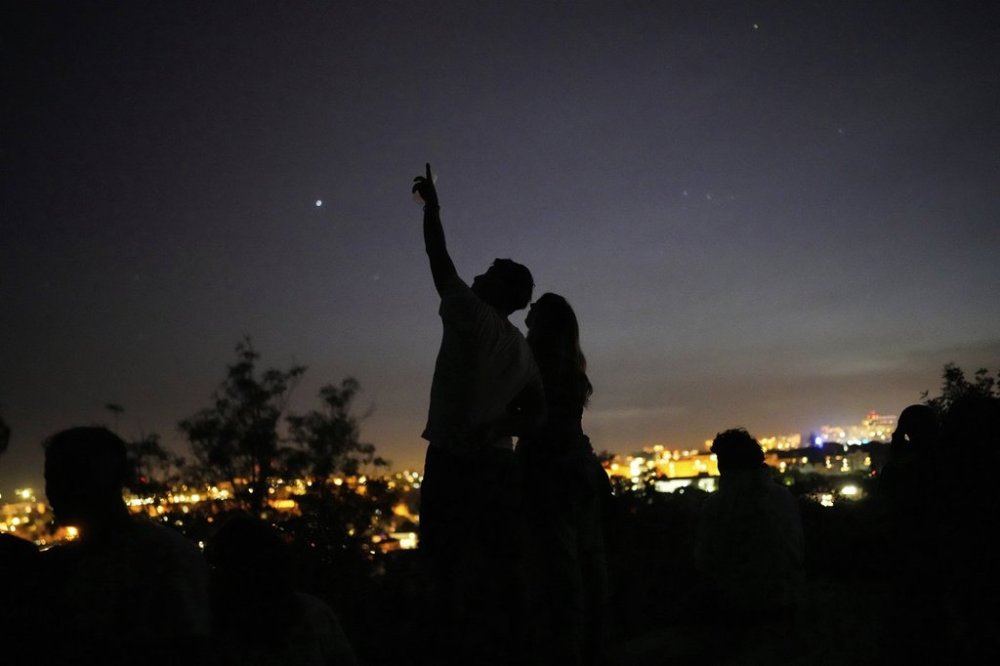
On railway tracks in the middle of nowhere, stranded passengers practiced viral dance moves as they waited for rescue. Lisbon locals joined tourists at scenic viewpoints and partied under the stars. People across the peninsula sang a cappella or played their instruments in the dark.
The world ceased its whirring and time stood still. Anxiety faded. There was boredom but also mindfulness.
When lampposts finally lit up, crowds celebrated, shouting and waving their hands in the air as if their soccer team had scored.
The power was back. And the notifications pinged again.
___
Associated Press journalists Tales Azzoni in Madrid, Hernán Muñoz in Barcelona and Armando Franca in Lisbon contributed to this report.