

South Africa to hold inquiry into whether prosecutions of apartheid-era crimes were blocked
Advertisement
Read this article for free:
or
Already have an account? Log in here »
To continue reading, please subscribe:

Digital Subscription
One year of digital access for only $205*
- Enjoy unlimited reading on winnipegfreepress.com
- Read the E-Edition, our digital replica newspaper
- Access News Break, our award-winning app
- Play interactive puzzles
*First annual payment billed as $205.00 + GST for one year. This annual subscription will automatically renew at $233.00 + GST every 52 weeks (10% off the regular annual price of $259.35). Offer available to new and qualified returning subscribers only. Cancel any time.
To continue reading, please subscribe:
Add Free Press access to your Brandon Sun subscription for only an additional
$1 for the first 4 weeks*
- Enjoy unlimited reading on winnipegfreepress.com
- Read the E-Edition, our digital replica newspaper
- Access News Break, our award-winning app
- Play interactive puzzles
*Your next Brandon Sun subscription payment will increase by $1.00 and you will be charged $17.95 plus GST for four weeks. After four weeks, your payment will increase to $24.95 plus GST every four weeks.
Read unlimited articles for free today:
or
Already have an account? Log in here »
Hey there, time traveller!
This article was published 30/04/2025 (503 days ago), so information in it may no longer be current.
CAPE TOWN, South Africa (AP) — South African President Cyril Ramaphosa ordered an inquiry Wednesday to establish whether previous governments led by his party intentionally blocked investigations and prosecutions of apartheid-era crimes.
The landmark move, which survivors and families of those who were killed have demanded for more than 20 years, will address allegations of “improper influence in delaying or hindering” investigations that have been levelled against post-apartheid governments led by the African National Congress party, Ramaphosa’s office said in a statement.
The ANC was the organization at the forefront of the battle against the system of white minority rule and led South Africa to democracy when apartheid ended in 1994. But ANC-led governments since then have been criticized by some for prioritizing national reconciliation ahead of justice for victims.
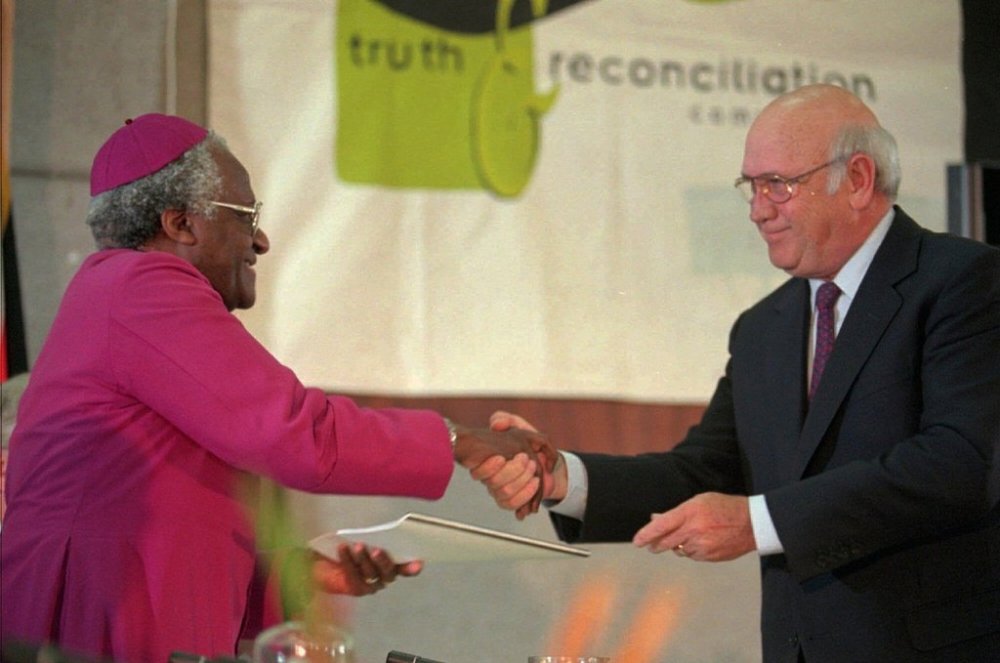
Ramaphosa’s announcement of a judicial commission of inquiry came after 25 survivors and relatives of victims of apartheid-era crimes launched a court case against his government in January seeking damages. They alleged that successive South African governments since the late 1990s had failed to properly investigate unresolved killings, disappearances and other crimes during the time of forced racial segregation despite recommendations made by the post-apartheid Truth and Reconciliation Commission.
The new inquiry was part of a settlement agreement in the January court case, Ramaphosa’s office said.
“President Ramaphosa appreciates the anguish and frustration of the families of victims, who have fought for so many years for justice,” it said.
The Truth and Reconciliation Commission was set up in 1996 by then-President Nelson Mandela under the chairmanship of fellow Nobel Peace Prize winner Desmond Tutu. Its mission was to expose and record apartheid-era crimes and give some of those responsible an opportunity to confess their role, including members of the apartheid government’s state security forces that were implicated in many killings.
Some were granted amnesty from prosecution, but others didn’t come forward and thousands were denied amnesty.
One of the most prominent unresolved cases is that of the Cradock Four, a group of Black anti-apartheid activists who were abducted and murdered by security forces in 1985. Their bodies were burned and security officers were suspected of torturing them.
Six former police officers appeared before the commission in 1999 over the murders of Fort Calata, Matthew Goniwe, Sicelo Mhlauli, and Sparrow Mkonto, but none of them were granted amnesty.
No one has been prosecuted for the killings and the circumstances of the deaths have never been fully revealed. They are among the thousands of crimes during apartheid where victims and families still haven’t seen justice.
Lukhanyo Calata, whose father Fort was one of the Cradock Four, is part of the group that took the current South African government to court in January. He said at the start of that court case that successive South African governments since the administration of President Thabo Mbeki from 1999-2008 had failed to act on the commission’s recommendations and had denied victims and their families justice. He and other relatives say that government ministers intervened to prevent the investigation and prosecution of crimes.
While the majority of the victims of apartheid-era crimes were Black, whites have also sought justice decades later. The joint case against the government included Neville Beling and Karl Weber, who are survivors of the Highgate Hotel Massacre, where five white people were killed by gunmen who burst into a bar and shot customers in 1993.
A new inquest into those shootings began earlier this year in an effort to shed light on who the killers were. A separate inquest into what happened to the Cradock Four is due to start in June, 40 years to the month after they were killed.
___
AP Africa news: https://apnews.com/hub/africa