

Livestream of moose migrating to summer pastures that had millions hooked ends
Advertisement
Read this article for free:
or
Already have an account? Log in here »
To continue reading, please subscribe:
Monthly Digital Subscription
$1 per week for 24 weeks*
- Enjoy unlimited reading on winnipegfreepress.com
- Read the E-Edition, our digital replica newspaper
- Access News Break, our award-winning app
- Play interactive puzzles
*Billed as $4.00 plus GST every four weeks. After 24 weeks, price increases to the regular rate of $19.95 plus GST every four weeks. Offer available to new and qualified returning subscribers only. Cancel any time.
Monthly Digital Subscription
$4.99/week*
- Enjoy unlimited reading on winnipegfreepress.com
- Read the E-Edition, our digital replica newspaper
- Access News Break, our award-winning app
- Play interactive puzzles
*Billed as $19.95 plus GST every four weeks. Cancel any time.
To continue reading, please subscribe:
Add Free Press access to your Brandon Sun subscription for only an additional
$1 for the first 4 weeks*
*Your next subscription payment will increase by $1.00 and you will be charged $16.99 plus GST for four weeks. After four weeks, your payment will increase to $23.99 plus GST every four weeks.
Read unlimited articles for free today:
or
Already have an account? Log in here »
Hey there, time traveller!
This article was published 04/05/2025 (326 days ago), so information in it may no longer be current.
STOCKHOLM (AP) — The seventh season of Swedish slow TV hit “The Great Moose Migration” ended Sunday night after 20 days of 24-hour live coverage.
The show, called “Den stora älgvandringen” in Swedish, began in 2019 with nearly a million people watching. In 2024, the production hit 9 million viewers on SVT Play, the streaming platform for national broadcaster SVT.
By 10 p.m. local time (2000GMT) Sunday, the end of the production, the livestream’s remote cameras had captured 70 moose swimming across the Ångerman River, some 300 kilometers (187 miles) northwest of Stockholm, in the annual spring migration toward summer grazing pastures.
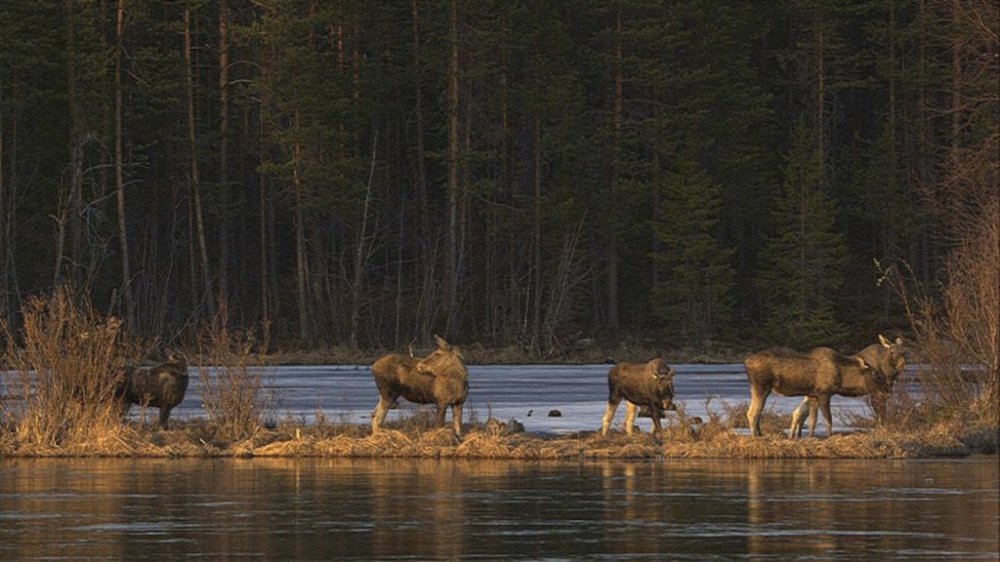
The program kicked off April 15, a week ahead of schedule due to warm weather and early moose movement.
Johan Erhag, SVT’s project manager for “The Great Moose Migration,” said this year’s crew will have produced 478 hours of footage — “which we are very satisfied with,” he wrote in an email to The Associated Press Saturday evening.
Figures for this year’s audience were not immediately available, but Erhag said roughly 30% of the viewers tuned in from outside Sweden. The 2025 production attracted international headlines from the New York Times, CNN, Sky News and France 24, among others, following an AP story that published April 15.
“I think AP has been a key for the success around the world this year, absolutely,” Erhag wrote hours before the final footage aired on Sunday night.
The program will return to SVT next spring for its eighth season.
“The Great Moose Migration” is part of a trend that began in 2009 with Norwegian public broadcaster NRK’s minute-by-minute airing of a seven-hour train trip across the southern part of the country.
The slow TV style of programming has spread, with productions in the United Kingdom, China and elsewhere. The central Dutch city of Utrecht, for example, installed a “ fish doorbell ” on a river lock that lets livestream viewers alert authorities to fish being held up as they migrate to spawning grounds.