

India and Pakistan have been in conflict since 1947 Partition. A look at its troubled legacy
Advertisement
Read this article for free:
or
Already have an account? Log in here »
To continue reading, please subscribe:

Digital Subscription
One year of digital access for only $205*
- Enjoy unlimited reading on winnipegfreepress.com
- Read the E-Edition, our digital replica newspaper
- Access News Break, our award-winning app
- Play interactive puzzles
*First annual payment billed as $205.00 + GST for one year. This annual subscription will automatically renew at $233.00 + GST every 52 weeks (10% off the regular annual price of $259.35). Offer available to new and qualified returning subscribers only. Cancel any time.
To continue reading, please subscribe:
Add Free Press access to your Brandon Sun subscription for only an additional
$1 for the first 4 weeks*
- Enjoy unlimited reading on winnipegfreepress.com
- Read the E-Edition, our digital replica newspaper
- Access News Break, our award-winning app
- Play interactive puzzles
*Your next Brandon Sun subscription payment will increase by $1.00 and you will be charged $17.95 plus GST for four weeks. After four weeks, your payment will increase to $24.95 plus GST every four weeks.
Read unlimited articles for free today:
or
Already have an account? Log in here »
Hey there, time traveller!
This article was published 09/05/2025 (517 days ago), so information in it may no longer be current.
NEW DELHI (AP) — India and Pakistan have agreed to a ceasefire following U.S.-led talks to end the most serious military confrontation between the nuclear-armed rivals in decades.
The ceasefire deal on Saturday follows weeks of clashes, missile and drone strikes across their borders that were triggered by a gun massacre of tourists last month that India blames on Pakistan, which denies the charge. Dozens of civilians have been killed on both sides.
The fresh round of confrontation was yet another escalation of a decades-long conflict over the disputed Kashmir region that began after a bloody partition of India in 1947.
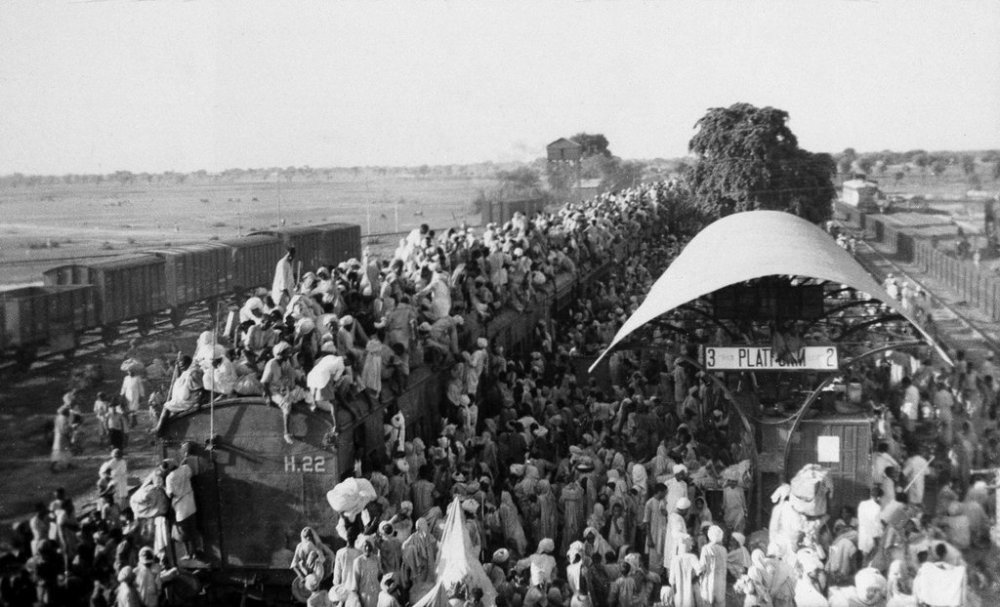
Here’s a look at the troubled legacy of Partition that has dictated the future course of India-Pakistan relations:
Partition created two new nations
In August 1947, Britain divided India, its former colony, into two countries — Hindu-majority India and Muslim-majority Pakistan. The fate of Kashmir — then a princely state — was left undecided.
Excitement over independence was quickly overshadowed by some of the worst bloodletting that left up to 1 million people dead as gangs of Hindus and Muslims slaughtered each other.
It divided millions of families
Creating two independent nations also tore apart millions of Hindu and Muslim families in one of the world’s largest peacetime migrations.
Many fled their homes and lost their property, never imagining that they would not be able to return.
At least 15 million people were displaced.
Both nations lay claim over Kashmir
Within months, both India and Pakistan laid claim over Kashmir, a Muslim-majority region.
Kashmir’s Hindu ruler wanted to stay independent, but local armed uprisings flared in various parts of Kashmir, along with a raid by tribesmen from Pakistan. It forced the monarch to seek help from India, which offered military assistance on condition that the kingdom link itself to India.
The Indian military entered the region soon after, with the tribal raid spiraling into the first of two wars between India and Pakistan over Kashmir. That war ended in 1948 with a U.N.-brokered ceasefire. Kashmir was divided between the two young nations by the heavily militarized Ceasefire Line that was later named Line of Control.
A U.N.-sponsored vote that was promised to Kashmiris would have enabled the region’s people to decide whether to be part Pakistan or India. That vote has never been held.
India and Pakistan fought another war, in 1965, and a limited conflict, in 1999, over Indian-controlled Kashmir.
Insurgency in Kashmir
Kashmiri discontent with Indian rule took root as successive governments reneged on a promise to allow a referendum while largely peaceful movements against Indian control were suppressed harshly.
By 1989, Indian-controlled Kashmir was in the throes of a full-blown rebellion.
India decries the rebellion as Islamabad’s proxy war and state-sponsored terrorism. Pakistan denies that.
Many Muslim Kashmiris consider it a legitimate freedom struggle and support the rebel goal that the territory be united, either under Pakistani rule or as an independent country.
Tens of thousands of civilians, rebels and government forces have been killed in the conflict.