

Alabama governor signs speedy trial bill into law, seeking to speed prosecution of violent crimes
Advertisement
Read this article for free:
or
Already have an account? Log in here »
To continue reading, please subscribe:
Monthly Digital Subscription
$1 per week for 24 weeks*
- Enjoy unlimited reading on winnipegfreepress.com
- Read the E-Edition, our digital replica newspaper
- Access News Break, our award-winning app
- Play interactive puzzles
*Billed as $4.00 plus GST every four weeks. After 24 weeks, price increases to the regular rate of $19.95 plus GST every four weeks. Offer available to new and qualified returning subscribers only. Cancel any time.
Monthly Digital Subscription
$4.99/week*
- Enjoy unlimited reading on winnipegfreepress.com
- Read the E-Edition, our digital replica newspaper
- Access News Break, our award-winning app
- Play interactive puzzles
*Billed as $19.95 plus GST every four weeks. Cancel any time.
To continue reading, please subscribe:
Add Free Press access to your Brandon Sun subscription for only an additional
$1 for the first 4 weeks*
*Your next subscription payment will increase by $1.00 and you will be charged $16.99 plus GST for four weeks. After four weeks, your payment will increase to $23.99 plus GST every four weeks.
Read unlimited articles for free today:
or
Already have an account? Log in here »
Hey there, time traveller!
This article was published 13/05/2025 (321 days ago), so information in it may no longer be current.
MONTGOMERY, Ala. (AP) — Alabama Gov. Kay Ivey signed legislation Tuesday to allow visiting judges to be brought in to handle violent criminal cases to get them to trial more quickly.
The law known as the Speedy Trial Act allows the chief justice of the Alabama Supreme Court to appoint a sitting or retired judge to preside over a specific case or cases involving a violent offense. Under the act, the attorney general or a district attorney must request the appointments.
On the same day the bill was signed, Alabama Attorney General Steve Marshall asked Chief Justice Sarah Stewart to appoint a visiting judge to handle the case of the man accused of the 2019 kidnapping and killing of college student Aniah Blanchard, 19. Her disappearance from an Auburn gas station drew national attention.
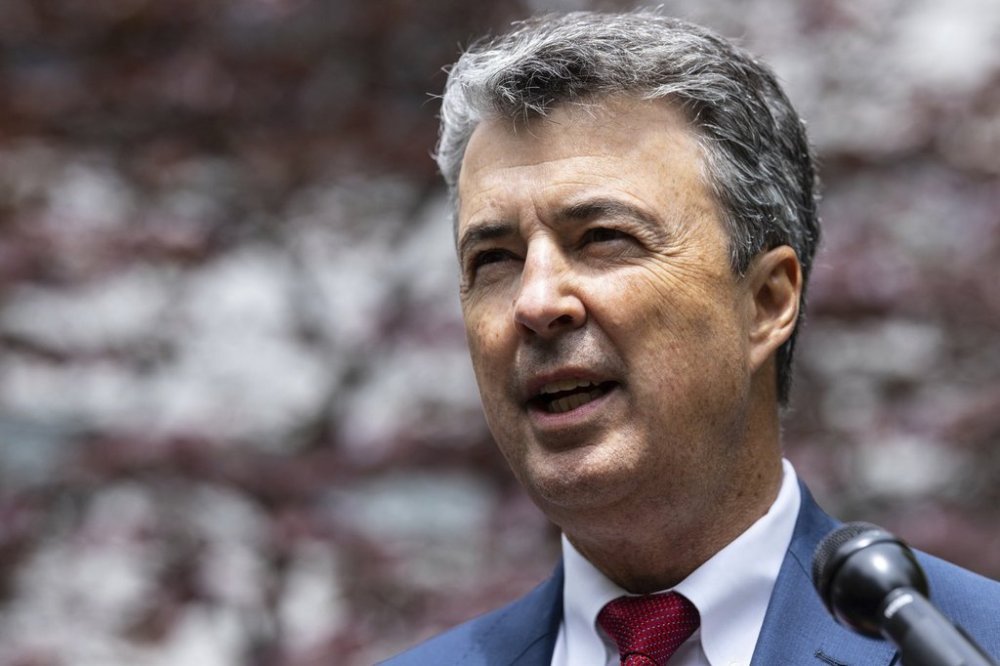
Marshall wrote in the letter to Stewart that “our entire state has watched the repeated delays in this case with angst and frustration.”
Blanchard, a Southern Union student and stepdaughter of prominent UFC fighter Walt Harris, was last seen on Oct. 23, 2019. Her remains were discovered about a month later in a wooded area of Macon County. A trial date has not been set for Ibraheem Yazeed, the man accused of killing Blanchard. He has pleaded not guilty to capital murder charges.
Recently, Marshall’s office had urged lawmakers to pass the legislation.
“There are significant bottlenecks in certain circuits in our state where violent crime cases are not moving quickly and victims are getting frustrated,” Katherine Robertson, who serves as chief counsel for Marshall, said last week after lawmakers approved the bill.
Ivey also referred to the Blanchard case while signing the legislation into law.