

Extreme wind blamed for sinking of superyacht off Sicily last year, British probe says
Advertisement
Read this article for free:
or
Already have an account? Log in here »
To continue reading, please subscribe:

Digital Subscription
One year of digital access for only $205*
- Enjoy unlimited reading on winnipegfreepress.com
- Read the E-Edition, our digital replica newspaper
- Access News Break, our award-winning app
- Play interactive puzzles
*First annual payment billed as $205.00 + GST for one year. This annual subscription will automatically renew at $233.00 + GST every 52 weeks (10% off the regular annual price of $259.35). Offer available to new and qualified returning subscribers only. Cancel any time.
To continue reading, please subscribe:
Add Free Press access to your Brandon Sun subscription for only an additional
$1 for the first 4 weeks*
- Enjoy unlimited reading on winnipegfreepress.com
- Read the E-Edition, our digital replica newspaper
- Access News Break, our award-winning app
- Play interactive puzzles
*Your next Brandon Sun subscription payment will increase by $1.00 and you will be charged $17.95 plus GST for four weeks. After four weeks, your payment will increase to $24.95 plus GST every four weeks.
Read unlimited articles for free today:
or
Already have an account? Log in here »
Hey there, time traveller!
This article was published 15/05/2025 (502 days ago), so information in it may no longer be current.
LONDON (AP) — The superyacht of British tech magnate Mike Lynch, which capsized last August off the coast of Sicily at the cost of seven lives, was knocked over by “extreme wind” and could not recover, British investigators said Thursday.
Billionaire entrepreneur Lynch, 59, and his daughter Hannah, 18, were among the dead when the 56-meter (184 feet) Bayesian sank Aug. 19 last year. The boat trip was a celebration of Lynch’s acquittal in a fraud case in the U.S. in June.
In an interim report on the disaster, Britain’s Marine Accident Investigation Branch said the boat was “vulnerable” to winds that were even lighter than the ones that tipped it over. The report was based on “a limited amount of verified evidence” as a criminal investigation by Italian authorities has restricted its access to the wreck and other pieces of evidence, it said.
The agency, which is investigating the disaster because the Bayesian was registered in the U.K, said the “vulnerabilities” were “unknown to either the owner or the crew,” as they were not included in the stability information book carried on board.
The report stated that the Bayesian was sailed to the site where it sank the day before in order to “shelter” from forecast thunderstorms. It said the disaster occurred at 4:06 a.m. local time, when wind speeds exceeded 70 knots (81 mph.), “violently” knocking the vessel over to a 90-degree angle in under 15 seconds,
It said that at the time of the incident, the vessel was in a “motoring condition” with its sails lowered, while the centerboard, which is used to help stabilize it, was in a “raised” position.
“You have the wind pushing the vessel over and then you have the stability of the vessel trying to push the vessel back up right again,” said Simon Graves, an MAIB investigator. “And what our studies found was that they show that the Bayesian may have been vulnerable to high winds and that these winds were likely to have been evident at the time of the accident.”
Inquest proceedings in the U.K. are looking at the deaths of Lynch and his daughter, as well as Morgan Stanley International bank chairman Jonathan Bloomer, 70, and his wife, Judy Bloomer, 71, who were all British nationals.
The others who died in the sinking were U.S. lawyer Chris Morvillo and his wife Neda Morvillo, and Canadian-Antiguan national Recaldo Thomas, who was working as a chef on the vessel.
Fifteen people, including Lynch’s wife, Angela Bacares, were rescued.
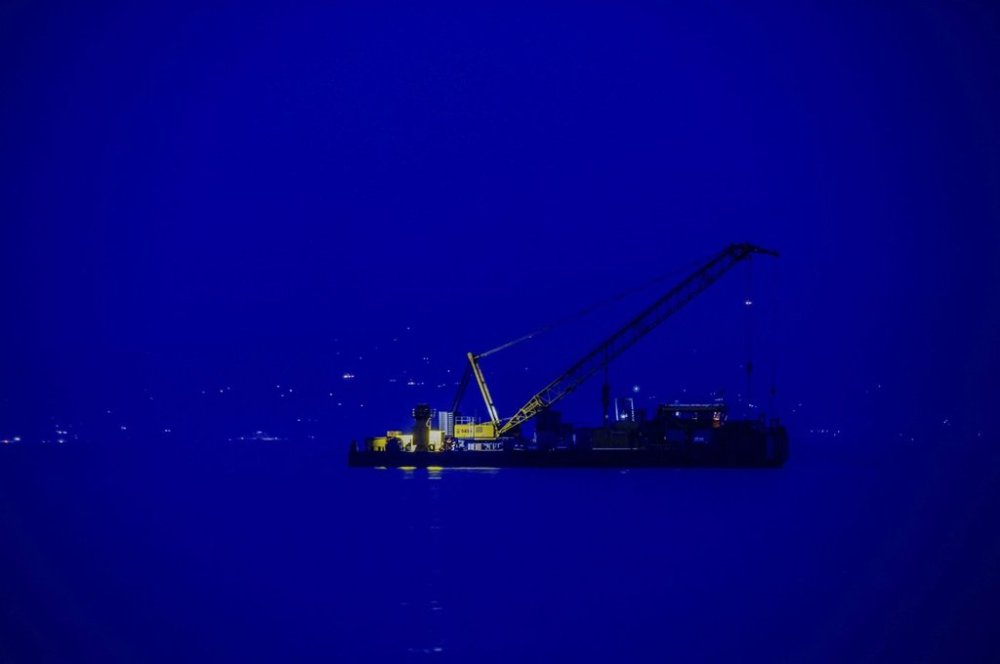
A project to move the Bayesian into an upright position and lift it to the surface has been paused since May 9 when a diver died during underwater work. Recovery work is set to resume from Thursday.
Further details such as “escape routes” will be included in the final report, according to Graves.
“Once we get access to the vessel we’ll be able to tell a fuller picture of activities on board and the sequence of events,” he said.
No date has been set for when the final report will be published.