

North Macedonia’s path toward full EU membership stalled by impasse with Bulgaria
Advertisement
Read this article for free:
or
Already have an account? Log in here »
To continue reading, please subscribe:
Monthly Digital Subscription
$1 per week for 24 weeks*
- Enjoy unlimited reading on winnipegfreepress.com
- Read the E-Edition, our digital replica newspaper
- Access News Break, our award-winning app
- Play interactive puzzles
*Billed as $4.00 plus GST every four weeks. After 24 weeks, price increases to the regular rate of $19.95 plus GST every four weeks. Offer available to new and qualified returning subscribers only. Cancel any time.
Monthly Digital Subscription
$4.99/week*
- Enjoy unlimited reading on winnipegfreepress.com
- Read the E-Edition, our digital replica newspaper
- Access News Break, our award-winning app
- Play interactive puzzles
*Billed as $19.95 plus GST every four weeks. Cancel any time.
To continue reading, please subscribe:
Add Free Press access to your Brandon Sun subscription for only an additional
$1 for the first 4 weeks*
*Your next subscription payment will increase by $1.00 and you will be charged $16.99 plus GST for four weeks. After four weeks, your payment will increase to $23.99 plus GST every four weeks.
Read unlimited articles for free today:
or
Already have an account? Log in here »
Hey there, time traveller!
This article was published 15/05/2025 (318 days ago), so information in it may no longer be current.
SKOPJE, North Macedonia (AP) — European Council President António Costa on Thursday called on North Macedonia to change its constitution to include protections for its Bulgarian minority as a way for the country to continue its path toward full European Union membership.
The EU started membership talks with Albania and North Macedonia in 2022, as the war in Ukraine forced a rethink of the bloc’s enlargement process.
North Macedonia’s bid was delayed by a dispute with Bulgaria over Balkan history, language and culture. To break the impasse, North Macedonia’s previous center-left government accepted a Bulgarian demand to insert a reference to the Bulgarian ethnic minority in North Macedonia’s constitution. However, that administration lacked the parliamentary majority to implement the change.
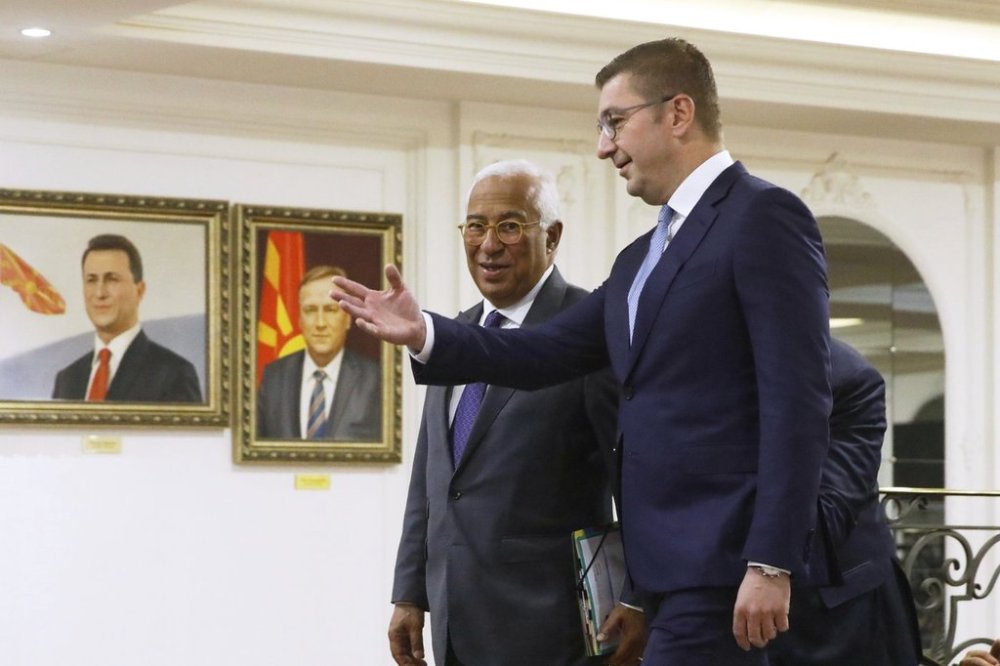
Costa said that the small Balkan country should now deliver what was previously agreed upon.
“I know how difficult it is to achieve. Now is the time to conclude the whole thing and open a new page,” Costa told reporters at a news conference in the North Macedonian capital, Skopje, alongside the country’s Prime Minister Hristijan Mickoski.
Mickoski, for his part, said the bloc’s enlargement must be based on merits, not bilateral issues. His conservative government, which came to power last year, has said it will only amend the constitution if Bulgaria first approves North Macedonia’s EU membership.
“We have a problem, and it should be a two-way street. If only one side delivers, it is not realistic,” he said.
Costa is visiting six Western Balkan countries, which are at different stages on their path to full EU membership. Montenegro and Albania have been at the forefront while Serbia, Bosnia-Herzegovina, Kosovo and North Macedonia are lagging behind.
In Tirana, his last stop of the regional tour, Costa hailed Albania for being “on track to join the European Union.”
“Keeping up the pace and intensifying work on European Union reforms is now key, particularly rule of law and fight against corruption,” said Costa at a news conference with Albanian Prime Minister Edi Rama.
Rama’s Socialist Party says it can deliver EU membership in five years, an ambitious pledge as he confronts an opposition that argues Albania isn’t ready for EU membership.
In Tirana, Costa will co-host the European Political Community, a forum that gathers 47 European leaders with the aim of boosting security and prosperity across the continent.
——
Associated Press correspondent Llazar Semini reported from Tirana, Albania.