

Rotterdam unveils a museum about migration while anti-foreigner sentiment rises in Europe
Advertisement
Read this article for free:
or
Already have an account? Log in here »
To continue reading, please subscribe:
Monthly Digital Subscription
$1 per week for 24 weeks*
- Enjoy unlimited reading on winnipegfreepress.com
- Read the E-Edition, our digital replica newspaper
- Access News Break, our award-winning app
- Play interactive puzzles
*Billed as $4.00 plus GST every four weeks. After 24 weeks, price increases to the regular rate of $19.95 plus GST every four weeks. Offer available to new and qualified returning subscribers only. Cancel any time.
Monthly Digital Subscription
$4.99/week*
- Enjoy unlimited reading on winnipegfreepress.com
- Read the E-Edition, our digital replica newspaper
- Access News Break, our award-winning app
- Play interactive puzzles
*Billed as $19.95 plus GST every four weeks. Cancel any time.
To continue reading, please subscribe:
Add Free Press access to your Brandon Sun subscription for only an additional
$1 for the first 4 weeks*
*Your next subscription payment will increase by $1.00 and you will be charged $16.99 plus GST for four weeks. After four weeks, your payment will increase to $23.99 plus GST every four weeks.
Read unlimited articles for free today:
or
Already have an account? Log in here »
Hey there, time traveller!
This article was published 15/05/2025 (320 days ago), so information in it may no longer be current.
ROTTERDAM, Netherlands (AP) — A gleaming spiral staircase jutting from the roof of a former Dutch warehouse overlooks the waterway where millions of Europeans once boarded ships bound for a new life in the United States.
The twisting path, intended to represent migrants’ unexpected journeys, stands on the Fenix museum, the newest attraction on Rotterdam’s waterfront.
The museum tells the story of migration, with exhibits including thousands of suitcases from travelers, portraits of refugees and a life-sized city bus.
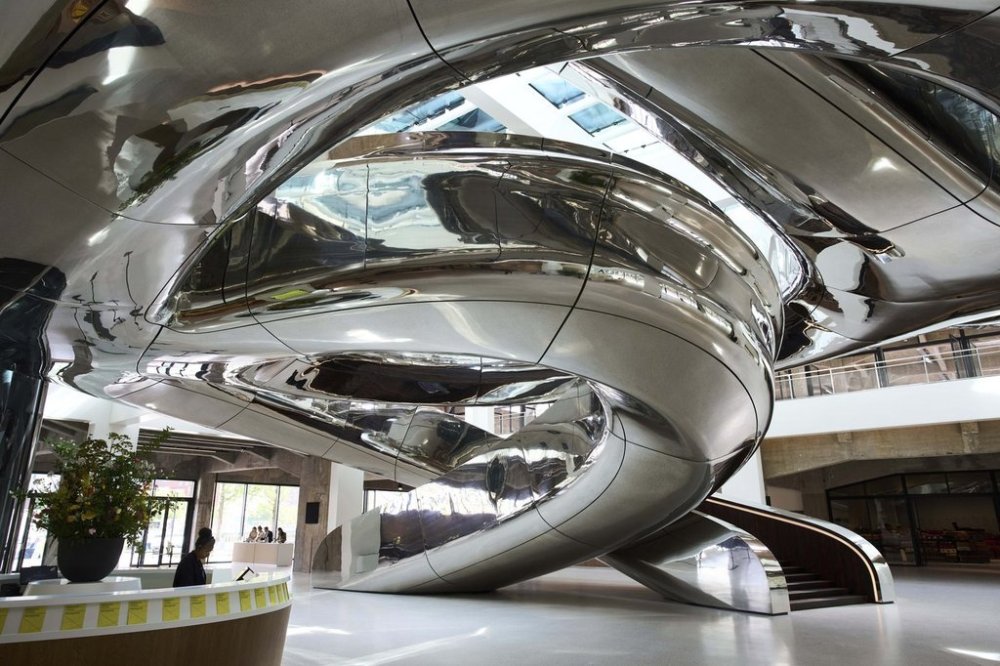
Architect Ma Yansong of Chinese firm MAD Architects told The Associated Press he wanted the building to serve not only as a museum but also as “a memory.”
The museum opens Friday as migration is on the rise, along with anti-immigrant sentiment in many parts of the world. The number of people living outside their country of birth — over 300 million — has nearly doubled since 1990, according to the United Nations.
“As long as we exist as human beings, we move and we migrate. And we will always keep on doing that. And that’s what we show in Fenix,” said the museum’s director, Anne Kremers.
As the museum’s construction continued last year, the hard-right Dutch government announced unprecedented measures aimed at reining in migration, including a reintroduction of border checks. It shattered a long-held image of the Netherlands as a nation that welcomed new arrivals.
The museum’s viewing platform looks out across Rotterdam, whose 650,000 inhabitants represent over 170 nationalities. The city is the largest port in Europe.
Many of those departing Rotterdam in the early part of the 20th century made the trans-Atlantic journey on the Holland America Line, a shipping company founded by the Van der Vorm family in 1873. The family has been the primary financial backer for the Fenix project, via Dutch art foundation Droom en Daad (Dream and Action).
Art can sometimes provide a better basis for discussion of politically loaded topics like migration, said Cathrine Bublatzky, an anthropologist who studies the intersection of art and migration.
Kremers said she hopes visitors will take away “what it feels like to leave your home, to find a new home, and to say farewell.”