

DHS asks for 20,000 National Guard troops for immigration roundups, Pentagon reviewing request
Advertisement
Read this article for free:
or
Already have an account? Log in here »
To continue reading, please subscribe:
Digital Subscription
One year of digital access for only $1.44 a week*
- Enjoy unlimited reading on winnipegfreepress.com
- Read the E-Edition, our digital replica newspaper
- Access News Break, our award-winning app
- Play interactive puzzles
*Billed as $5.77 plus GST every four weeks. After 52 weeks, price increases to the regular rate of $19.95 plus GST every four weeks. Offer available to new and qualified returning subscribers only. Cancel any time.
To continue reading, please subscribe:
Add Free Press access to your Brandon Sun subscription for only an additional
$1 for the first 4 weeks*
- Enjoy unlimited reading on winnipegfreepress.com
- Read the E-Edition, our digital replica newspaper
- Access News Break, our award-winning app
- Play interactive puzzles
*Your next Brandon Sun subscription payment will increase by $1.00 and you will be charged $17.95 plus GST for four weeks. After four weeks, your payment will increase to $24.95 plus GST every four weeks.
Read unlimited articles for free today:
or
Already have an account? Log in here »
Hey there, time traveller!
This article was published 16/05/2025 (380 days ago), so information in it may no longer be current.
WASHINGTON (AP) — The Department of Homeland Security has asked for 20,000 National Guard troops to assist with immigration roundups across the country, and the Pentagon is reviewing the unusual request, a U.S. official confirmed to The Associated Press.
DHS asked for the troops to help carry out President Donald Trump’s “mandate from the American people to arrest and deport criminal illegal aliens,” department spokeswoman Tricia McLaughlin said. She said DHS will ”use every tool and resource available” to do so because the “safety of American citizens comes first.”
Unlike the troops deployed at the southern border, these National Guard units would come from the states and be used to assist in deportation operations in the interior of the country.
How the troops would be used may depend on whether they remain under state governors’ control. Under the Posse Comitatus Act, troops under federal orders cannot be used for domestic law enforcement, but units under state control can.
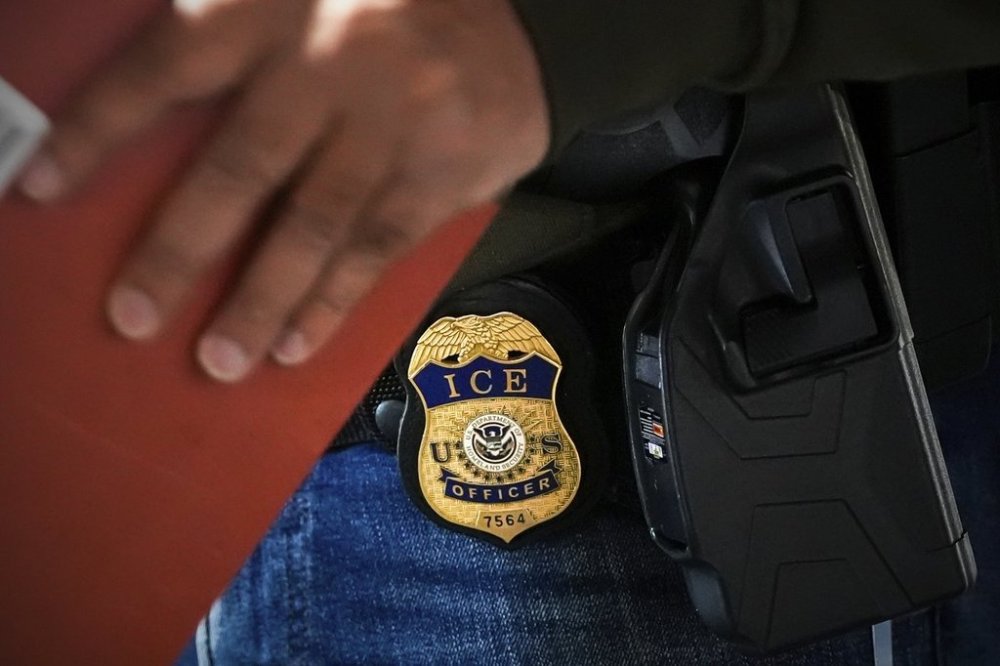
The addition of 20,000 National Guard troops would provide a huge boost to immigration enforcement. Immigration and Customs Enforcement, the DHS agency responsible for immigration enforcement in the interior of the country, has a total staff of about 20,000 people spread across three divisions.
Enforcement and Removals Operations, which is the division directly responsible for arresting and removing people who do not have the right to stay in the country, has a total staff of roughly 7,700 people, including a little over 6,000 law enforcement officers.
It was unclear why the request was made to the Defense Department and not to the states. The U.S. official spoke on condition of anonymity to provide details not yet made public.
Trump has been carrying out a wide-ranging crackdown on illegal immigration, issuing a series of executive orders designed to stop what he has called the “invasion” of the United States.
The U.S. already has as many as 10,000 troops under state and federal orders along the U.S.-Mexico border, including some who are now empowered to detain migrants they encounter along a newly militarized narrow strip of land adjacent to the border.
So far, these troops have largely been limited to providing airlift, bolstering the wall, surveillance and administrative support to free up border agents for arrests or detentions.
Along the newly militarized zone, troops have put up warning signs and accompanied border agents but left the detention of migrants crossing the border to other agencies.
In New Mexico, where the new militarized zone was first created, federal magistrate judges have started dismissing national security charges against migrants accused of crossing the southern U.S. border through the newly designated military zone, finding little evidence that they were aware of the zone.
The request for 20,000 troops was first reported by The New York Times.
___