

Planned water reserve intended to ease shortages in the Panama Canal fuels river protest
Advertisement
Read this article for free:
or
Already have an account? Log in here »
To continue reading, please subscribe:

Digital Subscription
One year of digital access for only $205*
- Enjoy unlimited reading on winnipegfreepress.com
- Read the E-Edition, our digital replica newspaper
- Access News Break, our award-winning app
- Play interactive puzzles
*First annual payment billed as $205.00 + GST for one year. This annual subscription will automatically renew at $233.00 + GST every 52 weeks (10% off the regular annual price of $259.35). Offer available to new and qualified returning subscribers only. Cancel any time.
To continue reading, please subscribe:
Add Free Press access to your Brandon Sun subscription for only an additional
$1 for the first 4 weeks*
- Enjoy unlimited reading on winnipegfreepress.com
- Read the E-Edition, our digital replica newspaper
- Access News Break, our award-winning app
- Play interactive puzzles
*Your next Brandon Sun subscription payment will increase by $1.00 and you will be charged $17.95 plus GST for four weeks. After four weeks, your payment will increase to $24.95 plus GST every four weeks.
Read unlimited articles for free today:
or
Already have an account? Log in here »
Hey there, time traveller!
This article was published 16/05/2025 (487 days ago), so information in it may no longer be current.
PANAMA CITY (AP) — Dozens of boats carrying around 200 people, mostly farmers waving Panamanian flags, traveled along the country’s central Indio River on Friday to protest a planned reservoir in the Panama Canal intended to solve water shortages in the waterway that have threatened international trade flow.
The Panama Canal Authority (ACP) says building the reservoir is the best way to provide an additional water source for over 2 million people in Panama City and to ensure the canal operates efficiently in the coming decades.
The canal, which needs around 189 million liters (50 million gallons) of freshwater for each ship crossing, faced severe water shortages in 2023 due to lack of rain, forcing authorities to cut crossings by 20% and delay traffic. The proposed reservoir, which would take four years and $1.6 billion to build, could allow 12 to 13 more ship crossings per day and support new water treatment facilities being built, authorities say.
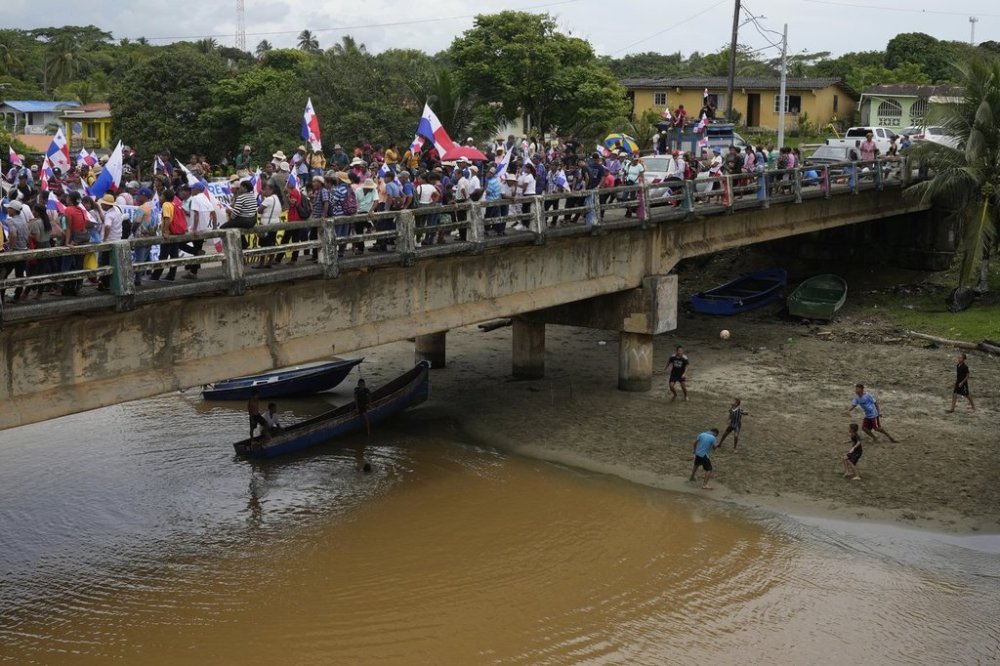
But protesters say building the reservoir using the Indio River, in the canal’s watershed, would also force 2,000 people to be relocated from their homes because their communities would be flooded. Other areas downstream could also be affected by reduced river flow.
Iris Gallardo, a teacher from the Guasimo community and a member of the “No to Reservoirs” movement, was among the group of mostly farmers waving Panamanian flags. She told the Associated Press they held the boat protest to show their rejection of the project and forced relocations.
“We are demanding that the multipurpose reservoir proposed by the ACP not be built without consulting and getting permission from the affected communities,” Gallardo said.
Instead, protestors suggest using the nearby Bayano Lake, located east of the capital. Authorities dismissed that idea due to logistical, legal challenges and cost, and said that such a project would displace 200,000 people – far more than the current plan. They said the project would also offer jobs to communities and that the resettlement plan is being developed with the community.
Former Panama Canal administrator Jorge Luis Quijano said opponents of the project don’t understand how serious the water problem is.
“The only way to have water is to store it,” he said.