

US and regional countries team up to resolve the issue of IS prisoners in Syria
Advertisement
Read this article for free:
or
Already have an account? Log in here »
To continue reading, please subscribe:

Digital Subscription
One year of digital access for only $205*
- Enjoy unlimited reading on winnipegfreepress.com
- Read the E-Edition, our digital replica newspaper
- Access News Break, our award-winning app
- Play interactive puzzles
*First annual payment billed as $205.00 + GST for one year. This annual subscription will automatically renew at $233.00 + GST every 52 weeks (10% off the regular annual price of $259.35). Offer available to new and qualified returning subscribers only. Cancel any time.
To continue reading, please subscribe:
Add Free Press access to your Brandon Sun subscription for only an additional
$1 for the first 4 weeks*
- Enjoy unlimited reading on winnipegfreepress.com
- Read the E-Edition, our digital replica newspaper
- Access News Break, our award-winning app
- Play interactive puzzles
*Your next Brandon Sun subscription payment will increase by $1.00 and you will be charged $17.95 plus GST for four weeks. After four weeks, your payment will increase to $24.95 plus GST every four weeks.
Read unlimited articles for free today:
or
Already have an account? Log in here »
Hey there, time traveller!
This article was published 22/05/2025 (502 days ago), so information in it may no longer be current.
ISTANBUL (AP) — Turkey, the United States, Syria and Iraq have formed a working group to try to resolve the issue of Islamic State group prisoners held in Syria, Turkish President Recep Tayyip Erdogan said in comments published Thursday.
The Kurdish-led Syrian Democratic Forces, or SDF, control large parts of northeast Syria bordering Turkey and Iraq and oversee more than a dozen prison camps holding thousands of suspected IS fighters and their families.
U.S. President Donald Trump asked the Syrian government to “assume responsibility” for some 9,000 IS prisoners when he met Syrian President President Ahmad al-Sharaa in Saudi Arabia on May 14.
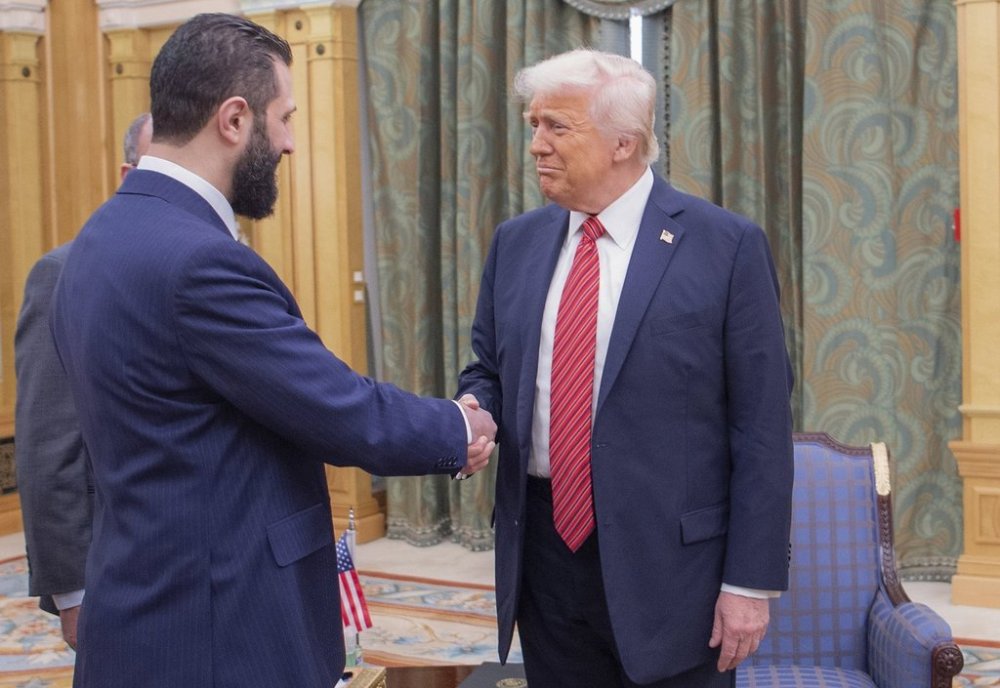
Erdogan said a committee had been formed to work out what to do with the prisoners, particularly women and children held at refugee camps such as Al-Hol in northern Syria. His comments on the presidential website were released as he returned from a trip to Hungary.
“Iraq needs to focus on the issue of the camps,” Erdogan said. “The vast majority of women and children in the Al Hol camp in particular belong to Iraq and Syria. They should do what is necessary for them.”
In 2014, IS declared a caliphate in large parts of Iraq and Syria and attracted tens of thousands of supporters from around the world. The extremists were defeated by a U.S.-led coalition in Iraq in 2017 and in Syria in 2019. Tens of thousands of people linked to the group were taken to al-Hol camp close to the Iraqi border.
It is anticipated that the government in Damascus will take control of the prison camps, a move Erdogan said would make it easier to integrate the Kurdish forces in Syria.
Kurdish fighters in Syria have ties to the Kurdistan Workers’ Party, or PKK, which on May 12 agreed to dissolve and lay down its weapons following a four-decade insurgency against Turkey.
Meanwhile, Turkish Energy Minister Alparslan Bayraktar said Thursday that Turkey will start exporting natural gas to provide electricity to Syria.
“We will soon start exporting gas that will reach Aleppo and Homs, with an annual contribution of approximately 2 billion cubic meters, or 1,200 to 1,300 megawatts, to the electricity production here,” he said during a joint news conference in Damascus.
Syrian Energy Minister Mohammed Bashir said a gas pipeline coming from Turkey’s Kilis provide would become operational in June. The heat from burning gas is used to create electricity by spinning a turbine that in turn powers a generator.
Bayraktar said the increase in gas exports represented a tripling of the present level. He added that Turkey was helping Syria to exploit its own oil and gas resources as well as “discovering new resources, on both land and sea, and using the economic values … from these in Syria’s reconstruction and infrastructure.”