

Australia’s new youngest senator elected at 21 with unexpected win
Advertisement
Read this article for free:
or
Already have an account? Log in here »
To continue reading, please subscribe:
Monthly Digital Subscription
$1 per week for 24 weeks*
- Enjoy unlimited reading on winnipegfreepress.com
- Read the E-Edition, our digital replica newspaper
- Access News Break, our award-winning app
- Play interactive puzzles
*Billed as $4.00 plus GST every four weeks. After 24 weeks, price increases to the regular rate of $19.95 plus GST every four weeks. Offer available to new and qualified returning subscribers only. Cancel any time.
Monthly Digital Subscription
$4.99/week*
- Enjoy unlimited reading on winnipegfreepress.com
- Read the E-Edition, our digital replica newspaper
- Access News Break, our award-winning app
- Play interactive puzzles
*Billed as $19.95 plus GST every four weeks. Cancel any time.
To continue reading, please subscribe:
Add Free Press access to your Brandon Sun subscription for only an additional
$1 for the first 4 weeks*
*Your next subscription payment will increase by $1.00 and you will be charged $16.99 plus GST for four weeks. After four weeks, your payment will increase to $23.99 plus GST every four weeks.
Read unlimited articles for free today:
or
Already have an account? Log in here »
Hey there, time traveller!
This article was published 27/05/2025 (304 days ago), so information in it may no longer be current.
A woman who turned 21 on the day of Australia’s federal election in May has been declared the nation’s youngest ever senator.
And like many female candidates who run for election in Australia, Charlotte Walker wasn’t expected to win.
The former union official won the governing center-left Labor Party’s third Senate seat for South Australia state in a complicated rank order voting system. A party’s third choice rarely wins.
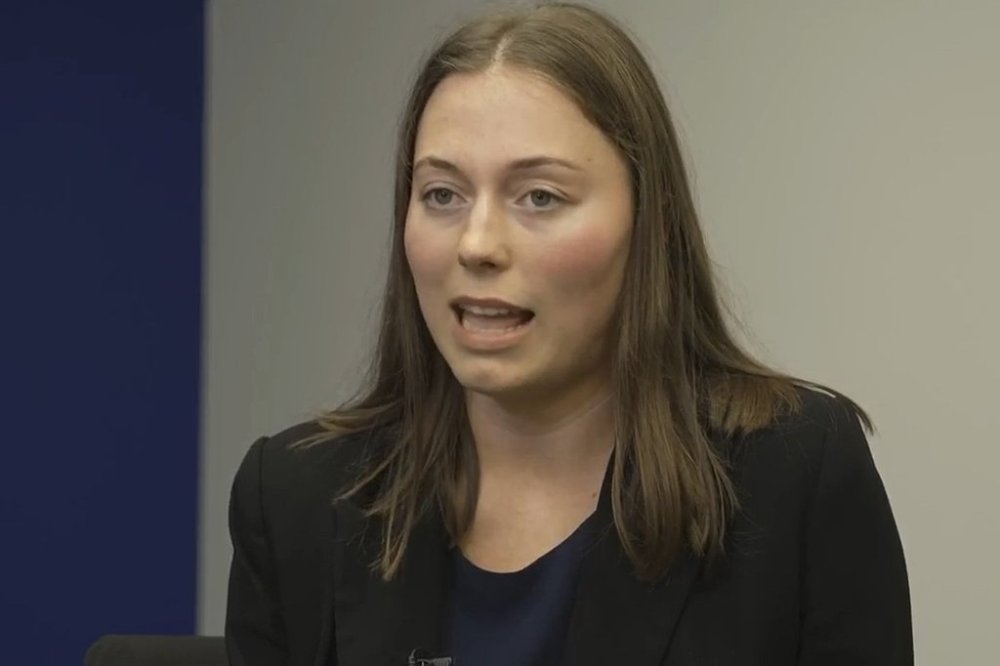
She had the lowest vote count of the six newly elected senators for the state. The Australian Electoral Commission officially declared the poll Tuesday.
The new job will be a “big adjustment,” said Walker, who starts her six-year term July 1. A federal lawmaker’s base salary is more than 205,000 Australian dollars ($133,000) annually.
“There’s a few feelings. Obviously, there’s a lot of pressure,” Walker told Australian Broadcasting Corp. after the results were announced late Monday.
“I want to do a good job for South Australians, but I also want to show young people, particularly young women, that this is achievable and this is something that they can do also. I’m also really excited. Not many people my age get to … go to Canberra and have the ability to contribute in the way that I will,” she added.
Previous young lawmakers
Before Walker, the youngest senator was Jordon Steele-John of the Greens party, who was elected for Western Australia state in 2017 at the age of 23.
Australia’s youngest-ever federal lawmaker was Wyatt Roy, who was elected to the House of Representatives in 2010 at the age of 20. He lasted two three-year terms before he was voted out of his Queensland state seat.
Large swings at elections as occurred May 3 typically bring a larger proportion of women into the Parliament in seats that their parties hadn’t realistically expected to win. Often the newcomers lose their seats when votes swing back at the next election.
Prime Minister Anthony Albanese expects 57% of Labor lawmakers in the Senate and House of Representatives will be women when the new Parliament first sits on July 22. The proportion of women was 52% during Albanese’s first term in government.
Australian governments usually lose seats in their second term. Albanese leads the first federal government not to lose a single seat at an election since 1966. Labor is expected to hold 94 seats in the 150-seat House of Representatives, up from 78 in the last Parliament.
Australian National University political historian Frank Bongiorno said unexpected swings can put women candidates into Parliament after seeking apparently unwinnable seats .
But Bongiorno said Labor had been working on increasing women’s representation since the party introduced a quota in 1994 that stated 35% of candidates in winnable seats had to be female.
“The fact that we now have not 50%, but 57% is partly a function of obviously just the size of the swing, but it is also, I think, very deliberate changes that have occurred within the Labor Party over about 30 years from what was a very male-dominated culture and environment,” Bongiorno said.
The odds had been stacked against Walker being elected as her party’s third choice in South Australia, Bongiorno said.