

Judge temporarily blocks Trump from retaliating against New York over congestion toll
Advertisement
Read this article for free:
or
Already have an account? Log in here »
To continue reading, please subscribe:
Digital Subscription
One year of digital access for only $1.44 a week*
- Enjoy unlimited reading on winnipegfreepress.com
- Read the E-Edition, our digital replica newspaper
- Access News Break, our award-winning app
- Play interactive puzzles
*Billed as $5.77 plus GST every four weeks. After 52 weeks, price increases to the regular rate of $19.95 plus GST every four weeks. Offer available to new and qualified returning subscribers only. Cancel any time.
To continue reading, please subscribe:
Add Free Press access to your Brandon Sun subscription for only an additional
$1 for the first 4 weeks*
- Enjoy unlimited reading on winnipegfreepress.com
- Read the E-Edition, our digital replica newspaper
- Access News Break, our award-winning app
- Play interactive puzzles
*Your next Brandon Sun subscription payment will increase by $1.00 and you will be charged $17.95 plus GST for four weeks. After four weeks, your payment will increase to $24.95 plus GST every four weeks.
Read unlimited articles for free today:
or
Already have an account? Log in here »
Hey there, time traveller!
This article was published 27/05/2025 (511 days ago), so information in it may no longer be current.
NEW YORK (AP) — A federal judge in New York has temporarily prevented President Donald Trump from retaliating against the state over its Manhattan congestion toll.
Judge Lewis Liman on Tuesday issued a temporary restraining order blocking the federal government from withholding federal funds or taking other punitive actions against the state at least until June 9 while he weighs a lawsuit the state has filed against the federal government to keep the toll in place.
The toll on drivers entering the busiest part of Manhattan was approved under former President Joe Biden, but has been strongly opposed by Trump, a native New Yorker whose namesake Trump Tower and other properties are within the congestion zone.
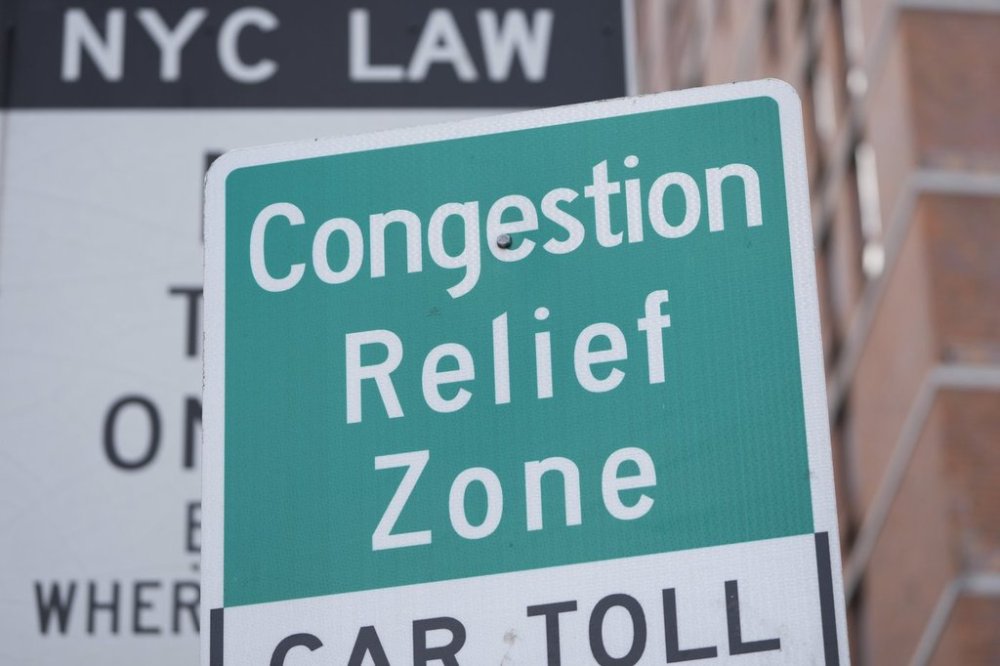
The Republican administration rescinded federal approval in February, prompting the Metropolitan Transportation Authority, the state agency overseeing the tolls, to challenge the decision.
In recent months, Trump officials have issued three ultimatums to New York, even threatening to pull funding and approvals for transportation projects.
But New York Gov. Kathy Hochul has said the state will continue collecting the toll until a judge orders it to stop.
The Democrat touted Tuesday’s ruling, which came after Liman heard arguments from both sides in Manhattan federal court, as a “massive victory” for New York commuters.
“New Yorkers deserve to control our own traffic patterns, keep gridlock off our streets and protect our clean air,” Hochul said in a statement. “We need to make the massive investments necessary to support our transit system and prevent it from falling into disarray and disrepair. Congestion pricing is the right solution to get us there.”
Halee Dobbins, a spokesperson for the U.S. Department of Transportation, said the administration will comply with the court order, stressing the judge’s decision is only temporary and not on the merits of the case itself.
“We look forward to making our case in court against Hochul’s illegal tolls as we work to protect working-class Americans from being unfairly charged to go to work, see their families, or visit the city,” she said.
The toll started in January and generally imposes $9 on drivers entering Manhattan south of Central Park, though it varies depending on the kind of vehicle and time of day.
New York officials say the program is already helping to reduce traffic and will eventually pump billions of dollars into its subways, commuter trains and public buses.
Suburban commuters have pushed back against the toll, though, because it comes on top of existing ones for crossing bridges and tunnels into the city.
London, Stockholm and other big cities around the world have long had similar fees to reduce traffic congestion in their central business districts.