

Germany charges three people with spying for Russia, potentially with intent to kill
Advertisement
Read this article for free:
or
Already have an account? Log in here »
To continue reading, please subscribe:
Monthly Digital Subscription
$1 per week for 24 weeks*
- Enjoy unlimited reading on winnipegfreepress.com
- Read the E-Edition, our digital replica newspaper
- Access News Break, our award-winning app
- Play interactive puzzles
*Billed as $4.00 plus GST every four weeks. After 24 weeks, price increases to the regular rate of $19.95 plus GST every four weeks. Offer available to new and qualified returning subscribers only. Cancel any time.
Monthly Digital Subscription
$4.99/week*
- Enjoy unlimited reading on winnipegfreepress.com
- Read the E-Edition, our digital replica newspaper
- Access News Break, our award-winning app
- Play interactive puzzles
*Billed as $19.95 plus GST every four weeks. Cancel any time.
To continue reading, please subscribe:
Add Free Press access to your Brandon Sun subscription for only an additional
$1 for the first 4 weeks*
*Your next subscription payment will increase by $1.00 and you will be charged $16.99 plus GST for four weeks. After four weeks, your payment will increase to $23.99 plus GST every four weeks.
Read unlimited articles for free today:
or
Already have an account? Log in here »
Hey there, time traveller!
This article was published 28/05/2025 (303 days ago), so information in it may no longer be current.
BERLIN, Germany (AP) — Three people in Germany were charged with working for one of Russia’s intelligence agencies and could have been plotting to kill a man, the German Federal Prosecutor’s Office said Wednesday.
The three men arrested in the “particularly serious case” on June 19, 2024 in Frankfurt were identified as Robert A., a Ukrainian citizen; Vardges I., an Armenian national; and Arman S., a Russian citizen. Their full names weren’t released in line with German privacy rules.
“The spying operation presumably served to prepare further intelligence operations in Germany, possibly even leading to killing,” the German Federal Prosecutor’s Office said.
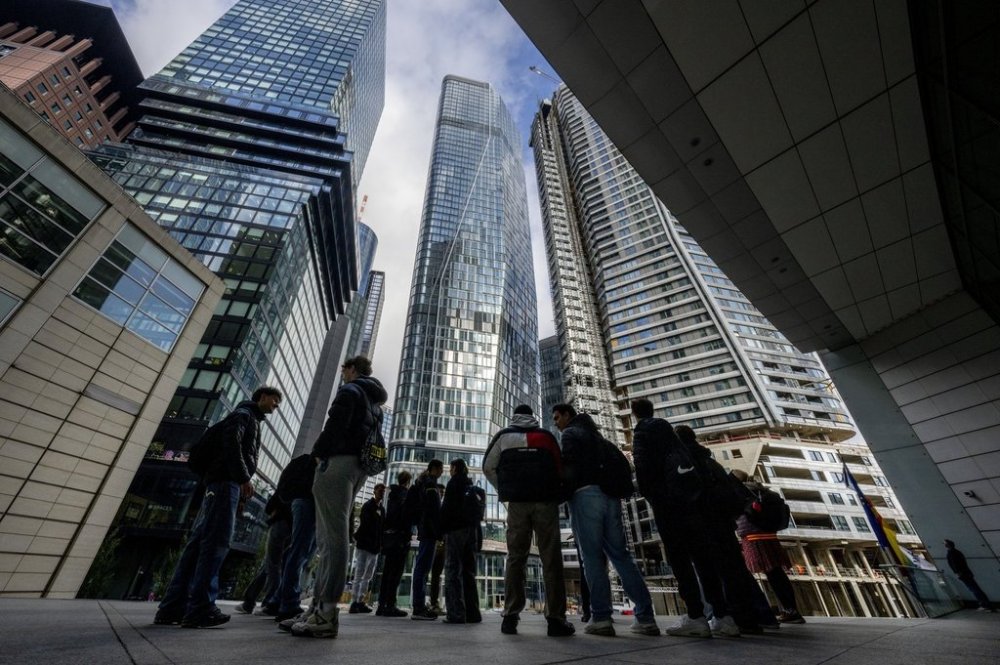
German prosecutors said at the beginning of May 2024, Vardges I. received an order from a Russian intelligence agency to spy on a man living in Germany who fought in Ukraine’s armed forces after Russia’s full-scale invasion in February 2022.
To do this, Vardges I. recruited Robert A. and Arman S., who are accused of trying to lure the man to a meeting in a cafe in downtown Frankfurt with the aim of identifying him and gathering further information about him. Because the man had previously been in touch with German police, no meeting ever took place, the Federal Prosecutor’s Office said, adding that the three men remain in custody.
The charges against the men, filed May 16, are the latest in a series of cases across Europe where Ukrainians and other nationals are accused of working on behalf of Russia’s intelligence services.
In May, German prosecutors said three Ukrainians were arrested in Germany and Switzerland on suspicion of agreeing to send parcels containing explosive or incendiary devices from Germany to Ukraine, apparently at the behest of people acting for Russia.
In April 2024, two German-Russian men were arrested in Germany on suspicion of espionage, one of them accused of agreeing to carry out attacks on potential targets including U.S. military facilities in hopes of sabotaging aid for Ukraine, prosecutors said.
Western officials have accused Russia and its proxies of staging dozens of attacks ranging from arson and sabotage to cyberattacks and espionage since Moscow’s invasion of Ukraine.
Russia has previously been accused of trying to kill people in Germany who have a connection to the war in Ukraine.
In July 2024, Western officials said a plot was uncovered to kill Armin Papperger, CEO of defense company Rheinmetall which provides weapons to Ukraine.
In 2019, a Russian national, Vadim Krasikov, was convicted in Germany of killing a Georgian citizen who had fought Russian troops in Chechnya. Krasikov was sentenced to life imprisonment, but was released as part of a prisoner exchange between Russia and Ukraine in 2024.
At his sentencing, German judges said Krasikov had acted on the orders of Russian authorities, who gave him a false identity, passport and the resources to carry out the killing.