

South Dakota tribe declares state of emergency over crime
Advertisement
Read this article for free:
or
Already have an account? Log in here »
To continue reading, please subscribe:
Monthly Digital Subscription
$1 per week for 24 weeks*
- Enjoy unlimited reading on winnipegfreepress.com
- Read the E-Edition, our digital replica newspaper
- Access News Break, our award-winning app
- Play interactive puzzles
*Billed as $4.00 plus GST every four weeks. After 24 weeks, price increases to the regular rate of $19.95 plus GST every four weeks. Offer available to new and qualified returning subscribers only. Cancel any time.
Monthly Digital Subscription
$4.99/week*
- Enjoy unlimited reading on winnipegfreepress.com
- Read the E-Edition, our digital replica newspaper
- Access News Break, our award-winning app
- Play interactive puzzles
*Billed as $19.95 plus GST every four weeks. Cancel any time.
To continue reading, please subscribe:
Add Free Press access to your Brandon Sun subscription for only an additional
$1 for the first 4 weeks*
*Your next subscription payment will increase by $1.00 and you will be charged $16.99 plus GST for four weeks. After four weeks, your payment will increase to $23.99 plus GST every four weeks.
Read unlimited articles for free today:
or
Already have an account? Log in here »
Hey there, time traveller!
This article was published 28/05/2025 (304 days ago), so information in it may no longer be current.
SIOUX FALLS, S.D. (AP) — The Rosebud Sioux Tribe in South Dakota has declared a public safety state of emergency on its reservation, asking for more law enforcement resources from the federal government.
It’s the tribe’s third emergency declaration in six years as members contend with methamphetamine and other illicit drug use, trafficking and gun violence on the Rosebud Indian Reservation. The tribe previously declared states of emergency in 2019 and 2024.
Kathleen Wooden Knife, president of the Rosebud Sioux Tribe, wrote in the declaration on Tuesday that the emergency is due to “pervasive law and order and public health issues … creating threats to public safety, the health and welfare of the general public.”
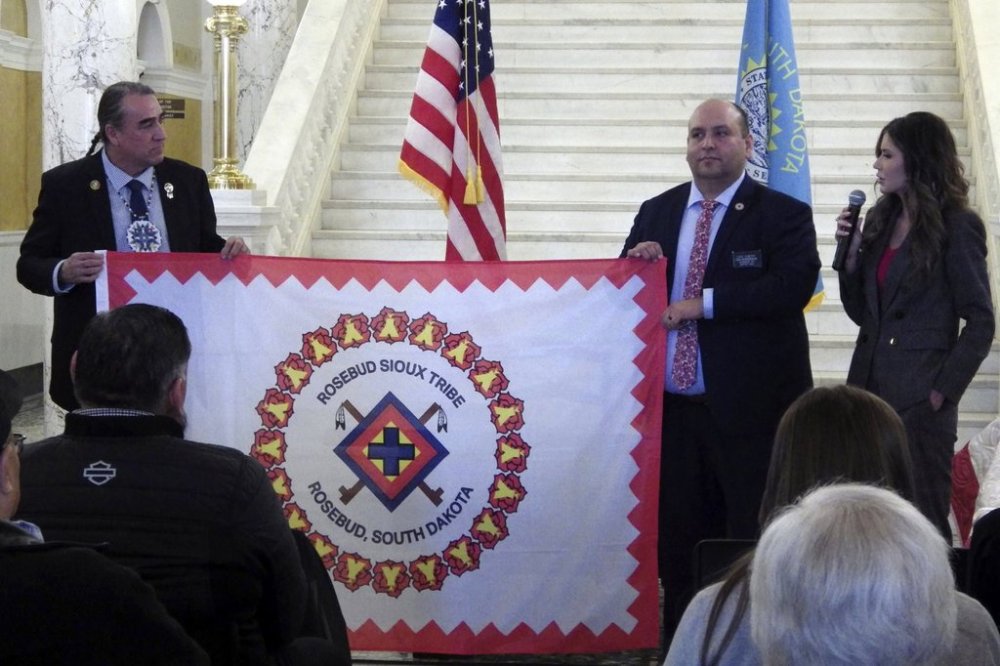
The declaration asked for increased patrol and investigative support from federal agencies, cooperation from the 12 communities on the reservation and coordination between the tribe and federal government.
Law enforcement is stretched thin on many reservations in the U.S., leading some tribes to sue the federal government. In a lawsuit the Oglala Sioux tribe filed against the Bureau of Indian Affairs, a federal judge ruled that the U.S. government is obligated by treaty to support law enforcement on the Pine Ridge Reservation.
The Rosebud Indian Reservation has a dozen law enforcement officers for an area that stretches nearly 1 million acres (404,686 hectares) across five counties, said Lewis Good Voice Eagle, chief of staff to Wooden Knife. Low staffing is partially due to 2016 budget cuts, as well as difficulty retaining officers who don’t receive the same benefits as they would working elsewhere.
After previous emergency declarations, the reservation received help from the U.S. Attorney’s Office, the Federal Bureau of Investigation and the Department of Interior, though it was not enough to solve the problems, Good Voice Eagle said.
“With the shortage of law enforcement and the shortage of juris doctorate barred attorneys, it has really created another nightmare on the Rosebud Indian Reservation,” he said.
Crime on South Dakota’s nine Native American reservations has been a longstanding issue and the subject of tense relations with former South Dakota governor and current Homeland Security Secretary Kristi Noem. The nine tribes in the state banned her from tribal lands last year for saying publicly that tribal leaders were catering to drug cartels on the reservations.