

Guatemala court convicts 3 ex-paramilitaries of war crimes for rape and gives them 40-year sentences
Advertisement
Read this article for free:
or
Already have an account? Log in here »
To continue reading, please subscribe:
Monthly Digital Subscription
$1 per week for 24 weeks*
- Enjoy unlimited reading on winnipegfreepress.com
- Read the E-Edition, our digital replica newspaper
- Access News Break, our award-winning app
- Play interactive puzzles
*Billed as $4.00 plus GST every four weeks. After 24 weeks, price increases to the regular rate of $19.95 plus GST every four weeks. Offer available to new and qualified returning subscribers only. Cancel any time.
Monthly Digital Subscription
$4.99/week*
- Enjoy unlimited reading on winnipegfreepress.com
- Read the E-Edition, our digital replica newspaper
- Access News Break, our award-winning app
- Play interactive puzzles
*Billed as $19.95 plus GST every four weeks. Cancel any time.
To continue reading, please subscribe:
Add Free Press access to your Brandon Sun subscription for only an additional
$1 for the first 4 weeks*
*Your next subscription payment will increase by $1.00 and you will be charged $16.99 plus GST for four weeks. After four weeks, your payment will increase to $23.99 plus GST every four weeks.
Read unlimited articles for free today:
or
Already have an account? Log in here »
Hey there, time traveller!
This article was published 30/05/2025 (300 days ago), so information in it may no longer be current.
GUATEMALA CITY (AP) — More than four decades after Guatemalan soldiers and paramilitaries raped Indigenous women during their efforts to crush an insurgency in the country’s 36-year civil war, a court on Friday convicted three men of crimes against humanity in the case and sentenced them to 40 years in prison.
Thirty-six women from the Maya Achi Indigenous group came forward in 2011 to seek justice for the abuses they suffered between 1981 and 1985. They came from Rabinal, a small town about 55 miles (88 kms) north of the capital.
Six of them testified against the three men convicted Friday.
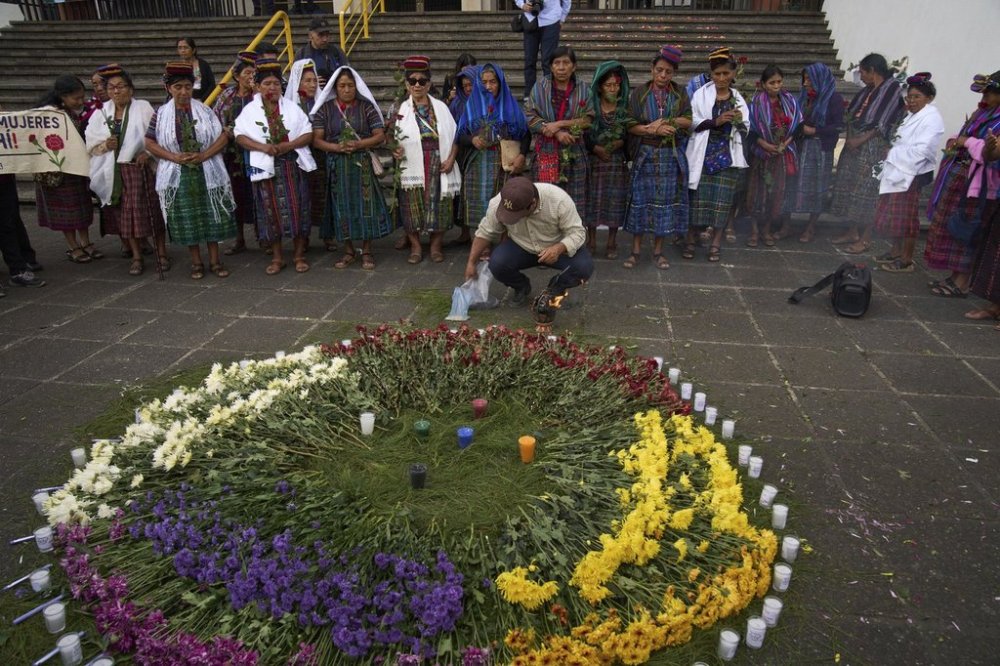
As the all female three judge panel prepared to announce the verdict, several elderly women huddled around a young woman who translated the judges’ words from Spanish to Achi.
Judge María Eugenia Castellanos, president of the tribunal, said the women had been brave to come on repeated occasions to testify. “They are crimes of solitude that stigmatize the woman. It is not easy to speak of them,” she said.
Judge Marling Mayela González Arrivillaga said there was no doubt about the women’s testimony.
In 2022, five other paramilitaries – men from the area trained by soldiers to help root out insurgents – were convicted of raping women and sentenced to 30 years in prison. No soldiers have been tried for the acts.
Guatemala’s civil war pitted the army and police against leftist rebels. It ended with the signing of peace accords in 1996.
Of the 36 women who originally came forward, seven have died. The youngest was 19 when she was attacked.
Among the women who testified at this trial, was Pedrina Ixpatá. She is 63 now, but was 21 when she said she was assaulted. Félix Tum Ramírez, one of those convicted, had pointed her out to soldiers earlier in the day in the plaza.
“At 9 at night they came to take me (from the house) and took me to a big water tank. They pushed by head in the tank and when I was about to drown, let me out and asked me questions, but I said I didn’t know anything,” Ixpatá said.
Later, she was taken to a room on the local military base where she said soldiers raped her. “I couldn’t take it. My whole body hurt,” Ixtapá said. She got pregnant, aborted and wasn’t able to have children. Tum Ramírez was convicted of raping two women and for signaling four women to be raped by others.
The Associated Press typically does not name people who say they have been sexually assaulted unless they come forward publicly, as Ixpatá has done.
One of the accused, Pedro Sánchez, told the court Friday before the ruling was handed down that he was not involved. He was convicted of raping two women.
“I am innocent of what they are accusing us, I don’t know any of these women,” Sánchez testified before the verdict. Simeón Enríquez Gómez, the third paramilitary, was also convicted of raping two of the women.
Anthropologist Aura Cumes, who testified as a forensic expert during the trial, said women suffered differently in the war than men did.
“Sexual violence was a planned and deliberate method,” she said. “It was effective for the army’s goals insomuch as these brutal acts on women had the effect of causing mistrust, of destroying healthy relationships between women and men, of splitting the family unit and destroying the community social fabric.”
Another woman testified in closed session that she had been washing clothes in the river when paramilitaries and soldiers forced her inside and told her to strip. She was raped first by paramilitaries and then by soldiers.
Through an interpreter, she explained that they took her husband that day and she never saw him again. She was four months pregnant at the time.
The Guatemalan Commission for Historical Clarification established by the United Nations to investigate human rights violations during the civil war, documented 1,465 cases of rape during the conflict. In 89% of the cases, the women were Indigenous Maya, according to the report.